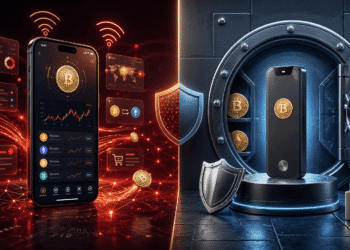

AI agent crypto wallets are no longer just a futuristic idea. Wallet companies are now preparing for a world where the next on-chain user may not be human.
At Consensus Miami, Trust Wallet CEO Felix Fan and Mesh CTO Arjun Mukherjee said AI agents are creating a new role for crypto wallets. Instead of wallets only helping people hold assets, sign transactions and connect to apps, the next generation may help autonomous software hold value, prove identity and transact on-chain.


That is a major shift. Crypto spent years trying to make wallets simple enough for humans. Now the industry is asking whether wallets can be structured safely enough for bots.
Why AI Agents Need Wallets
An AI agent can only become economically useful if it can act.
That means it may need to pay for data, buy software, hire services, rebalance assets, settle invoices, or make small payments to other agents. Traditional payment systems were not designed for autonomous software moving across platforms. Crypto wallets are more naturally programmable.
A wallet gives an AI agent a way to hold assets, interact with smart contracts and make transactions under predefined rules. That does not mean an agent should have unlimited freedom. It means wallets may become permission systems where humans define what an agent can do, how much it can spend and where it can send funds.
That is the key difference between an AI chatbot and an AI market participant. One can answer a question. The other can move money.
Trust Wallet Is Building for Agent Control
Trust Wallet has already started moving in this direction.
Its Agent Kit lets AI agents execute real crypto transactions across more than 25 blockchains, including swaps, dollar-cost averaging and limit orders, within rules set by users. The point is not to let an AI blindly control a wallet. The point is to let users delegate specific actions inside defined limits.
That model matters because crypto transactions are final. If an AI agent makes a bad trade, signs a malicious transaction or sends funds to the wrong address, there may be no customer-support button that can undo it.
So the wallet of the AI-agent era needs guardrails. Spending limits, approved actions, risk checks, whitelisted destinations and human override controls may become as important as seed phrases once were.
Mesh Is Focused on Moving Money Across Apps
Mesh’s angle is payments infrastructure.
Mesh has been positioning itself as a settlement layer that helps crypto become spendable across wallets, chains and currencies. At Consensus, Mukherjee reportedly emphasized the infrastructure needed for AI agents to transact programmatically and move value across fragmented crypto environments.
That problem is very real. Even human users struggle with chain selection, gas tokens, wallet compatibility and asset routing. AI agents will face the same problem at machine speed.
If an agent needs to pay with one token, settle in another, or move value across chains, the wallet needs to abstract away complexity. Otherwise, autonomous payments become brittle and unsafe.
The agent wallet is not only a custody tool. It becomes the transaction engine.
The “Wallet as Browser” Idea Is Powerful
One of the more interesting ideas from the Consensus discussion is that wallets could become the “new browser” for crypto.
That framing makes sense. Browsers helped humans navigate the internet. Wallets may help agents navigate the on-chain economy. A browser reads websites. A wallet reads balances, permissions, contracts, identities and payment instructions.
For humans, the wallet is already the login layer of Web3. For AI agents, it could become the action layer.
An agent with a wallet could identify itself, prove authorization, access services, pay for resources and interact with other agents. That is much bigger than simply storing tokens. It turns the wallet into a control panel for automated economic activity.
Security Is the Hard Part
The biggest question is safety.
AI agents can hallucinate, follow malicious instructions, misread context or be manipulated by bad inputs. If an agent has access to funds, those mistakes become financial losses.
This is why agent wallets need different design assumptions from human wallets. A human can pause and think before signing. An AI agent may operate continuously. A human can notice something feels wrong. An agent needs rules and monitoring systems to catch problems automatically.
Wallets for AI agents will likely need transaction simulation, anomaly detection, policy engines, spending caps and real-time alerts. They may also need identity systems so users can know which agent is acting and what it is authorized to do.
Without those protections, agent wallets could become a new attack surface.
This Could Change DeFi and Payments
If agent wallets work, they could reshape several parts of crypto.
In DeFi, agents could manage strategies, rebalance positions, optimize yield and execute trades. In payments, agents could handle subscriptions, invoices, microtransactions and commerce flows. In business operations, agents could pay vendors, buy cloud resources or settle small tasks with other agents.
That is why wallet infrastructure matters. The next wave of on-chain activity may not come only from more retail users clicking buttons. It may come from software agents making thousands of small decisions in the background.
Crypto is well suited for that because blockchains are open, programmable and always on.
The Bottom Line
AI agent crypto wallets are becoming one of the most important wallet trends in Web3.
Trust Wallet and Mesh executives are pointing toward the same future: wallets are being rebuilt from human custody tools into infrastructure for autonomous software. These wallets may need to hold value, prove identity, route payments and enforce rules for agents acting on behalf of users.
The opportunity is huge, but so is the risk. Giving bots wallets is powerful only if the permissions are strict, the monitoring is strong and users remain in control.
Crypto spent years onboarding people. The next wave may be onboarding agents.
Disclaimer: This article is for informational purposes only and does not constitute financial, investment, or legal advice. Always conduct your own research before making any investment decisions.