Somewhere on the Bitcoin blockchain sit approximately 1.1 million BTC that haven’t moved in over fifteen years. They belong to Satoshi Nakamoto, Bitcoin’s pseudonymous creator, who vanished from public life in 2011. At today’s price near $63,000, that dormant fortune is worth roughly $70 billion. Nobody knows if Satoshi is alive, dead, or simply never coming back. The coins just sit there, a monument to Bitcoin’s origins.
Binance founder Changpeng Zhao, known universally as CZ, thinks those coins might need to be frozen.


Speaking on the Galaxy Brains podcast, CZ floated the possibility of freezing Satoshi’s Bitcoin, along with other dormant coins sitting in addresses vulnerable to future quantum computing attacks. He didn’t call for an immediate seizure. He didn’t claim Binance would act alone. He put the question to the community: if these coins stay inactive past a set deadline after a future upgrade, should the network lock them?
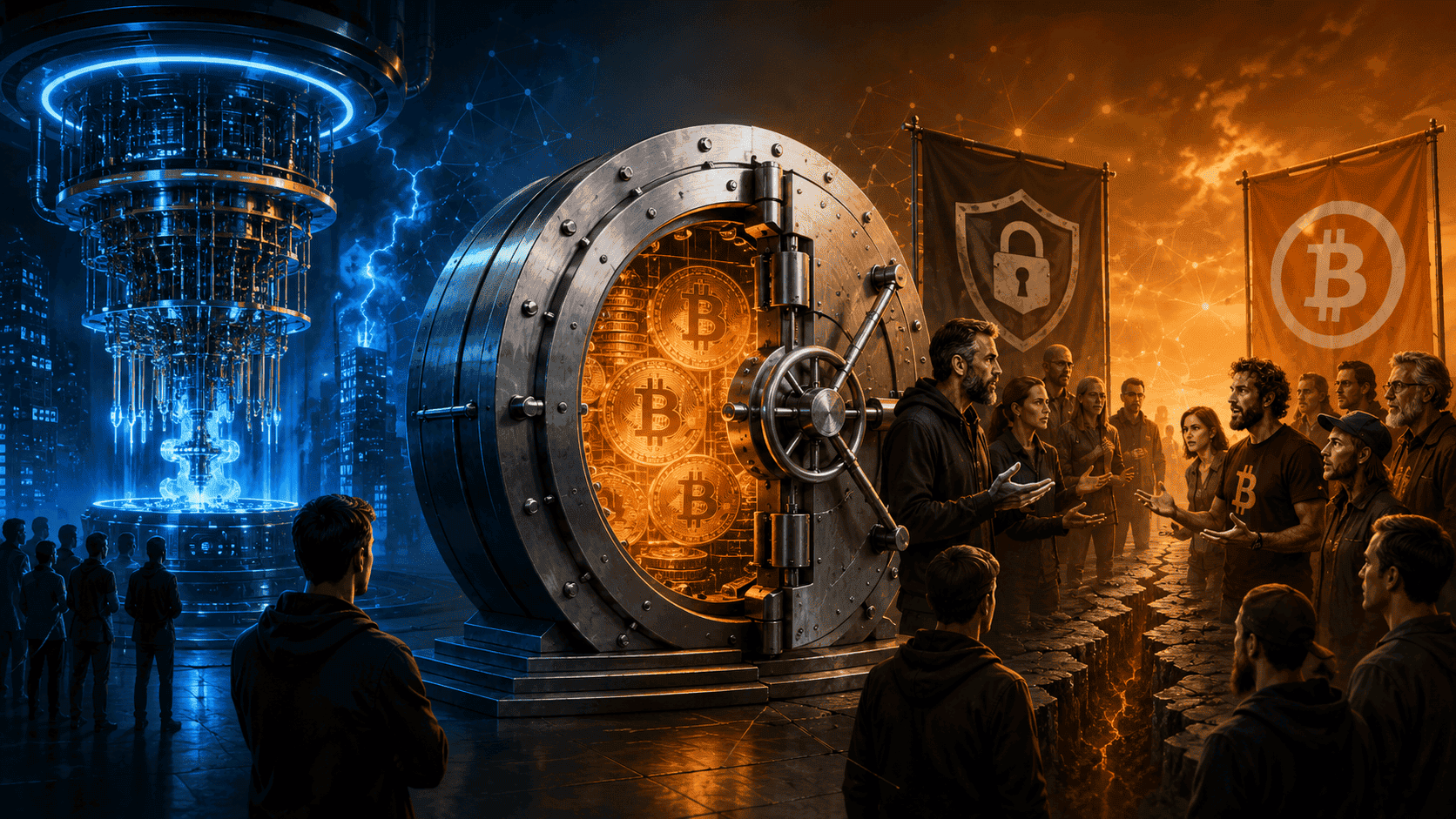
The proposal landed like a grenade in a community that has spent fifteen years treating immutability as sacred. The debate is back in the headlines today, with Bitcoin experts remaining split over whether the plan protects the network or betrays its founding principles.
Why Quantum Computers Are the Problem
The concern isn’t abstract anymore. Bitcoin wallets are protected by cryptography called ECDSA. Your private key controls your coins, and it’s mathematically linked to a public key visible on the blockchain. Right now, deriving a private key from a public key is effectively impossible, requiring more time than the age of the universe on conventional computers.
Quantum computers change that math. A powerful enough quantum machine could work backward from a public key to calculate the private key, then drain the wallet. Google Quantum AI research from March 2026 estimated such an attack might need fewer than 500,000 qubits and could run in minutes, well below earlier projections.
Satoshi’s coins are especially exposed. Many sit in old “pay-to-public-key” addresses where the public key is directly visible. That makes them prime targets. CZ’s argument is that leaving these addresses active indefinitely creates an unfair outcome: whoever builds a quantum computer first would effectively be handed a billion-dollar reward for cracking coins whose owner is no longer around to defend them.
What CZ Actually Proposed
The nuance matters because his idea has been widely oversimplified.
CZ suggested that after Bitcoin upgrades to quantum-resistant cryptography, the network should establish a migration period of roughly six to twelve months. During that window, holders could move coins from vulnerable old addresses to protected new ones. Anyone with legitimate access to their keys, including Satoshi if he’s still around, would have time to secure their funds.
If coins remained unmoved after that deadline, CZ proposed the community could agree to freeze them. The logic is that anyone actively holding Bitcoin would migrate to safety, so the only coins left exposed would be genuinely abandoned ones. Freezing them would protect them from quantum thieves rather than let attackers claim them.
CZ pushed back on reports that he personally wanted to freeze Satoshi’s address, stressing that no single individual or company, including Binance, should have unilateral authority. Any decision would need transparent community consensus. His thinking aligns with an existing draft called BIP-361, which would block sends to vulnerable addresses about three years after activation, then void legacy signatures two years later.
Why the Community Is Split
Both camps have serious, thoughtful people in them.
Supporters see quantum resistance as an urgent problem. Their argument is pragmatic: a preemptive freeze could protect enormous value from an attacker who cracks the cryptography before Bitcoin upgrades its defenses. If a quantum thief drained Satoshi’s coins and dumped them, the market impact could be catastrophic for the entire network. Freezing vulnerable coins, in this view, is defense, not seizure.
Critics see any proposal to lock coins as a fundamental betrayal of what Bitcoin is. The network’s entire appeal rests on the idea that no one can touch your coins without your keys. Introduce a mechanism to freeze “abandoned” coins, and you’ve created a precedent that could theoretically be extended later. The immutability that makes Bitcoin valuable would be compromised.
There’s a philosophical wrinkle too. Satoshi himself once wrote that lost coins benefit the network by making remaining coins scarcer. That hands-off philosophy has been baked into Bitcoin culture from the start. The debate echoes Ethereum’s 2016 DAO hack, when the community reversed a theft through a hard fork, permanently splitting the chain. That decision still divides people nearly a decade later.
What This Actually Means
For now, this is a debate rather than an imminent change. No quantum computer can crack Bitcoin today. BIP-361 hasn’t passed any adoption threshold. Any freeze would require a hard fork taking years to coordinate even if the community agreed, which it currently doesn’t.
But the conversation matters. If freezing 1.1 million BTC ever happened, it would represent roughly 5% of total supply, creating a permanent supply shock that could push up the value of every remaining coin. It would also raise legal questions no government or court has ever ruled on, since Satoshi’s ownership status remains completely undefined.
For holders, the practical takeaway is that quantum computing has moved from science fiction to a genuine engineering concern developers are actively planning around. Quantum-resistant cryptography already exists. The hard part, as CZ noted, is coordinating a network-wide migration across a system deliberately designed to resist central coordination.
CZ’s proposal is best understood as a starting point, not a final answer. Whether Bitcoin freezes Satoshi’s coins, races to migrate everyone to quantum-safe addresses, or hopes the threat stays theoretical, the debate isn’t going away. The most valuable dormant wallet in history has become the test case for Bitcoin’s most difficult question: what happens when protecting the network means touching coins that were supposed to be untouchable?
FAQ
What did CZ actually propose?
After Bitcoin upgrades to quantum-resistant cryptography, holders would get a six-to-twelve-month window to move coins from vulnerable old addresses to secure new ones. If coins linked to Satoshi or other dormant wallets stayed unmoved after that deadline, the community could agree to freeze them. CZ stressed this should be a community consensus decision, not a unilateral action by any individual or company including Binance.
Why are Satoshi’s coins vulnerable to quantum computers?
Many of Satoshi’s estimated 1.1 million BTC sit in old “pay-to-public-key” addresses where the public key is directly visible on the blockchain. A powerful enough quantum computer could theoretically derive the private key from a visible public key, then drain the wallet. Google Quantum AI research from March 2026 estimated such an attack might need fewer than 500,000 qubits, closer than earlier projections suggested.
Will this actually happen?
Not anytime soon. No quantum computer can currently break Bitcoin’s cryptography. Any freeze would require a hard fork taking years to coordinate, and the community is deeply divided. Related proposals like BIP-361 exist but haven’t reached adoption thresholds. The debate is about long-term planning rather than imminent action.
Disclaimer: This article is for informational purposes only and does not constitute financial advice. Cryptocurrency investments carry significant risk. Always conduct your own research before making any investment decisions.