If you hold Bitcoin and you do not pay attention to oil prices, now is a good time to start. On April 17, WTI crude oil dropped nearly 10% to $85.90 per barrel after Iran declared the Strait of Hormuz fully open for commercial shipping. That is the lowest price since shortly after the war began in late February. The drop is the largest single-day move in oil since the conflict started, and it matters for crypto more than most people realise.
The connection between oil and your crypto portfolio is not complicated, but it runs through several layers. Understanding those layers helps explain why Bitcoin surged past $77,000 on the same day oil crashed, and why cheap energy is one of the most bullish signals a crypto investor can get.


The Pipeline: Oil to Inflation to the Fed to Crypto
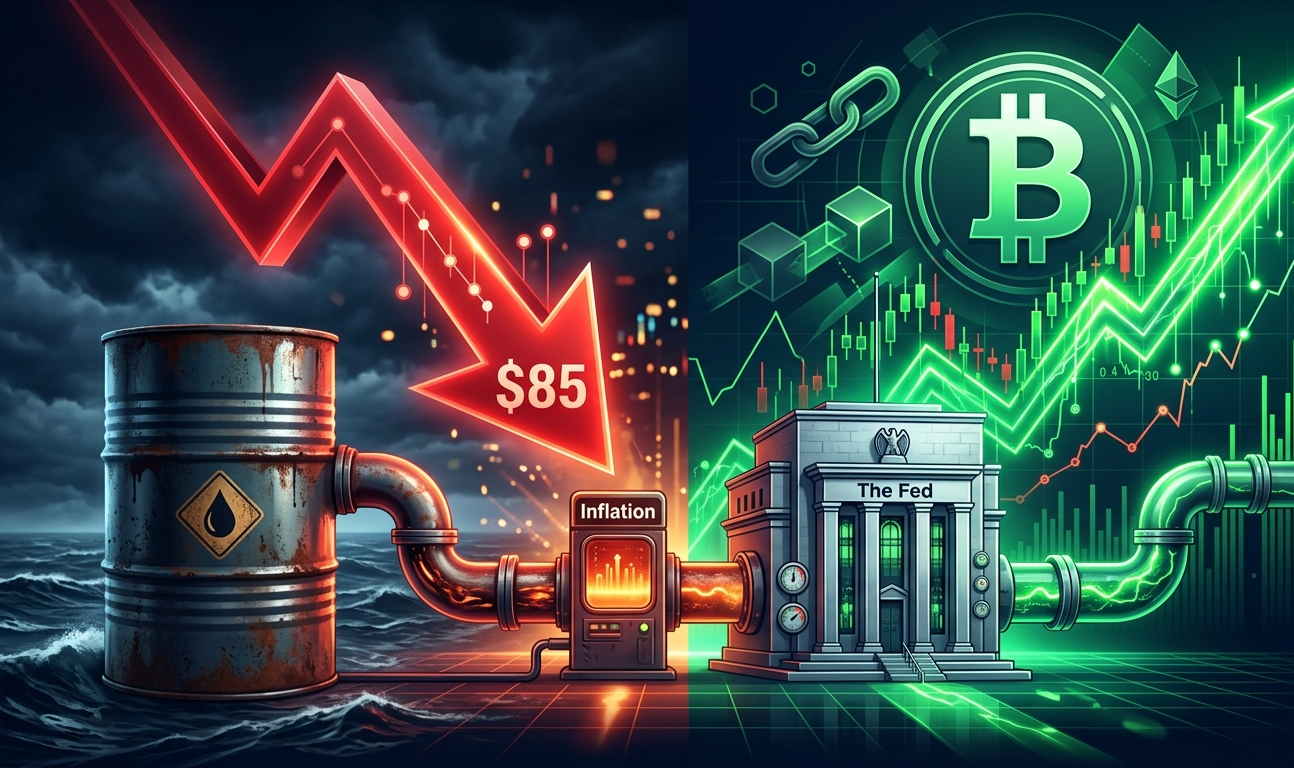
The transmission logic is straightforward and has played out repeatedly in macro cycles: oil prices crash, energy-driven inflation expectations cool, bond yields decline, Fed rate-cut probability rises, risk appetite returns, and capital flows into growth and speculative assets, including crypto.
The Strait of Hormuz carries roughly 20% of the world’s daily oil supply. When it was effectively closed during the conflict, oil spiked from pre-crisis levels around $73 per barrel to above $118 by mid-March. That surge fed directly into inflation. Gasoline prices in the US climbed above $4 per gallon. Headline CPI re-accelerated. The Federal Reserve, which had been expected to cut rates in early 2026, shelved those plans entirely. Every risk asset, from tech stocks to Bitcoin, spent Q1 under pressure as the “higher for longer” narrative took hold.
Now the strait is open, and the maths reverses. Iran’s move to reopen the Strait of Hormuz and a sharp drop in oil prices on Friday boosted bets the Federal Reserve may resume its interest rate cuts as soon as December.
How Much Does Oil Actually Affect Inflation?
More than most people think. Energy prices flow through the entire economy: transportation costs, food production, manufacturing inputs, electricity bills. When oil drops from $118 to $85, the effect on inflation readings is not subtle.
Neil Dutta, head of economic research for Renaissance Macro Research, said the Fed may now be able to set aside the stagflationary concerns and pursue “good-news” rate reductions based on a renewed drop in inflation. “This will be much better for inflation than it will be for growth, though it will be good for both,” as consumers’ purchasing power improves and they spend less on basics like gas.
Goldman Sachs has estimated that sustained oil below $90 would take roughly 30 basis points off the next headline CPI print. That might sound small, but it is the difference between inflation that is moving in the wrong direction and inflation that is moving toward the Fed’s 2% target. The distinction changes what the Fed does next, and what the Fed does next changes everything for Bitcoin.
Why Crypto Responds So Strongly
Bitcoin’s correlation with the Nasdaq-100 has reached 85.4% during this oil price spike, meaning BTC is currently trading as a high-beta tech asset, not a commodity-linked inflation hedge.
That is a crucial point. During an energy shock, Bitcoin does not act like digital gold. It acts like a leveraged bet on risk appetite. When oil surges, institutions de-risk across the board: they sell tech, they sell growth assets, and they sell crypto. When oil crashes, the reverse happens. Money flows back into everything that was sold during the fear phase.
This explains why Bitcoin moved from $60,000 in mid-March to $77,000 today. It is not because Bitcoin suddenly became more useful or more scarce. It is because oil dropped, inflation expectations cooled, rate cut bets returned, and institutional capital rotated back into risk assets. Bitcoin was the beneficiary of improving financial conditions, not the cause of them.
The historical pattern reinforces this: oil price peaks have coincided with crypto market bottoms in October 2018, June 2022, and the early March 2026 low, each time preceding a relief rally in crypto once energy prices stabilised.
What the Fed Is Saying
Fed Governor Christopher Waller said a reopened Strait of Hormuz and falling oil prices could pave the way to rate cuts later this year, but cautioned about “the possibility that this series of price shocks may lead to a more lasting increase in inflation.”
The Fed meets on April 28 and 29. Markets are not expecting a cut at that meeting, but the probability of a cut by December has jumped significantly since the Hormuz reopening. If oil stays below $90 through the summer and inflation data continues to improve, the first cut could come as early as September. That timeline matters for crypto because rate cuts historically coincide with the strongest phases of Bitcoin bull markets.
The Risk Nobody Wants to Talk About
The ceasefire expires on April 22. If the Hormuz closes again and oil spikes back above $110, everything written above reverses. The inflation relief disappears, rate cut bets evaporate, and risk assets sell off. The market is pricing in peace, but peace has not been achieved. A ceasefire extension or a permanent deal would solidify the oil drop and give the Fed the cover it needs to begin cutting. A ceasefire collapse would undo the week’s gains and send oil, inflation, and crypto back to where they were in March.
For crypto investors, the lesson from this week is simple: watch oil. When energy prices fall, the entire financial system loosens, and Bitcoin is one of the biggest beneficiaries. When energy prices rise, the system tightens, and Bitcoin is one of the first assets to feel the squeeze. Right now, oil is at $85 and falling. As long as it stays there, the tailwind for crypto is real.