

Every crypto cycle follows a familiar script. Bitcoin rallies first, grabs all the attention, and then eventually money starts flowing into altcoins. Ethereum pumps. Mid-caps follow. Small caps go wild. Everyone makes money. Altcoin season.
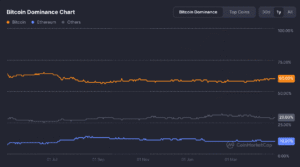
Except this time, the script isn’t playing out. Bitcoin dominance just broke above 60% this week, its highest sustained level since 2021. The Altcoin Season Index, which measures whether altcoins are outperforming Bitcoin, sits at just 39 out of 100. Anything below 25 is considered deep “Bitcoin Season.” A reading of 75 or higher signals altcoin season. We’re nowhere close.


Meanwhile, Bitcoin is pushing toward $82,000 and flirting with levels not seen since January. But most altcoins? They’re either flat, bleeding against BTC, or barely keeping up with the broader market.
If you hold altcoins, this is the most important market dynamic to understand right now. Because what’s happening isn’t a temporary blip. It’s a structural change in how money moves through the crypto market.
What Bitcoin Dominance Actually Tells You
Bitcoin dominance measures BTC’s share of the total cryptocurrency market capitalisation. When it rises, it means Bitcoin is attracting a larger proportion of all the money in crypto. When it falls, capital is spreading out into altcoins.
In past cycles, the pattern was reliable. Bitcoin would rally, dominance would peak somewhere between 60% and 70%, and then it would start declining as profits rotated into Ethereum and then into smaller altcoins. The 2021 altcoin season saw dominance drop from 70% to 38%, and during that stretch, hundreds of altcoins posted returns that made Bitcoin look like a savings account.
The difference in 2026 is that Bitcoin dominance hasn’t dipped below 50% since September 2023. That’s the longest sustained stretch above 50% since early 2017. And instead of rolling over as many traders expected, dominance just broke higher again this week.
Something fundamental has changed in how capital enters and stays in the crypto market. And understanding that change is the key to understanding why altcoin season keeps getting pushed further into the future.
The ETF Problem for Altcoins
The single biggest reason altcoin season hasn’t arrived is three letters: ETF.
When spot Bitcoin ETFs launched in January 2024, they created a massive new pipeline for institutional money to enter crypto. But that pipeline flows exclusively into Bitcoin. BlackRock’s IBIT became the fastest ETF in history to reach $100 billion in assets. Total net inflows across all Bitcoin ETFs have surpassed $56 billion since launch.
Here’s the problem for altcoin holders. In previous cycles, new money entered the crypto market broadly. Retail investors would buy Bitcoin on Coinbase, feel confident, and then start exploring Ethereum, Solana, and smaller tokens. That natural rotation from BTC into alts was the engine that powered every altcoin season.
ETF money doesn’t work that way. When a pension fund or wealth manager buys IBIT, that capital sits in Bitcoin. It doesn’t rotate into altcoins. It doesn’t chase the latest DeFi token or memecoin. It just stays parked in BTC, collecting exposure to the asset class through a familiar, regulated wrapper.
The result is a market where a huge chunk of new capital enters through a door that only leads to Bitcoin. And as long as that continues, Bitcoin dominance has a structural floor that didn’t exist before.
The Numbers Don’t Lie
Let’s look at how the broader altcoin market is actually performing relative to Bitcoin right now.
According to CoinMarketCap data, only about 35% to 40% of the top 100 altcoins have outperformed Bitcoin over the past 90 days. That’s well below the 75% threshold needed to qualify as altcoin season. And even the altcoins that are outperforming BTC are doing so by thin margins.
The ETH/BTC ratio, which many traders watch as a leading indicator for altcoin strength, remains at multi-year lows. Ethereum’s dominance has slipped to around 10.4%, and the gap between Bitcoin and Ethereum in terms of market performance continues to widen.
Individual narrative-driven pumps have happened. Toncoin surged over 100% this week after Telegram’s takeover announcement. Canton Coin rallied on its ETF launch. But these are isolated, catalyst-driven moves, not the kind of broad-based altcoin rally where everything goes up together.
Analyst Ben Cowen has been one of the most vocal voices warning that a mass extinction of junk tokens needs to happen before the market can support a healthy altcoin season. His argument is that with millions of tokens competing for a finite pool of capital, most simply can’t survive. The purge has been underway since 2021, and it’s not over yet.
When Could Altcoin Season Actually Arrive?
The honest answer is: nobody knows for certain. But there are specific conditions that historically need to be met before capital rotates out of Bitcoin and into altcoins.
First, Bitcoin needs to stabilise at higher levels. Altcoin seasons have typically started after Bitcoin finishes a major rally and enters a consolidation phase. Right now, BTC is still in its recovery and hasn’t reclaimed its October 2025 all-time high of $126,000. Until Bitcoin shows signs of topping out or going sideways, most institutional and sophisticated money will stay in BTC.
Second, Bitcoin dominance needs to peak and start declining in a sustained way, not just a few days of weakness, but a durable trend lower. The key level to watch is 61%. If dominance breaks above that and holds, it likely delays any meaningful altcoin rotation further into late 2026 or even 2027. If it gets rejected at 61% and starts falling, that could be the first real signal.
Third, Ethereum needs to lead. In every previous altcoin season, ETH outperformed Bitcoin first, and then the rest of the market followed. Right now, the ETH/BTC ratio is still weak and hasn’t shown the kind of strength needed to trigger a broader rotation.
Fourth, total crypto market cap needs to be growing alongside a decline in Bitcoin dominance. If dominance falls because everything is losing value at different speeds, that’s not altcoin season. That’s a bear market. True altcoin season requires new money entering the market and flowing into altcoins specifically.
What Should Altcoin Investors Do Right Now?
The current environment rewards selectivity, not broad-based altcoin bets. The days of buying any random token and watching it multiply during a rising tide are over, at least for now.
If you hold altcoins, focus on projects with genuine catalysts. This week’s news provides a good template. Toncoin surged because Telegram took direct control of its blockchain. Canton Coin rallied because it launched an ETF backed by Goldman Sachs. Solana is building anticipation around its Alpenglow upgrade. These are specific, narrative-driven moves supported by real developments.
Projects without clear catalysts, active development, or growing user bases are likely to continue bleeding against Bitcoin. The market has too many tokens and not enough capital to support all of them. That’s why Cowen’s argument about millions of tokens needing to die resonates. The crypto market is going through a natural selection process, and only the strongest projects will survive it.
For investors who are uncertain, there’s no shame in holding a larger BTC allocation during Bitcoin Season. The goal isn’t to predict exactly when altcoin season starts. It’s to recognise which phase the market is in and position accordingly.
The Bottom Line
Bitcoin dominance at 60% with an Altcoin Season Index of 39 tells a clear story: we are firmly in Bitcoin territory. The ETF-driven market structure, elevated institutional capital flows into BTC, and the ongoing purge of low-quality tokens are all working against a broad altcoin rally.
That doesn’t mean altcoins are dead. It means the old playbook of “buy alts, wait for the tide to lift all boats” doesn’t apply in this cycle. Instead, this market rewards research, selectivity, and patience.
Altcoin season will come eventually. It always does. But it’s not here yet, and trying to force it by loading up on random tokens in a Bitcoin-dominated market is a recipe for underperformance. Watch the dominance chart, watch the ETH/BTC ratio, and when the signals align, you’ll know.
FAQ
What is Bitcoin dominance and why is it at 60%?
Bitcoin dominance measures BTC’s share of the total crypto market capitalisation. At 60%, it means Bitcoin holds three-fifths of all value in the crypto market. It’s elevated because spot Bitcoin ETFs channel institutional capital exclusively into BTC, creating a structural floor for dominance that didn’t exist in previous cycles.
When will altcoin season start in 2026?
There’s no guaranteed timeline. Key signals to watch include Bitcoin dominance peaking and declining sustainably below 55%, the ETH/BTC ratio strengthening, and total crypto market cap growing alongside falling BTC dominance. Until these conditions align, the market is likely to remain Bitcoin-led with only isolated altcoin rallies around specific catalysts.
Should I sell my altcoins and buy Bitcoin?
That depends entirely on your investment goals and risk tolerance. During Bitcoin Season, holding a larger BTC allocation tends to outperform a broad altcoin portfolio. However, high-quality altcoins with strong catalysts can still deliver outsized returns. Focus on projects with real development activity, growing users, and clear near-term catalysts rather than spreading capital across dozens of tokens.
Disclaimer: This article is for informational purposes only and does not constitute financial advice. Cryptocurrency investments carry significant risk. Always conduct your own research before making any investment decisions.