
“You do not sell your Bitcoin.” Michael Saylor has said some version of that sentence hundreds of times. On podcasts. At conferences. On X. It became his brand. His identity. The one thing everyone knew about the man who bet his entire company on Bitcoin.
Then on Monday night, during Strategy’s Q1 2026 earnings call, he said the opposite.


“We will probably sell some bitcoin to pay a dividend just to inoculate the market and send the message that we did it.”
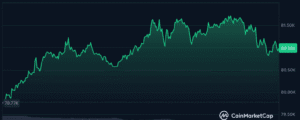
MSTR dropped 4% after hours. Bitcoin slipped below $81,000. And the crypto world spent the night trying to figure out whether Saylor just changed the rules, or whether this was part of the plan all along.
What Happened on the Earnings Call?
Strategy reported a $12.54 billion net loss for Q1 2026. That is the largest quarterly loss in the company’s history. It looks terrifying on paper. But it is almost entirely an accounting number, not real money leaving the building.
Here is what happened. Bitcoin fell from about $87,000 on January 1 to roughly $68,000 by March 31. Under the accounting rules, Strategy has to mark its Bitcoin to market every quarter. When the price drops, the company books an unrealised loss. It did not sell anything. It did not lose any coins. The Bitcoin is still sitting in the same wallets. The $12.54 billion is the difference between what the coins were worth on January 1 and what they were worth on March 31.
Since then, Bitcoin has recovered to $81,500. That recovery will show up as a gain in Q2. The loss was temporary. The panic was not.
Why Is Saylor Talking About Selling?
Because of dividends. Strategy owes roughly $1.5 billion per year in dividend payments on its preferred stock (STRC) and interest on its debt. STRC alone carries an 11.5% annual yield. That dividend has to be paid in cash, not in Bitcoin.
Strategy currently has $2.25 billion in cash. That covers about 18 months of dividends. But what happens after that? The company needs a plan for year two, year three, and beyond.
Saylor’s answer was surprisingly practical. Buy Bitcoin with credit. Let it appreciate. Then sell a small amount to pay the dividend. The Bitcoin goes up more than the dividend costs. The company ends up with more Bitcoin per share even after selling some.
“You buy bitcoin with credit, you let it appreciate, and then you sell bitcoin to pay the dividend,” he explained.
CEO Phong Le went even further. He said Strategy would sell Bitcoin “when it’s advantageous to the company.” He added: “We’re not going to sit back and just say, ‘We’ll never sell the bitcoin.’ We want to be net aggregators of bitcoin, but more importantly, increasing our bitcoin per share.”
That is a real shift. “Never sell” became “we’ll sell when it makes sense.” The principle did not change. The absolutism did.
Why Did He Use the Word “Inoculate”?
This is the part that shows how carefully Saylor thinks about narrative.
Short sellers have been building a case that Strategy’s model is unsustainable. The argument goes like this: Strategy buys Bitcoin with borrowed money, pays dividends from cash reserves, and eventually runs out of cash. When it does, it has to sell Bitcoin at the worst possible time, crashing both the stock and the coin.
Saylor wants to kill that argument before it grows. By selling a small amount of Bitcoin voluntarily, on his own terms, during a period of strength, he proves that selling is not a crisis. It is a normal part of the business model. He “inoculates” the market against the fear that a forced sale would look like.
Think of it like a flu shot. You introduce a small, controlled dose of the thing everyone is afraid of. The market absorbs it. The fear goes away. And the next time someone says “what happens when Saylor has to sell,” the answer is: “He already did. Nothing happened.”
How Much Would Strategy Actually Sell?
Almost nothing, relative to the stack. Strategy holds 818,334 BTC worth roughly $66 billion at current prices. The annual dividend obligation is $1.5 billion. That is about 2.3% of the total holdings.
At $81,000 per coin, Strategy would need to sell roughly 18,500 BTC per year to cover the full dividend. That sounds like a lot, but the company has been buying more than 36,000 BTC per month this year. It is adding coins far faster than it would sell them.
The Q1 numbers tell the story. Strategy raised $7.37 billion in Q1 through stock sales. STRC raised another $5.58 billion year-to-date through May 3. The company achieved a 9.4% BTC Yield, representing roughly 63,410 BTC in gain per share. Even after selling a fraction for dividends, the net position keeps growing.
Saylor is not unwinding the trade. He is trimming the edges to keep the machine running.
What Does This Mean for Bitcoin?
In the short term, the market did not like it. Bitcoin dipped below $81,000 after the earnings call. MSTR fell 4%. The “never sell” narrative was a psychological floor for both the stock and the coin. Cracking it, even slightly, shook confidence.
In the medium term, it is probably healthy. A company that holds 3.9% of all Bitcoin and says it will never sell under any circumstances is actually a risk, not a feature. What if there is a liquidity crisis? What if the dividend can’t be paid? What if regulators force a sale? By opening the door to voluntary, controlled selling, Saylor reduces the tail risk of a forced, chaotic liquidation later.
Strategy is still the most aggressive Bitcoin buyer on the planet. It bought 89,600 BTC in Q1 alone. The cash reserves cover 18 months of dividends. The fundraising machine is running at full speed. And Saylor said clearly that the goal is still to be a “net aggregator” of Bitcoin, buying more than it sells, every quarter.
Disclaimer: This article is for informational purposes only and does not constitute financial, investment, or legal advice. Always conduct your own research before making any investment decisions.