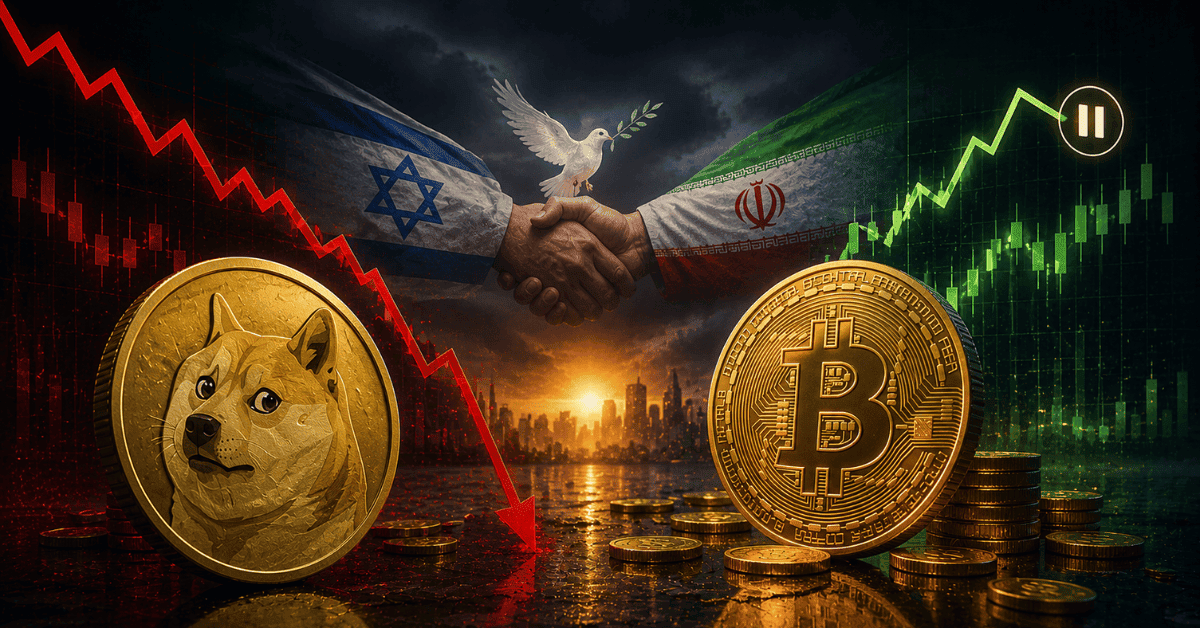
Dogecoin slides as the broader crypto market takes a breather after a strong run, even while global equities push higher on optimism around a possible U.S.-Iran deal.
DOGE fell around 4% in the past 24 hours, while Bitcoin held near $81,000 and Ether slipped below roughly $2,330. The move suggests crypto traders are not panicking, but they are becoming more selective after a sharp rebound across major tokens.

That split is the important part. Stocks are celebrating lower geopolitical risk, easing oil fears and hopes of a diplomatic breakthrough. Crypto, meanwhile, is digesting gains. Bitcoin is still holding a major psychological level, but higher-beta assets like Dogecoin are starting to show fatigue.
In plain English: the rally has not broken, but traders are no longer chasing everything.
Why Dogecoin Is Usually First to Feel the Cooldown
Dogecoin often acts like a high-beta version of crypto sentiment.
When traders are aggressively risk-on, DOGE can outperform because it is liquid, familiar and emotionally easy to trade. It has a huge brand, a long history and enough market depth to attract both retail traders and short-term momentum players.
But the same qualities work in reverse when the market cools. If Bitcoin stalls, Dogecoin can fall faster. If traders take profits, meme coins are often among the first assets they trim.
That appears to be happening now. Bitcoin is not collapsing. It is holding near $81,000 after a strong move. But Dogecoin’s 4% decline shows that traders are pulling back from the most speculative parts of the market.
This is a normal pattern. In crypto rallies, Bitcoin often moves first. Then Ethereum follows. Then large altcoins and meme coins get their turn. When the rally pauses, the order can reverse: meme coins weaken first, then altcoins, then Ethereum, while Bitcoin holds up best.
Bitcoin Near $81,000 Is Still the Main Market Signal
Bitcoin’s ability to hold around $81,000 matters more than Dogecoin’s one-day pullback.
The $80,000 to $82,000 zone has become a key psychological area. A clean hold above that range would suggest the market is consolidating before another possible move higher. A break back below $80,000, especially with rising volume, would make the recent rally look less secure.
For now, Bitcoin’s pause looks more like digestion than panic. Traders who bought the recent move are taking profits, while others are waiting to see whether macro conditions remain supportive.
The next few sessions are important. If Bitcoin continues to hold near $81,000 while Dogecoin and other riskier assets cool off, that could be healthy. It would mean the market is rotating rather than breaking.
If Bitcoin starts losing support, however, Dogecoin’s decline may look like an early warning.
Iran Ceasefire Optimism Is Helping Equities More Than Crypto
The macro backdrop is unusual.
Global stocks pushed to fresh records as hopes of a U.S.-Iran deal lifted sentiment, while oil prices eased as traders priced in lower energy-supply risk.
That should, in theory, be supportive for crypto. Lower oil prices can reduce inflation pressure. Lower inflation risk can improve expectations for central banks. Better liquidity expectations usually help risk assets, including Bitcoin and altcoins.
But markets do not always move in straight lines. Crypto had already rallied strongly into the optimism, so some traders may have decided to take profits while equities kept climbing.
There is also a difference between equities and crypto here. Stocks are being helped by earnings, rate expectations and relief around geopolitical risk. Crypto is more dependent on liquidity, speculative appetite and whether traders believe the Bitcoin breakout has more room to run.
That is why the same macro headline can lift stocks while crypto pauses.
The Oil Factor Still Matters
The Iran ceasefire narrative matters because of oil.
When tensions around Iran and the Strait of Hormuz rise, oil markets usually become more sensitive. Higher oil prices can feed inflation, pressure consumers and make central banks less willing to ease policy. That tends to hurt speculative assets.
If ceasefire optimism continues and oil prices stay lower, crypto could eventually benefit. A calmer energy market reduces one of the biggest macro threats to risk appetite.
But if talks fail or tensions return, the picture changes quickly. Oil could rebound, equities could cool and crypto could face another round of volatility.
That is why Bitcoin’s pause near $81,000 is not happening in isolation. Traders are watching diplomatic headlines, oil prices and stock-market risk appetite at the same time.
Ether Slipping Below $2,330 Adds to the Caution
Ether falling below roughly $2,330 adds another cautious signal.
Ethereum is not as defensive as Bitcoin, but it is not as speculative as most meme coins either. It sits in the middle of the crypto risk curve. When ETH weakens while BTC holds up, it can suggest capital is rotating toward the safest crypto asset rather than expanding across the whole market.
That matters for Dogecoin because meme coins usually need broad risk appetite. If Ethereum is already struggling to keep momentum, DOGE and other high-beta tokens may find it harder to rally.
Still, Ether’s move is not catastrophic by itself. Like Bitcoin, it may simply be cooling after a broader rebound. The concern would grow if ETH continues to fall while Bitcoin loses $80,000.
Why This Is Not Necessarily Bearish
Dogecoin’s decline does not automatically mean the crypto rally is over.
Markets need pauses. A rally that goes straight up without consolidation often becomes fragile. Pullbacks can reset leverage, cool overheated sentiment and give stronger buyers a chance to step in.
A 4% move in Dogecoin is not unusual. DOGE can easily move more than that during normal market volatility. The real question is whether the decline comes with broader deterioration: falling Bitcoin support, weak spot demand, rising liquidations or worsening macro headlines.
So far, the market looks cautious rather than broken.
Bitcoin holding near $81,000 is the stabilizing factor. As long as BTC remains firm, Dogecoin’s slide looks more like a risk reset than a full reversal.
What Traders Should Watch Next
The first thing to watch is Bitcoin’s $80,000 level.
If BTC holds above that zone, traders may regain confidence and rotate back into altcoins and meme coins. Dogecoin could recover quickly if risk appetite returns.
The second thing to watch is oil. If crude prices keep falling on ceasefire optimism, the macro backdrop could improve for crypto. If oil spikes again, risk assets may struggle.
The third thing to watch is Ethereum. ETH needs to stabilize above key short-term levels to show that the rally is not only about Bitcoin.
The fourth thing is Dogecoin volume. A low-volume pullback is less concerning. A sharp drop with heavy selling would suggest traders are exiting more aggressively.
The Bottom Line
Dogecoin slides because crypto traders are taking profits after a strong run, not because the entire market has collapsed.
Bitcoin is still holding near $81,000, which keeps the broader rally alive. Equities are pushing higher on Iran ceasefire optimism, but crypto is moving more cautiously after pricing in some of that relief earlier.
The story is not simply bearish or bullish. It is a market reset.
If Bitcoin holds $80,000 and oil stays calm, Dogecoin’s 4% drop may look like a temporary cooldown. If Bitcoin loses support and geopolitical risk returns, meme coins could be the first to feel deeper pressure.
For now, Dogecoin is telling traders that risk appetite has cooled. Bitcoin will decide whether that cooldown becomes something bigger.
Disclaimer: This article is for informational purposes only and does not constitute financial, investment, or legal advice. Always conduct your own research before making any investment decisions.