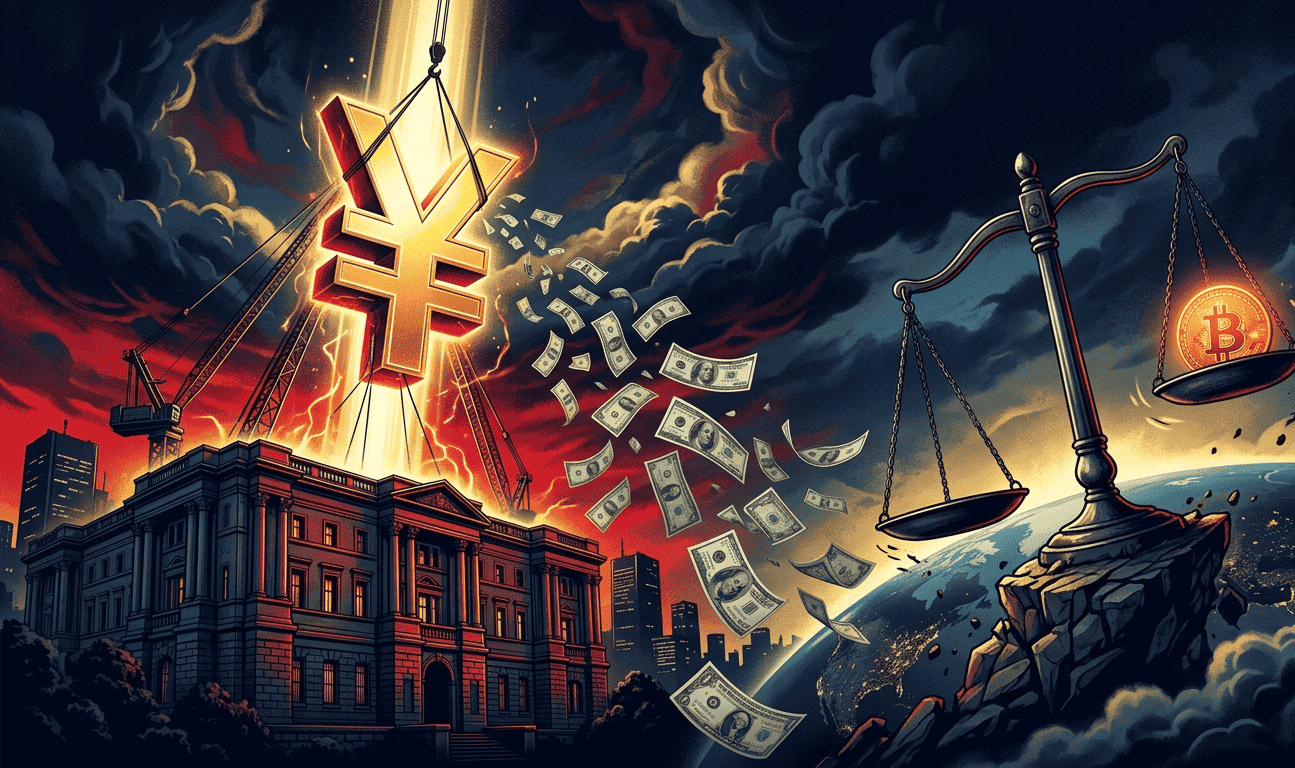
Japan just did something it has not done in almost two years. It reached into the currency market, grabbed the yen by the collar, and yanked it higher.
The Japanese government bought roughly $35 billion worth of yen on April 29, selling dollars to strengthen its currency. The move sent the dollar crashing 3% against the yen in a single session. It was the second-largest yen intervention on record.


You might be wondering what any of this has to do with Bitcoin. The answer is: everything. The last time Japan intervened this aggressively, in August 2024, Bitcoin dropped 13% in days. Whether history repeats depends on what happens next.
Why Did Japan Intervene?
Because the yen was falling off a cliff. The dollar had climbed to 160.7 yen, the weakest the Japanese currency has been in four decades. For a country that imports nearly everything it consumes, a weak yen means everything gets more expensive.
Japan imports 95% of its oil through the Strait of Hormuz. With Brent crude above $107 and the Hormuz blockade still in place, Japan is paying record prices for energy. A weak yen on top of expensive oil means Japanese consumers are getting squeezed from both sides.
The Bank of Japan projects inflation between 2.5% and 3% for the rest of the year. But that forecast assumes oil at $70 to $80 per barrel. Oil is at $107. If the yen keeps falling, inflation could overshoot badly. The government decided it could not wait any longer.
After the intervention, the dollar dropped from 160.7 to 155.5 yen. The message from Tokyo was clear: we will spend billions to protect our currency if we have to.
What Is the Carry Trade and Why Does Bitcoin Care?
This is where it gets important. Stay with me because this is simpler than it sounds.
Japan has had very low interest rates for decades. Borrowing yen is cheap. So hedge funds and big trading firms borrow yen at low rates, then invest that money in higher-returning assets like US stocks, bonds, and yes, crypto. This is called the “carry trade.”
The carry trade works great as long as the yen stays weak. You borrow cheap yen, invest in something that earns more, and pocket the difference. Easy money.
But when Japan intervenes and the yen suddenly gets stronger, the math flips. The money you borrowed is now more expensive to pay back. Your profits shrink or disappear. And you need to sell your investments quickly to cover the loss.
Here is where Bitcoin comes in. When carry traders need cash fast, they sell whatever is most liquid. Bitcoin is one of the most liquid assets on the planet. It trades 24/7. You can sell it at 3am on a Sunday. So when a yen squeeze hits and leveraged traders need to raise money, Bitcoin is often one of the first things they dump.
That is exactly what happened in August 2024. The yen carry trade unwound violently. Bitcoin dropped 13% in days. Stocks fell too. The entire global risk market shook because of a currency move in Tokyo.
Could That Happen Again?
Maybe. But there are reasons to think this time could play out differently.
The good news first. The intervention pushed the dollar index down 0.8%. The euro, pound, and Swiss franc all strengthened. A weaker dollar is historically good for Bitcoin because BTC tends to move in the opposite direction of the greenback. If the dollar keeps weakening, Bitcoin benefits even as the yen strengthens.
Coinbase Research’s Q2 outlook found that 75% of institutional investors view Bitcoin as undervalued at current levels. That means buying interest is waiting on the other side of any short-term dip. If the yen squeeze causes a quick 5% to 8% Bitcoin pullback, institutional buyers could step in and cushion the fall.
The bad news is what comes next. 65% of economists polled by Reuters expect the Bank of Japan to raise rates to 1% by the end of June. If a rate hike follows the intervention, the carry trade gets squeezed from both sides: a stronger yen AND higher borrowing costs. That combination could force a much bigger unwind than a single intervention alone.
Estimates of how much money sits in yen-funded carry trades range from $250 billion to $500 billion. Only about half of that unwound during the August 2024 episode. If the other half starts unwinding now, the selling pressure across risk assets could be significant.
Two Scenarios for Bitcoin
Scenario A: the soft landing. The BOJ raises rates gradually. Markets absorb the repricing without panic. The dollar weakens broadly. Bitcoin dips briefly, recovers within weeks, and resumes the rally that just pushed it above $80,000. This is the most likely outcome if everything stays orderly.
Scenario B: the hard landing. The BOJ raises rates sharply, or intervenes again, squeezing carry traders with enough force to trigger margin calls across global portfolios. Bitcoin drops 8% to 15% in days as leveraged funds sell everything liquid to raise cash. The $80,000 breakout fails and BTC retests $72,000 to $74,000.
The difference between the two comes down to speed. A slow, telegraphed adjustment is manageable. A fast, unexpected one is not.
What Should You Watch?
Three things.
First, the BOJ meeting in June. If they hike rates, the carry trade gets more expensive and another unwind becomes more likely. If they hold, the intervention was a one-off and the impact fades.
Second, the dollar index. If the dollar keeps weakening, Bitcoin’s inverse correlation works in its favour. If the dollar bounces back, the intervention did not change anything and yen weakness resumes.
Third, Bitcoin’s behaviour between $78,000 and $80,000 this week. If BTC holds above $80,000 despite the yen noise, the breakout is strong enough to absorb macro shocks. If it slips back below $78,000, the yen intervention may have been the trigger that kills the rally.
Japan’s problems feel far away. But in a world where hedge funds borrow yen to buy Bitcoin, what happens in Tokyo can land in your portfolio faster than you think.
Disclaimer: This article is for informational purposes only and does not constitute financial, investment, or legal advice. Always conduct your own research before making any investment decisions.