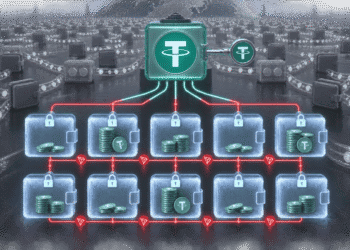
Ten fresh wallets withdrew 100 million LAB tokens from Bitget over a 12-hour window, raising new questions about supply control, exchange activity, and possible market manipulation after LAB’s sharp rally this month.
Lookonchain flagged the transfers on May 12, saying the wallets pulled about $480.33 million worth of LAB from Bitget. The on-chain tracker said the withdrawals represented 32.26% of LAB’s circulating supply, a large enough movement to catch traders’ attention quickly.


The move does not prove wrongdoing by itself. Large withdrawals can happen for custody, market-making, treasury management, or private investor activity. But when ten new wallets pull nearly one-third of a token’s circulating supply from one exchange in half a day, traders are right to ask who controls the wallets and what happens next.
Why the LAB Token Bitget Withdrawals Matter
Crypto markets can handle large transfers when the reason is clear. The problem with the LAB token withdrawals is that the public signal is big, but the explanation is still thin.
Ten wallets reportedly received between 8.6 million and 10.8 million LAB each from Bitget’s hot wallet, according to summaries of the on-chain movement. That kind of pattern looks organized, even if the purpose is not yet confirmed.
For traders, the concern is supply concentration. If a small group controls a large chunk of circulating tokens, price action can become fragile. A coordinated selloff can crush late buyers. A coordinated hold can squeeze available liquidity and make the chart look stronger than real demand.
That does not mean every large wallet movement is a scam. It means the market needs more transparency before treating the move as bullish or harmless.
What Happened With LAB This Month?
LAB had already been under the spotlight before the 100 million token withdrawal.
Reports around the move said LAB had rallied sharply earlier this month, with some coverage pointing to a 370% gain and other summaries describing an even larger run from earlier lows. The exact percentage depends on the starting point used, but the important part is clear: LAB was not moving quietly. It had already become a high-volatility token before the fresh wallets appeared.
That timing matters. Large withdrawals after a major rally can mean different things. Some traders may read it as whale accumulation. Others may see it as a warning that insiders or coordinated wallets are preparing for the next phase of a pump.
When a token runs hard, liquidity often becomes the real story. If many tokens leave an exchange, the visible sell supply may shrink. That can support price in the short term, but it can also make the market more dangerous. Thin liquidity can move both ways.
A token that rises quickly can fall just as fast when large holders decide to sell.
Why Traders Are Talking About Manipulation
The manipulation concerns around LAB are not coming only from the latest withdrawals.
On-chain investigator ZachXBT previously raised concerns about LAB and linked the token to alleged manipulation. Some coverage also noted that he had posted a $10,000 bounty tied to LAB founder Vova Sadkov.
Those claims should be handled carefully. Allegations from blockchain investigators can be useful, especially when they point to wallet behavior, but they are not the same as a court finding or a regulator’s conclusion.
Still, ZachXBT’s involvement is part of why traders are watching the LAB movement so closely. His public criticism of Bitget and LAB-related activity has turned what could have been a normal whale-transfer story into a broader trust issue around exchange listings, token supply, and market integrity.
The safer reading is this: the withdrawals are real enough to matter, the concentration is large enough to raise questions, and the market does not yet have enough public information to know the motive.
Ten fresh wallets withdrew 100M $LAB($480.33M) from #Bitget over the past 12 hours, 32.26% of the circulating supply.https://t.co/hKh7C1lvKA pic.twitter.com/c8ABgvBJ8R
— Lookonchain (@lookonchain) May 12, 2026
What Could the Ten Fresh Wallets Mean?
There are a few possible explanations.
The first is custody reshuffling. Bitget or connected parties may have moved tokens for storage, security, market-making, or operational reasons. That would be the least alarming version, but it still needs clear communication because the amount is large.
The second is private allocation movement. Tokens may have moved to investors, insiders, or entities connected to the project. If so, traders will want to know whether those wallets have lockups, sale limits, or any connection to earlier price action.
The third is whale positioning. A group may be moving LAB off exchange to reduce visible supply and influence market psychology. That can create a supply squeeze narrative, even when real demand is uncertain.
The fourth is the one traders fear most: preparation for distribution. If large holders move tokens through fresh wallets and later sell into market demand, late buyers can take the damage.
None of these explanations should be treated as proven yet. The next wallet activity will matter more than the first withdrawal. If the tokens sit still, the market may calm down. If they move to other exchanges, bridges, or trading venues, concerns will grow.
What Bitget and LAB Holders Should Watch Next
The cleanest next step would be a public explanation from Bitget or the LAB team.
A simple statement could clarify whether the wallets belong to custody partners, market makers, project entities, investors, or unrelated users. Without that, traders will keep filling the gap with speculation.
LAB holders should also watch whether the ten wallets start sending tokens again. Fresh wallets are not automatically suspicious, but fresh wallets holding nearly one-third of circulating supply deserve attention.
Market depth is another key signal. If LAB’s price keeps moving sharply on low volume, that suggests the token may be easier to push around. If liquidity improves and wallet behavior stays calm, the story becomes less urgent.
For now, this is a risk-management story. Traders do not need to decide whether LAB is good or bad. They need to understand that a token with major supply concentration can behave unpredictably.
Key Takeaway
The LAB token Bitget withdrawals are not automatically proof of a scam, but they are too large to ignore.
When ten fresh wallets pull 100 million tokens, worth roughly $480 million, from one exchange after a major rally, traders need better answers. Until Bitget, the LAB team, or on-chain evidence explains the movement clearly, this is a high-risk token story built around supply concentration and trust.
Disclaimer: This article is for informational purposes only and does not constitute financial, investment, or legal advice. Always conduct your own research before making any investment decisions.