South Korean customs authorities have uncovered more than ₩10 trillion, about $7.2 billion to $7.4 billion, in crypto-linked illegal foreign exchange transactions over the past five years, with Tether’s USDT reportedly used in many of the schemes.
The cases stretch back to 2021 and show how stablecoins have become a favored tool for moving value across borders without using the normal banking system. The reported transaction value jumped from ₩823.8 billion in 2021 to ₩4.7566 trillion in 2022, while the number of detected cases rose from 10 in 2021 to 16 in 2025.


The story is not that Tether itself caused the violations. The sharper point is that USDT has become useful in illegal forex schemes because it is liquid, dollar-linked, and easy to transfer quickly.
Why South Korea’s Tether Forex Case Matters
Stablecoins sit in a strange place in global finance. They feel like crypto to regulators, but they often behave like digital dollars for users.
That is exactly why enforcement agencies care. A person can buy USDT in one market, send it across borders, and convert it elsewhere without moving money through the traditional banking rails. For honest users, that can be useful. For illegal brokers, gambling operators, smugglers, and capital flight networks, it can be even more useful.
South Korea has strict foreign exchange rules, so unofficial cross-border settlement can quickly become a criminal issue. When crypto enters the picture, investigators have to follow both financial records and blockchain transfers.
The latest figures suggest this is no longer a small loophole. More than ₩10 trillion in detected cases over five years points to a mature shadow market, not a few isolated trades.
How USDT Fits Into Illegal Forex Schemes
USDT is popular because it tracks the U.S. dollar and trades almost everywhere. That makes it easy to use as a bridge between local currencies.
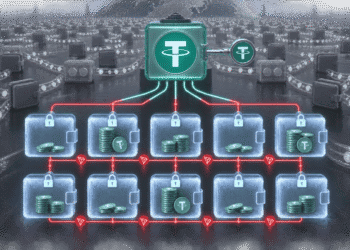
A simple scheme can look like this. Someone in South Korea gives won to an underground broker. The broker or its partner sends USDT to another country. A second broker then pays out local currency on the other side. Money has effectively crossed borders, but it may not appear as a normal bank transfer.
That is why stablecoins are attractive in illegal forex cases. They do not need bank branches, business hours, or correspondent banking networks. They move like crypto, but carry a dollar value people understand.
Recent Korean enforcement reports have also linked crypto-based forex activity to real-world trade. One report said authorities found schemes tied to gold and used car transactions, showing that stablecoin settlement is moving beyond purely digital markets.
This matters for readers because it shows how crypto crime is changing. The risk is not only hacks or stolen wallets. It is also the use of stablecoins as hidden plumbing for real-world money movement.
Why South Korea Is Tightening Crypto Enforcement
South Korea has been stepping up enforcement around illegal foreign exchange transactions this year.
Earlier in May, officials said a pan-government task force had uncovered about ₩600 billion in illegal foreign exchange transactions, including gambling funds, export proceeds, virtual accounts, and crypto-linked transfers. That effort involved multiple agencies and showed the government wants tighter coordination across customs, tax, and financial regulators.
That context helps explain why the ₩10 trillion figure matters now. It is not just a historical total. It fits into a broader push to track how crypto is being used in cross-border settlements, trade manipulation, and underground remittance networks.
For regulators, the challenge is speed. Stablecoin transactions can move quickly, and brokers can split activity across wallets, exchanges, and countries. Even when blockchain data is public, matching wallet activity to real people and businesses can take time.
That is why enforcement often starts with the off-chain pieces: customs records, bank accounts, trade invoices, broker networks, phone records, and exchange accounts. The blockchain trail helps, but it usually needs traditional investigation around it.
What This Means for Tether and Stablecoins
The South Korea case adds more pressure to the stablecoin industry, especially around anti-money laundering controls.
USDT is the world’s most widely used stablecoin by trading activity, so it naturally appears in many markets, legal and illegal. That scale is part of its strength, but it also brings scrutiny. Regulators will ask whether exchanges, brokers, and wallet services are doing enough to detect suspicious movement.
Tether has often said it works with law enforcement and can freeze wallets when legally required. Still, cases like this keep the spotlight on how stablecoins move through offshore exchanges, OTC desks, and informal brokers.
The industry’s argument is that stablecoins are neutral tools, like cash or bank transfers. Regulators usually accept that tools are not automatically illegal. But they still expect controls around the places where those tools touch customers, businesses, and fiat money.
That is where the pressure will land. Exchanges, payment firms, and OTC desks may face tougher questions about who is using stablecoins, where funds are going, and whether transfers match real business activity.
What Crypto Users Should Take From This
For ordinary crypto users, this story is a warning about compliance, not a reason to panic about stablecoins.
Using USDT is not illegal by itself. Millions of users hold stablecoins for trading, payments, savings access, or dollar exposure. The problem starts when stablecoins are used to dodge foreign exchange rules, hide gambling proceeds, fake trade payments, or move money for someone else without proper licensing.
Users should be careful with informal exchange offers, Telegram brokers, and anyone promising better rates for cross-border transfers. If someone asks you to move stablecoins on behalf of another person or business, that can create serious legal risk.
The same warning applies to businesses. Stablecoin payments need records, counterparties, invoices, and compliance checks. Faster money is still regulated money.
What Happens Next?
South Korea is likely to keep targeting crypto-linked forex violations because the numbers are now too large to ignore.
The next phase may involve more exchange data requests, closer monitoring of OTC brokers, tighter reporting rules, and stronger coordination with foreign authorities. Customs cases may also expand into tax, gambling, trade, and money laundering investigations.
Stablecoins will not disappear from cross-border payments. They are too useful. But cases like this show the line between innovation and evasion can get thin fast when money moves outside normal channels.
For the crypto industry, the lesson is clear. If stablecoins want a bigger role in global payments, they will need stronger compliance systems that can handle both blockchain speed and real-world regulation.
Key Takeaway
South Korea’s ₩10 trillion illegal forex trail shows how stablecoins have become part of real-world financial crime investigations.
USDT’s role in these cases does not make every stablecoin transfer suspicious. But it does show why regulators are watching dollar-linked crypto more closely, especially when it crosses borders outside licensed channels.
Disclaimer: This article is for informational purposes only and does not constitute financial, investment, or legal advice. Always conduct your own research before making any investment decisions.