



Bitcoin traded near $81,000 on May 13, 2026 after fresh ETF outflows and macroeconomic concerns weighed on investor sentiment across crypto markets. U.S. spot Bitcoin ETFs recorded another day of net withdrawals, extending a recent slowdown in institutional demand that has increased volatility around the world’s largest cryptocurrency.
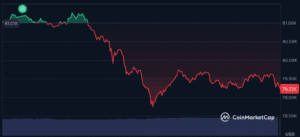
Market data showed Bitcoin briefly slipping below the $80,000 level during volatile trading before recovering slightly during the European session. Traders are now closely watching ETF flow data, inflation concerns, and geopolitical tensions for clues about Bitcoin’s next move.
Bitcoin ETF Outflows Return on May 13
Institutional demand softened again on May 13 as U.S. spot Bitcoin ETFs posted approximately $233 million in net outflows. The reversal followed several weeks of strong inflows that had previously helped push Bitcoin back above key resistance levels.
BlackRock’s iShares Bitcoin Trust and Fidelity’s Wise Origin Bitcoin Fund reportedly accounted for a large share of the withdrawals. Analysts said the latest move reflects growing caution among institutional investors after hotter-than-expected U.S. inflation data reduced expectations for near-term interest rate cuts.
ETF flows have become one of the biggest drivers of Bitcoin price action since spot Bitcoin products launched in the United States. When large inflows enter the market, ETF issuers typically purchase additional Bitcoin to back investor demand. Outflows can create the opposite effect.
That relationship has made daily ETF data increasingly important for traders looking to gauge institutional sentiment.
Why Bitcoin Fell Below $80,000
Bitcoin briefly dropped under $80,000 during overnight trading as broader risk sentiment weakened across financial markets. Analysts linked the move to a combination of macroeconomic pressure and profit-taking following Bitcoin’s recent rally above $82,000 earlier this month.
Fresh inflation concerns continue pressuring risk assets globally. Recent U.S. producer price data came in stronger than expected, reinforcing fears that interest rates could remain elevated for longer than investors previously anticipated.
Higher rates tend to hurt speculative assets because investors can earn safer returns elsewhere. Bitcoin often reacts sharply when Treasury yields rise or liquidity conditions tighten.
Geopolitical tensions also contributed to market caution. Traders monitored ongoing uncertainty surrounding U.S.-Iran negotiations and broader global macro risks throughout the day.
Institutional Investors Still Dominate Bitcoin Direction
Despite the recent weakness, institutional investors remain one of the biggest forces supporting Bitcoin’s long-term trend in 2026.
Glassnode reported that ETF inflows had turned firmly positive again in recent weeks before the latest pullback interrupted momentum. The firm noted that Bitcoin’s recovery from the mid-$60,000 range back above $80,000 was heavily supported by institutional demand and stronger spot buying activity.
However, analysts also warned that current market conviction remains weaker than previous bull cycles.
Capital inflows into Bitcoin remain below the levels seen during earlier explosive rallies. That has left the market more vulnerable to sudden volatility whenever ETF demand slows or macro conditions deteriorate.
Some on-chain analysts also observed increased whale activity moving Bitcoin onto exchanges, a signal that large holders may be preparing for additional selling pressure if market weakness continues.
Macro Events Could Decide Bitcoin’s Next Move
Several major macro catalysts are now converging at the same time, making this one of the most closely watched weeks for crypto markets in months.
Investors are monitoring Federal Reserve leadership developments, upcoming U.S. crypto legislation discussions, inflation commentary from Fed officials, and continued ETF flow updates.
Analysts say ETF flow momentum remains one of the clearest short-term indicators for Bitcoin direction. Positive weekly inflows above $300 million could help stabilize sentiment and support another rally attempt. Continued outflows, however, may increase the risk of deeper consolidation below current levels.
Options markets also continue showing defensive positioning, with traders buying downside protection against further volatility.
What Happens Next for Bitcoin?
Bitcoin now faces an important short-term test around the $80,000 to $81,000 range.
If ETF demand stabilizes and macro sentiment improves, traders believe Bitcoin could recover momentum relatively quickly. Strong institutional accumulation earlier this year showed how rapidly inflows can push prices higher when confidence returns.
On the other hand, continued outflows combined with rising yields or geopolitical escalation could pressure Bitcoin toward lower support levels.
For now, crypto markets remain highly sensitive to institutional positioning and broader economic conditions. That means ETF flow data will likely continue driving headlines throughout the rest of May.
FAQ
Why is Bitcoin falling on May 13, 2026?
Bitcoin weakened after U.S. spot Bitcoin ETFs recorded fresh outflows and investors reacted to inflation concerns and macroeconomic uncertainty.
How much left Bitcoin ETFs on May 13?
Market flow data showed roughly $233 million in net outflows from U.S. spot Bitcoin ETFs.
Are institutions still buying Bitcoin?
Yes, although demand has slowed recently. Analysts say institutions still hold significant Bitcoin exposure through ETFs despite short-term volatility.
Final Thoughts
Bitcoin’s recent pullback highlights how influential ETF flows have become in shaping short-term crypto market direction. Institutional demand helped drive Bitcoin’s rally earlier this year, but the May 13 outflows show sentiment can reverse quickly when macroeconomic uncertainty rises.
For now, traders are watching whether ETF demand stabilizes over the coming sessions. If inflows return, Bitcoin could regain momentum above recent highs. If outflows continue, volatility may remain elevated across the broader crypto market heading deeper into the second half of May 2026.
This article is for informational purposes only and does not constitute financial, investment, or legal advice. Always conduct your own research before making any investment decisions.