
Taiwan spent years regulating crypto through the lightest possible touch. Businesses operating in the country needed only to complete anti-money laundering registration and notify authorities of their service capacity. No comprehensive licensing. No reserve mandates. No specific stablecoin framework. The approach treated crypto as a compliance issue rather than a fully regulated financial sector.
That era just ended.


Taiwan’s Legislative Yuan passed the Virtual Asset Service Act in its third reading on Tuesday, sending the bill to President Lai Ching-te for formal signing. Lai is expected to promulgate the law within 10 days, after which the Executive Yuan will set the official effective date. The legislation transforms Taiwan’s crypto oversight from baseline AML registration into full-scale regulatory supervision covering licensing, custody, governance, and market conduct.
The core shift is who decides whether a platform gets to operate at all. Under the new law, every virtual asset service provider must obtain explicit approval from the Financial Supervisory Commission (FSC) before operating. Registration alone is no longer enough. The FSC becomes the sole licensing authority with broad supervisory powers over governance, custody, and conduct.
For the broader crypto industry, Taiwan joins a rapidly expanding list of jurisdictions formalizing crypto regulation. Europe’s MiCA framework took full effect this week. Japan launched multiple bank-backed stablecoins. Australia’s ASIC no-action position expired. The global regulatory environment is converging toward comprehensive licensing regimes, and Taiwan’s law represents another significant Asian market joining that trend.
What the Law Actually Requires
The Virtual Asset Service Act sorts crypto businesses into seven distinct provider categories, each requiring an explicit FSC license before operating. The categories include digital asset exchanges, specialized trading platforms, transfer services, custodians, underwriters, and lending service providers.
The licensing requirements go well beyond the previous AML registration model. The law mandates internal controls, cybersecurity standards, asset listing reviews, customer asset segregation, outsourcing rules, civil liability provisions, and financial reporting requirements. The comprehensive scope moves Taiwan from monitoring crypto for money laundering to fully supervising how crypto businesses operate.
Existing firms that completed AML registration before the law takes effect receive a transition period. They have 12 months to submit license applications and up to 21 months total to obtain full FSC approval. The FSC can extend the window by three months, but only once. Firms that fail to complete the process by the deadline cannot continue virtual asset business in Taiwan.
Importantly, the transition clock doesn’t start on the July 1 vote. It starts once the Executive Yuan sets an official implementation date, which follows presidential promulgation expected within roughly ten days. The sequencing means the actual compliance deadlines likely fall in 2028, giving existing businesses meaningful time to adapt.
The criminal penalties represent the sharpest departure from the previous regime. Operating an unlicensed virtual asset service or issuing stablecoins without approval carries up to seven years in prison and fines of up to NT$100 million (approximately $3.14 million). Fraud or market manipulation carries prison terms of three to ten years and fines ranging from NT$10 million to NT$200 million (approximately $6.28 million). The criminal-grade exposure raises the stakes substantially for platforms serving Taiwan users.
The Stablecoin Framework
The stablecoin provisions represent the most restrictive element of the new law and the part with the broadest implications for the global stablecoin market.
Stablecoin issuers face a higher bar than other crypto businesses. They must obtain approval from both the FSC and Taiwan’s central bank (the Central Bank of the Republic of China) before issuing tokens. The dual-approval requirement gives the central bank direct oversight of stablecoin issuance, reflecting concerns about how dollar-pegged and other fiat-referenced stablecoins could affect monetary policy and financial stability.
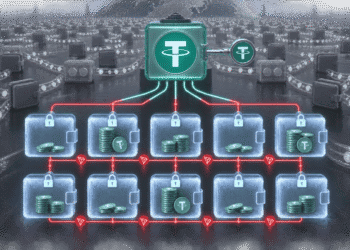
The reserve requirements are strict. Issuers must maintain 100% reserve asset backing at all times. Reserves must be placed in segregated trust accounts within domestic financial institutions. The reserves are legally insulated from corporate bankruptcy estates, protecting stablecoin holders if an issuer fails. Issuers must undergo mandatory independent audits and comply with periodic public disclosure requirements.
The most significant restriction limits domestic stablecoin issuance to banks. This measure ties the emerging asset class to Taiwan’s established financial institutions rather than allowing crypto-native startups to issue stablecoins directly. The bank-centric approach mirrors the structure emerging in Japan, where megabanks are launching stablecoins, and reflects a broader regulatory preference for anchoring stablecoins to regulated deposit-taking institutions.
The framework aligns with the global trend toward strict stablecoin regulation. The US GENIUS Act requires 100% reserve backing in qualifying assets. Europe’s MiCA imposes similar requirements. The Bank for International Settlements recently warned of foreign-exchange risks posed by dollar-pegged stablecoins. Taiwan’s approach fits this pattern of treating stablecoins as systemically important financial instruments requiring bank-grade oversight.
In an unexpected expansion, lawmakers also passed a supplemental resolution directing the FSC to submit a comprehensive plan within one year outlining how Taiwan can safely introduce regulated crypto derivative products. The provision signals that Taiwan intends to eventually allow regulated derivatives trading, positioning the market for broader institutional participation over time.
What This Means for the Market
The Taiwan law carries specific implications for different market participants that extend beyond the immediate regulatory changes.
For crypto-native businesses operating in Taiwan, the law forces a fundamental shift. Kevin Cheng, a Taiwanese lawyer and founder of crypto consultancy Harmony Governance Advisors, told The Block that many crypto businesses that previously operated in a legal gray area will no longer be able to rely on regulatory ambiguity. The fitness bar means some existing platforms may not qualify for licenses independently, pushing them toward partnerships or exit.
For traditional financial institutions, the law creates opportunity. The framework allows banks and established financial firms to enter the virtual asset sector, leveraging their compliance expertise to compete directly with crypto-native businesses. The bank-centric stablecoin provisions specifically position traditional institutions to dominate stablecoin issuance. Increased competition from well-resourced traditional players could reshape Taiwan’s crypto market structure.
For global stablecoin issuers, the Taiwan framework adds another jurisdiction with strict requirements. Circle, Tether, and other major issuers seeking to serve Taiwan users must navigate the dual central bank and FSC approval process. The bank-only domestic issuance restriction means foreign stablecoin issuers face particular challenges in the Taiwan market compared to jurisdictions with more open frameworks.
For traders, the practical implication is counterparty risk. Platforms serving Taiwan users now face criminal-grade exposure for operating without an FSC license. Traders should consider where they custody assets and whether their platforms are pursuing proper licensing. The transition period provides time, but the eventual enforcement environment will be far stricter than the previous AML-only regime.
For the broader regulatory landscape, Taiwan’s law reinforces the global convergence toward comprehensive crypto regulation. Kenya and Ghana signed virtual asset laws in recent months. Japan launched bank-backed stablecoins. The EU’s MiCA took full effect. Australia’s licensing regime is advancing. Each new framework adds to the pattern of jurisdictions moving from patchwork guidance to comprehensive statutes.
Titan Cheng, chairman of the Taiwan VASP Association and founder of crypto exchange BitoGroup, said the industry group plans to work closely with regulators during implementation. The association will help develop detailed sub-rules covering licensing standards, personnel requirements, internal controls, and stablecoin procedures. The collaborative implementation approach suggests Taiwan aims to balance strict oversight with practical workability.
The FSC framed the framework as designed to improve investor protection while supporting the sustainable development of Taiwan’s digital asset market. Whether the balance between strict oversight and industry growth actually materializes will be determined during the implementation phase as the detailed sub-rules take shape over the coming year.
FAQ
What does Taiwan’s Virtual Asset Service Act require?
The law requires all virtual asset service providers to obtain licenses from the Financial Supervisory Commission (FSC) before operating, replacing the previous AML-registration-only model. It covers seven provider categories including exchanges, custodians, and lending services, with requirements for internal controls, cybersecurity, customer asset segregation, and financial reporting. Existing AML-registered firms have 12 months to apply for licenses and 21 months total to obtain approval once the law takes effect.
What are the stablecoin rules?
Stablecoin issuers must obtain approval from both Taiwan’s central bank and the FSC before issuing tokens. They must maintain 100% reserve backing at all times, place reserves in segregated trust accounts within domestic financial institutions, undergo mandatory independent audits, and comply with regular public disclosures. Domestic stablecoin issuance is restricted to banks, tying the asset class to established financial institutions rather than crypto-native startups.
What are the penalties for violations?
Operating an unlicensed virtual asset service or issuing stablecoins without approval carries up to seven years in prison and fines of up to NT$100 million (approximately $3.14 million). Fraud or crypto market manipulation carries prison terms of three to ten years and fines ranging from NT$10 million to NT$200 million (approximately $6.28 million). The criminal penalties represent a sharp departure from the previous AML-only regulatory approach.
Disclaimer: This article is for informational purposes only and does not constitute financial or legal advice. Cryptocurrency investments carry significant risk. Always conduct your own research before making any investment decisions.