

• About Us
  • Advertise
AltcoinReporter
  • Home
  • News
    • Bitcoin
    • Ethereum
    • Blockchain
    • Altcoins
    • DeFi
    • NFT
  • Press Releases
  • Reviews
    • Exchanges
    • NFT Marketplaces
    • Wallets
  • Market Analysis
  • Contact Us
No Result
View All Result
  • Home
  • News
    • Bitcoin
    • Ethereum
    • Blockchain
    • Altcoins
    • DeFi
    • NFT
  • Press Releases
  • Reviews
    • Exchanges
    • NFT Marketplaces
    • Wallets
  • Market Analysis
  • Contact Us
No Result
View All Result
AltcoinReporter
No Result
View All Result
Home Altcoins

Polkadot’s dotUSD Bug Had a Fix for Four Months Before Attackers Used It

Salar Salek by Salar Salek
November 3, 2026
in Altcoins, DeFi
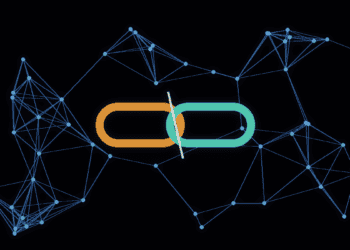
Abstract illustration of linked chain nodes with one broken ledger column draining into a liquidity pool

The dotUSD XCM bug that cost the Polkadot Treasury about $1.38 million last month had already been fixed in code for four months. It just never made it into the runtime that was running on Asset Hub.

That is the central admission in the incident review Parity Technologies published on the Polkadot forum late on Monday. The report covers the attack on dotUSD, the network’s native stablecoin, between 24 and 26 October, and it is unusually direct about where the process broke down.
Related articles

Abstract illustration of a chain of blocks with tokens flowing from three flagged blocks into a vault

Core Hard Fork Moves 68M CORE Back to b14g as Bounty Clock Runs to Nov 6

November 3, 2026
Abstract stacks of glowing tokens shrinking step by step under a descending line, illustrating a gradual cut in NEAR token issuance

NEAR Issuance Cut to 1.6% Clears House of Stake Vote; Validators Decide Next

November 2, 2026

What the attacker actually did

XCM, the messaging format Polkadot chains use to move assets, is supposed to be all or nothing. If a program fails, none of its changes should stick. Parity said a bug in the XCM executor on Asset Hub broke that rule in certain cases.

The attacker built programs around the WithdrawAsset instruction that failed on purpose. The account debits were correctly reversed, but the matching cut to dotUSD’s recorded total supply was not. Run that loop enough times and the chain believed far fewer dotUSD existed than were actually sitting in wallets. Parity’s first notice on 26 October put the gap at roughly 4.06 million dotUSD.

On its own, that is a bookkeeping error. It became a money problem because of how the Hub’s built-in exchange priced the DOT/dotUSD pool. The exchange treated the pool’s dotUSD reserve as the smaller of two numbers: what the pool held, or the asset’s total recorded supply. Normally the second number is always bigger, so the cap never matters. Once the recorded supply fell below the pool’s real balance, the pool started quoting a distorted rate, and traders swapped dotUSD for DOT at prices that should not have existed.

The only liquidity provider in that pool was the Polkadot Treasury. Parity estimates the loss at about $1.381 million in DOT and says no user funds were lost. It also says on-chain evidence has not shown that whoever triggered the bug was the same party that profited from the arbitrage.

The stablecoin itself held up. dotUSD stayed fully backed, and its Peg Stability Module kept minting and redeeming at 1:1 against USDT throughout. The understated supply did restrict redemption capacity until it was corrected.

A fix that sat on the shelf

The part of the review that will draw the most attention is the timeline. Parity said the flaw was reported through its bug bounty programme in June 2026 and fixed in pull request #11910, which GitHub shows was merged on 25 June. It was rated medium severity at the time, because dotUSD had not launched and nobody had mapped how the bug would interact with it. It has since been reclassified as critical.

The fix missed the cut-off for the stable-2606 release of the Polkadot SDK, was folded into stable-2609 instead, and was not included in the production runtimes that were hit.

Then came the disclosure dispute. On 20 October, Parity said, the same researcher who had filed the bounty report posted a public forum comment pointing to PR #11910 as a vulnerability fix. Parity said that broke the programme’s terms, and that the comment was deleted a few hours after it raised the issue with the reporter. Parity believes the comment may have handed attackers enough context to find the bug and reach it through other routes in the days that followed. Parity did not name the researcher.

Four days, two runtimes

Ecosystem partners flagged suspicious activity on 24 October, and Parity said it reproduced the issue within hours. The attack messages had come from Ethereum over Snowbridge, though Parity stressed the bug sat in the XCM executor and was reproduced without the bridge. Snowfork halted its own consensus relayers, which stopped the attack for a while, and Runtime 2.5.1 with the fix went to OpenGov the same day.

On 26 October the attacker ran its own consensus relayer and resumed, about six hours before the upgrade was applied on-chain. Parity then moved what was left in the pool to safety. Referendum #1961 followed on 27 October, and Runtime 2.5.2 was enacted on 30 October. That upgrade rebuilt dotUSD’s recorded supply from actual account balances, without touching any holdings, and fixed a Snowbridge weight problem the first patch had caused. The recovered dotUSD went back to the Treasury.

For a sense of how cross-chain plumbing keeps failing in new ways, our earlier look at the $35 million wave of bridge hacks covers similar ground.

What Parity says will change

The review lists three areas of work:

  • Detection: reassessing bug reports as new features ship, more testing of XCM failure cases, and an automated agentic framework that scans pull requests and existing code.
  • Speed: simpler release and backport processes, and checks that a merged fix has actually reached deployed runtimes.
  • Monitoring: alerts for unusual changes in asset issuance, plus clearer incident response steps.

Parity is also reviewing existing security reports to see whether any should be upgraded now that dotUSD is live, and it cited the risk of increasingly sophisticated AI-assisted attacks.

The lesson travels beyond Polkadot. A medium-severity bug became a critical one because a new product was built on an assumption the bug could break, and a DEX trusted a supply figure that turned out to be writable by an attacker.

FAQ

Did dotUSD holders lose money?
Parity says no. Account balances were never changed, dotUSD stayed fully backed, and the Peg Stability Module kept 1:1 USDT redemptions running. The loss fell on the Treasury’s liquidity position.

How much was lost?
About $1.381 million in DOT, according to Parity’s review. The first notice on 26 October estimated $1.3 million.

Is the bug fixed on-chain now?
Yes. Runtime 2.5.1 carried the XCM fix, and Runtime 2.5.2, enacted on 30 October, corrected dotUSD’s recorded supply.

Disclaimer: This article is for informational purposes only and does not constitute financial advice.

Salar Salek

Salar Salek Verified AltcoinReporter Author

Salar covers cryptocurrency markets, blockchain technology, DeFi, and emerging digital asset trends for AltcoinReporter. With a background in technology and finance, he has been actively following and investing in the...

Read More
Tags: dotUSDParityPolkadotStablecoinsXCM

Related Posts

Abstract illustration of a chain of blocks with tokens flowing from three flagged blocks into a vault

Core Hard Fork Moves 68M CORE Back to b14g as Bounty Clock Runs to Nov 6

by Salar Salek
November 3, 2026
0

Core's Fermi fork zeroed three exploit-linked balances and moved 68.15 million CORE to a b14g recovery contract. Nothing more has...

Abstract stacks of glowing tokens shrinking step by step under a descending line, illustrating a gradual cut in NEAR token issuance

NEAR Issuance Cut to 1.6% Clears House of Stake Vote; Validators Decide Next

by Salar Salek
November 2, 2026
0

House of Stake voters backed HSP-029 with 99.97% of veNEAR cast, setting a 24-month ramp from 2.5% to 1.6% maximum...

Illustration of a broken chain link being rejoined over a glowing network of connected nodes, representing the Initia network restart after an exploit

Initia Restarts Its L1 and Rollups 10 Days After a $2.7 Million MoveVM Exploit

by Salar Salek
November 2, 2026
0

Initia's L1 and rollups are running again after a MoveVM bug let an attacker bridge out about $2.7 million. The...

Abstract illustration of a row of glowing server nodes behind a translucent shield with a crack, representing blockchain validators exposed to an operating system flaw

Anza Urges Solana Validators to Block Critical Linux Kernel Flaw Ubuntu Has Not Patched

by Salar Salek
November 2, 2026
0

Anza has urged Solana mainnet-beta validators to mitigate CVE-2026-98432, a remotely triggerable Linux kernel bug rated 9.8 that Ubuntu has...

Abstract illustration of scattered digital tiles spilling out of an open vault grid, representing NFTs taken from a marketplace escrow

Talis Protocol Exploit Takes 5,700 NFTs on Injective, Nets Attacker About $3,100

by Salar Salek
November 1, 2026
0

An attacker drained about 5,700 escrowed NFTs from Injective marketplace Talis and sold most to bid bots for pennies, netting...

Load More
  • Trending
  • Comments
  • Latest
Best Crypto News Apps 2026: CoinGecko vs TradingView vs CoinMarketCap

Best Crypto News Apps 2026: CoinGecko vs TradingView vs CoinMarketCap

May 6, 2026
Pi Network Completes Protocol 23 and Sets June 2 Deadline for Node Operators

Pi Network Completes Protocol 23 and Sets June 2 Deadline for Node Operators

May 27, 2026
Solana Alpenglow Upgrade 2026: Launch Date, Features, and What It Means for SOL

Solana Alpenglow Upgrade 2026: Launch Date, Features, and What It Means for SOL

April 18, 2026
Lost Bitcoin

Crypto Throwback: The 12-Year Search for a $724M Lost Bitcoin Hard Drive Finally Ended

April 29, 2026
North Korea’s Six-Month Con: How Hackers Stole $286M from Solana’s Drift Protocol

North Korea’s Six-Month Con: How Hackers Stole $286M from Solana’s Drift Protocol

0
Ethereum’s Glamsterdam Upgrade: What It Is and Why It Matters in 2026

Ethereum’s Glamsterdam Upgrade: What It Is and Why It Matters in 2026

0
Bitcoin’s Worst Q1 Since 2018: Can April Turn the Tide?

Bitcoin’s Worst Q1 Since 2018: Can April Turn the Tide?

0
Former UK Chancellor Kwarteng Leads Bitcoin Firm as Farage Backs BTC

Former UK Chancellor Kwarteng Leads Bitcoin Firm as Farage Backs BTC

0
Abstract illustration of a shrinking stack of gold discs beside rows of glowing server racks

Cipher Digital Sold Most of Its Bitcoin as Mining Revenue Fell 71% in Q3

November 3, 2026
Abstract illustration of linked chain nodes with one broken ledger column draining into a liquidity pool

Polkadot’s dotUSD Bug Had a Fix for Four Months Before Attackers Used It

November 3, 2026
Abstract illustration of gold coins draining from a tall glass container into a shallow tray against a dark background

Bitcoin ETFs Lose $1.04 Billion in Two Sessions as IBIT Posts Its Largest Outflow Since June

November 3, 2026
Abstract illustration of orange and blue blocks balanced evenly on a scale above a chain, representing restored LBTC reserves

Liquid Restores 1:1 Bitcoin Backing for LBTC, but Direct Peg-Outs Still Wait

November 3, 2026

About

AltcoinReporter

AltcoinReporter is an independent crypto news platform built to keep you ahead of the market. We cover everything from Bitcoin and altcoins to DeFi, NFTs, regulation, and emerging blockchain technology.


Our editorial team delivers accurate news, detailed market analysis, and expert insights, with every article written and reviewed by named contributors. We are committed to transparent, independent reporting our readers can trust.

News

  • Altcoins
  • Bitcoin
  • Blockchain
  • DeFi
  • Ethereum
  • NFT

Reviews

  • Exchanges
  • NFT Marketplaces
  • Wallets

Company

  • About Us
  • Advertise
  • Write for Us
  • Contact Us

Disclaimer: AltcoinReporter.com provides cryptocurrency news for informational purposes only, not financial, investment, or legal advice. Crypto markets carry significant risk. Always do your own research and consult a financial advisor before investing. We may earn compensation through affiliate links, ads, and sponsored content, which are clearly labelled. AltcoinReporter is not responsible for any financial losses resulting from information on this site.

  • Cookie Policy
  • Ethics
  • Corrections
  • Editorial Standards
  • Privacy Policy
  • Terms & Conditions

© 2026 AltcoinReporter. All rights reserved.

No Result
View All Result
  • Home
  • News
    • Altcoins
    • Bitcoin
    • Blockchain
    • DeFi
    • Ethereum
    • NFT
  • Press Releases
  • Reviews
    • Exchanges
    • NFT Marketplaces
    • Wallets
  • Market Analysis
  • Contact Us

© 2026 AltcoinReporter. All rights reserved.