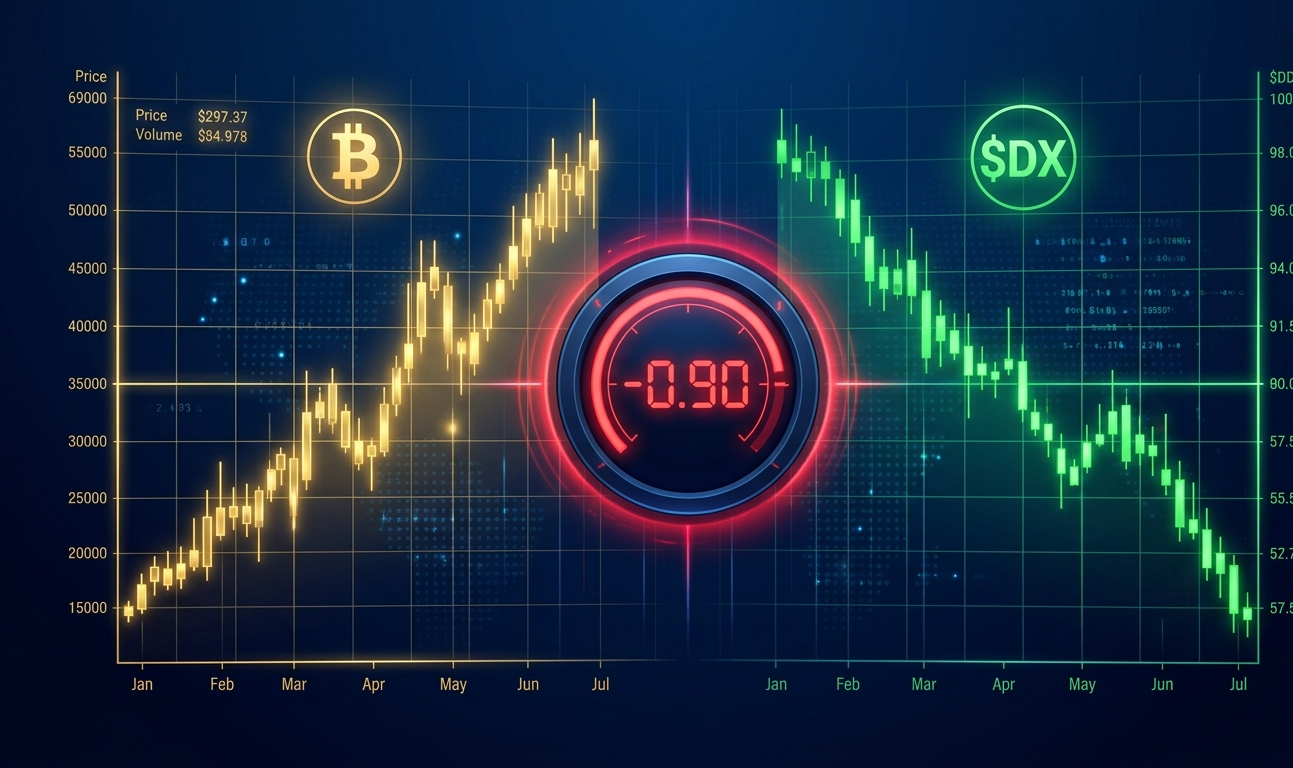
When the dollar goes down, Bitcoin goes up. That relationship has existed for years, but right now it is stronger than it has been since 2022. CoinDesk reported on April 24 that Bitcoin and the US Dollar Index are moving in near-perfect opposition, the most extreme inverse correlation in almost four years.
Bitcoin is holding above $78,000. The DXY, which measures the dollar against a basket of major currencies, has been sliding since March. The two charts look like mirror images. For traders trying to figure out what happens next, this relationship matters more than almost anything else right now.


Why Are Bitcoin and the Dollar Moving in Opposite Directions?
The simple version: when the dollar gets weaker, assets priced in dollars get cheaper for everyone else in the world. Bitcoin is priced in dollars. So when the DXY drops, international buyers get more BTC for their money, and demand goes up.
But there is more to it than just maths. The dollar is weakening because the US economy is under pressure. The Iran war pushed oil above $89. Inflation is sticky. The Fed cannot cut rates yet. Government debt keeps climbing. Foreign investors are starting to question whether the dollar deserves its status as the world’s reserve currency.
Bitcoin benefits from that doubt. Every time confidence in the dollar slips, some of that capital flows into alternatives. Gold is one. Bitcoin is another. The narrative that BTC is “digital gold” gets louder every time the dollar drops and Bitcoin rallies at the same time.
How Strong Is the Correlation Right Now?
Very strong. The 30-day rolling correlation between BTC and DXY has dropped below -0.80, meaning they move in opposite directions more than 80% of the time. The last time it was this extreme was mid-2022, when the dollar was surging and Bitcoin was crashing from $48,000 to $16,000. Same relationship, just running the other way.
The pattern has held through some wild weeks. Bitcoin rallied when the ceasefire was extended. The dollar fell. Bitcoin pulled back when oil spiked. The dollar rose. Over and over, the two assets have moved like a seesaw.
Does This Mean Bitcoin Is Becoming a Safe Haven?
That is the big debate. Bitcoin’s supporters have been arguing for years that BTC should trade like gold, rising when the dollar falls and acting as a hedge against inflation and currency debasement. For most of Bitcoin’s history, that has not been true. BTC traded like a tech stock, rising and falling with the Nasdaq.
Something shifted in 2026. Bitcoin broke out of its February range while the Nasdaq was still choppy. It rallied on ceasefire headlines while equities gave back gains. It held above $76,000 while the S&P wobbled on oil price spikes.
None of that proves Bitcoin is a safe haven. One quarter of data does not rewrite a decade of correlation patterns. But the fact that BTC is behaving differently from stocks while tracking inversely with the dollar is exactly the kind of behaviour its supporters have been waiting for.
Market analyst Mati Greenspan told CoinDesk that the next leg up for Bitcoin will likely be driven by nation-state adoption rather than retail speculation. If countries start diversifying reserves away from dollars and into Bitcoin, the inverse correlation would become structural rather than temporary.
What Should Traders Watch Next?
The DXY is the signal. If it keeps falling, Bitcoin has a tailwind that could push it through $80,000 and toward the 200-day moving average around $87,500. If the dollar rebounds on a surprise rate hike or a peace deal that crashes oil prices, Bitcoin could lose its momentum just as quickly.
The FOMC meeting on April 28 and 29 is the next catalyst. A hawkish tone strengthens the dollar and pressures Bitcoin. A dovish tone weakens the dollar and gives Bitcoin room to run. Kevin Warsh’s confirmation hearing this week suggested he would not rush to cut rates, but he also called crypto “part of the fabric” of finance.
For now, the trade is simple. Watch the dollar. If DXY keeps sliding, Bitcoin keeps climbing. If the dollar finds a floor, Bitcoin probably does too. The two assets are locked together in opposite directions, and that relationship is not going away anytime soon.
Frequently Asked Questions
Why does Bitcoin go up when the dollar goes down?
A weaker dollar makes Bitcoin cheaper for international buyers, increasing demand. It also signals economic uncertainty, which pushes investors toward alternative stores of value like Bitcoin and gold.
How strong is the Bitcoin-dollar inverse correlation in 2026?
The 30-day rolling correlation between BTC and the DXY has dropped below -0.80, meaning they move in opposite directions more than 80% of the time. This is the strongest inverse reading since mid-2022.
Is Bitcoin becoming a safe haven asset?
Bitcoin is showing safe-haven characteristics in 2026, rallying against a falling dollar while diverging from stock market movements. However, one quarter of data does not confirm a permanent shift, and the pattern could reverse if macro conditions change.