
When the bank that looks after more money than any other institution on the planet starts offering crypto services in one of the world’s fastest-growing financial hubs, it’s worth paying attention.
BNY Mellon, which oversees approximately $59.4 trillion in assets under custody and serves over 90% of Fortune 100 companies, announced on Thursday that it’s launching cryptocurrency custody services in Abu Dhabi. The bank will start with Bitcoin and Ethereum, with plans to expand into stablecoins and tokenized assets down the line.


This isn’t a small fintech testing the waters. This is the oldest bank in America and the largest custodian in the world planting a flag in the Middle East’s digital asset market.
What Is Crypto Custody and Why Does It Matter?
Before diving into the details, it helps to understand what custody actually means in this context.
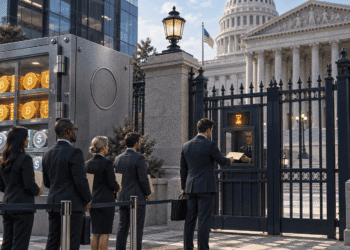
When large institutions like pension funds, hedge funds, or asset managers want to hold Bitcoin or Ethereum, they can’t just download a wallet app on their phone. They need a regulated custodian, a trusted third party that securely stores the assets on their behalf and provides the insurance, compliance, and reporting that institutional investors require.
Think of it like a bank vault, but for digital assets. Without trusted custody services, most large institutions simply won’t touch crypto. The regulatory and fiduciary risk is too high.
That’s why BNY Mellon’s move matters so much. When the world’s most established custodian offers crypto storage, it removes one of the biggest barriers that keeps institutional money on the sidelines.
How the Abu Dhabi Partnership Works
BNY isn’t building this from scratch on its own. The bank has partnered with two local firms, Finstreet Limited and ADI Foundation, to build regulated digital asset infrastructure within the Abu Dhabi Global Market (ADGM).
Finstreet is a digital market infrastructure company backed by Abu Dhabi’s International Holding Company through Sirius International Holding. ADI Foundation operates sovereign-grade blockchain infrastructure under the ADI Chain banner. Together, they bring local regulatory expertise and technical infrastructure that BNY can plug into.
The first phase focuses on Bitcoin and Ethereum custody for Finstreet’s existing client base. From there, the partnership plans to expand into stablecoins and tokenized real-world assets, connecting to ADI Foundation’s blockchain rails.
Hani Kablawi, executive vice chair at BNY, said the UAE is entering a new phase of financial development. By operating within ADGM’s regulatory framework, BNY can serve institutional clients who want crypto exposure through a globally recognised custodian with a clear legal structure around it.
🚨BNY EXPANDS CRYPTO CUSTODY TO UAE
$59.4T global financial services platform BNY will offer digital asset custody in Abu Dhabi via local partners, starting with $BTC and $ETH.
Plans include expanding to stablecoins and tokenized assets, as the UAE pushes to become a global hub… pic.twitter.com/mFujcITtYA
— Coin Bureau (@coinbureau) May 7, 2026
Why Abu Dhabi?
The UAE has been aggressively positioning itself as a global hub for digital finance, and Abu Dhabi is at the centre of that strategy.
ADGM has built one of the most progressive regulatory frameworks for digital assets in the world. It offers clear licensing pathways, investor protections, and a legal structure that international firms can work within. That’s attracted a wave of crypto companies and blockchain projects looking for a stable, well-regulated base in the Middle East.
Dubai gets most of the headlines, but Abu Dhabi’s ADGM is where the institutional infrastructure is being built. The free zone model gives firms the ability to operate under international standards while accessing the broader Gulf and Middle Eastern markets.
For BNY, the decision to launch here rather than in, say, Singapore or London reflects where institutional demand for crypto custody is growing fastest. Gulf sovereign wealth funds, family offices, and regional asset managers have been increasing their crypto allocations over the past two years, and they need custody solutions from providers they already trust.
BNY’s Broader Crypto Strategy
This Abu Dhabi expansion isn’t happening in isolation. BNY has been steadily building its digital asset capabilities over the past few years.
The bank was the first US global systemically important bank (G-SIB) to offer crypto custody services. It already serves as custodian for several major crypto ETFs, including the Morgan Stanley Bitcoin ETF. Earlier this year, BNY launched tokenized deposits for institutional investors, signalling its intent to move beyond simple custody into broader blockchain-based financial services.
With $2.1 trillion in assets under management on top of its $59.4 trillion in custody, BNY has the scale to move markets. When a bank of that size says it’s expanding crypto services, it sends a clear message to the rest of the financial industry: digital assets are no longer optional.
The plan to eventually offer stablecoin and tokenized asset custody in Abu Dhabi is particularly significant. As the tokenization market continues to grow (it’s now worth over $19 billion globally), institutions will need custody solutions for a much wider range of digital assets beyond just Bitcoin and Ethereum. BNY is positioning itself to be the provider they turn to.
What This Means for the Crypto Market
Every time a major traditional financial institution takes a visible step into crypto, it lowers the barrier for the next one to follow. BNY’s Abu Dhabi launch is the latest in a string of institutional moves this week that collectively paint a picture of an industry reaching a tipping point.
Amazon launched stablecoin-powered AI agent payments. JPMorgan settled tokenized Treasuries across borders in seconds. Twenty banks are queuing up to issue stablecoins through Anchorage Digital. Visa completed stablecoin credit card settlement in Canada. And now the world’s largest custodian is offering crypto storage in one of the fastest-growing financial centres on the planet.
For retail investors, these developments may not change your day-to-day experience right away. But they’re building the infrastructure that will make crypto more accessible, more liquid, and more integrated with traditional finance over the coming years. And that infrastructure is what ultimately supports long-term price appreciation for assets like Bitcoin and Ethereum.
Disclaimer: This article is for informational purposes only and does not constitute financial advice. Cryptocurrency investments carry significant risk. Always conduct your own research before making any investment decisions.