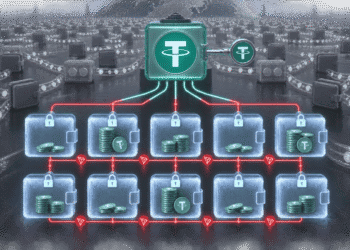

Crypto infrastructure may be the biggest story of 2026, yet it is receiving surprisingly little attention.
While headlines continue to focus on Bitcoin price swings, memecoin rallies and ETF flows, a much larger transformation is unfolding behind the scenes. Instead of asking which token could be the next 100x opportunity, some of the industry’s biggest companies are investing in payment networks, regulated custody, compliance software and stablecoin infrastructure.


These developments rarely dominate social media because they lack the excitement of a new token launch. Yet they could ultimately have a much greater impact on crypto’s future than another speculative bull run.
For years, the industry promised to reinvent finance. Ironically, that promise may finally be taking shape through the least glamorous part of the ecosystem.
Stablecoins Have Become the Foundation
One of the clearest examples is the rapid evolution of stablecoins.
Just a few years ago, most investors viewed stablecoins simply as a convenient way to move between crypto trades without returning to traditional banking. Today, governments and financial institutions increasingly see them as payment infrastructure capable of settling transactions almost instantly across borders.
That shift is visible everywhere.
In the United States, lawmakers continue developing the GENIUS Act to establish a regulatory framework for payment stablecoins. Across Europe, MiCA is creating unified rules for issuers and crypto service providers. Meanwhile, the Bank of England recently softened parts of its proposed stablecoin framework after industry feedback, signalling that regulators are moving beyond the question of whether stablecoins should exist and focusing instead on how they should safely integrate into financial markets.
This is a significant change in tone. Stablecoins are no longer being discussed as a niche crypto product. They are increasingly being treated as part of tomorrow’s payment infrastructure.
Banks Are Changing Their View of Crypto
Traditional financial institutions are changing alongside them.
Only a few years ago, many banks kept their distance from digital assets, citing volatility, regulatory uncertainty and reputational risk. Today, the conversation looks very different.
Instead of debating whether blockchain belongs in finance, banks are exploring how tokenized deposits, blockchain settlement and regulated digital assets can improve existing financial systems. Rather than competing with crypto, many institutions are now looking for practical ways to incorporate it into their own operations.
That shift may be less exciting than another bull market, but it is arguably much more meaningful.
Mainstream adoption has never depended solely on retail investors buying Bitcoin. It depends on financial institutions becoming comfortable enough to build products around blockchain technology.
The Real Opportunity May Be the Infrastructure
One of Reuters’ recent analyses made an interesting observation: the biggest investment opportunity may not be stablecoins themselves, but the infrastructure supporting them.
Every stablecoin transaction depends on a much larger ecosystem. Someone has to safeguard reserves. Someone provides custody. Someone handles compliance checks. Payment processors move funds between businesses, while regulated financial institutions ensure everything operates within existing legal frameworks.
These companies rarely receive the same attention as token issuers, but they increasingly form the backbone of the digital asset economy.
The comparison with the early internet is difficult to ignore.
Many of the biggest winners were not the websites people visited every day. They were the companies building servers, cloud computing, networking equipment and payment systems that allowed the internet to scale.
Crypto may be entering a similar stage of development.
Regulation Is Becoming a Business Advantage
Another notable change is how companies now approach regulation.
During previous market cycles, many crypto firms viewed compliance as something that slowed innovation. Today, obtaining licences has become a competitive advantage.
MiCA is forcing exchanges across Europe to operate under a single regulatory framework. Stablecoin issuers are preparing for more comprehensive oversight. Institutional investors increasingly prefer working with businesses that already meet strict regulatory standards.
This represents a cultural shift for the industry.
Success is becoming less about launching products as quickly as possible and more about building systems that banks, payment companies and institutional investors are comfortable using for years to come.
That may not produce dramatic headlines, but it creates a stronger foundation for long-term growth.
Companies Are Betting on the Next Phase
The trend is already visible among some of the industry’s largest players.
Stripe’s crypto subsidiary, Bridge, recently received conditional approval to establish a national trust bank in the United States. Rather than focusing on speculative tokens, the company is building regulated infrastructure for stablecoin custody, reserve management and institutional payments.
Similar moves are appearing throughout the industry.
Exchanges are investing heavily in compliance departments. Custody providers continue expanding services for institutions. Payment companies are integrating stablecoins into existing financial products instead of treating them as experimental technology.
Individually, these announcements may not seem particularly exciting.
Together, they paint a picture of an industry quietly preparing for much wider adoption.
Crypto’s Next Bull Market May Look Very Different
If this trend continues, the next chapter of crypto could look very different from previous cycles.
Memecoins will still exist. Bitcoin will continue dominating headlines whenever prices move sharply. Speculation is unlikely to disappear entirely.
But beneath those headlines, the industry’s center of gravity appears to be shifting.
The companies creating lasting value may not be the ones launching the loudest tokens. They may be the businesses building payment rails, regulated custody platforms, compliance software and settlement networks that ordinary users never even notice.
History often rewards infrastructure more than excitement.
Railways created fortunes beyond the trains themselves. The internet’s biggest companies were not necessarily the first websites, but the businesses that built the systems everyone else depended on.
Crypto may now be entering its own infrastructure era.
The Quiet Revolution Could Be the Most Important One
The biggest crypto story of 2026 may not be another record-breaking Bitcoin rally or the latest viral memecoin.
Instead, it may be the gradual transformation of blockchain into financial infrastructure that operates quietly in the background.
Stablecoins are becoming payment tools. Banks are embracing blockchain settlement. Regulators are replacing uncertainty with rulebooks. Custody providers and compliance specialists are becoming just as important as exchanges themselves.
None of these developments generate the excitement of a bull market.
But together, they suggest crypto is finally beginning to mature into something much larger than speculation.
The next revolution in digital assets may not be flashy at all.
It may simply work.
Disclaimer: This article is for informational purposes only and does not constitute financial, investment or legal advice. Always conduct your own research before making any investment decisions.