KelpDAO rsETH hack fallout is spreading across Ethereum’s restaking market, Aave, Arbitrum and even the courts.
The April exploit has already become one of the most complicated DeFi incidents of the year. What began as a bridge-related attack against KelpDAO’s rsETH has turned into a wider confidence shock, pushing users toward exits, triggering a major industry relief effort and creating a legal fight over recovered funds.


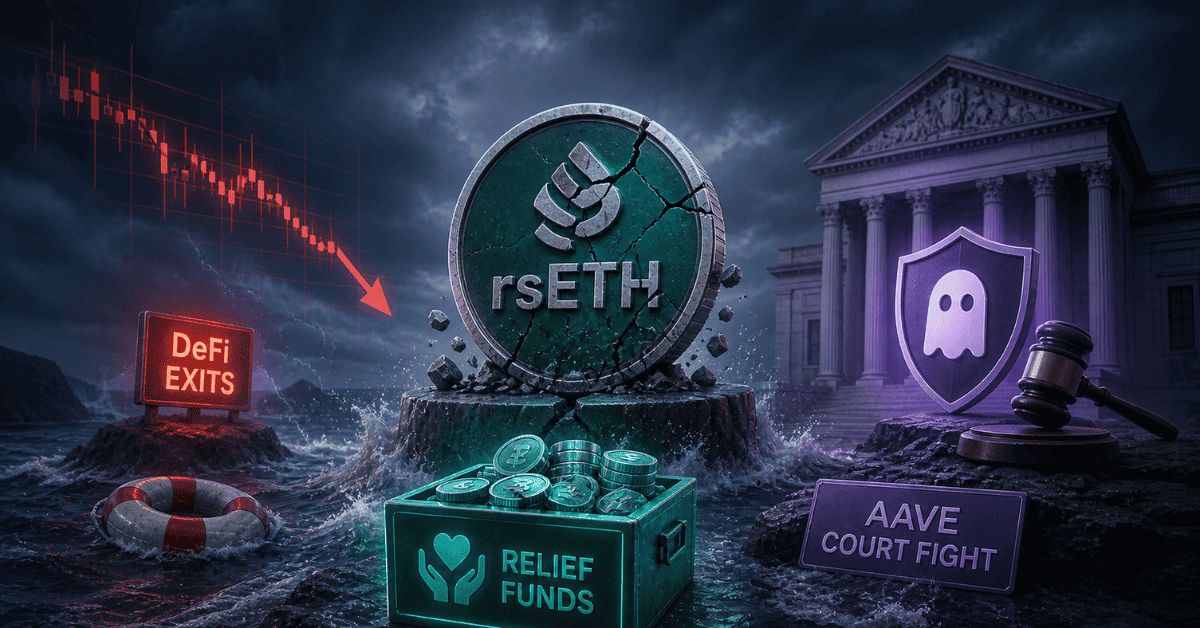
Ethereum’s validator exit queue has reportedly climbed to about 433,000 ETH, while DeFi United has gathered around 132,650 ETH in relief commitments. At the same time, Aave is fighting a New York court order tied to roughly 30,765 ETH recovered on Arbitrum.
The hack is over. The consequences are not.
The Validator Exit Queue Shows Confidence Took a Hit
One of the clearest signs of stress is Ethereum’s validator exit queue.
Recent market data showed the queue rising to about 433,158 ETH, with an estimated withdrawal wait of roughly seven days. The surge was linked to fallout from recent DeFi hacks, especially the KelpDAO rsETH exploit, which shook confidence in liquid restaking assets and pushed some users to reduce exposure.
That does not mean Ethereum staking itself is broken. The exit queue is part of Ethereum’s normal safety design, slowing withdrawals so the validator set cannot change too quickly. But a sharp increase in exits tells us something important: some users want liquidity back.
Restaking products depend heavily on confidence. If users worry that a liquid restaking token may become undercollateralized, temporarily frozen or caught in legal disputes, they may choose to exit rather than wait for the cleanup.
The Relief Effort Is Huge by DeFi Standards
The recovery effort is unusually large.
DeFi United has reportedly gathered about 132,650 ETH, worth more than $300 million, to help restore rsETH backing and reduce damage from the exploit. The coalition includes major DeFi participants and is designed to backstop affected markets, including the bad debt created when the attacker used unbacked rsETH inside lending protocols.
That scale matters. DeFi often talks about being trustless and automated, but large exploits still require human coordination. Protocol teams, DAOs, foundations and investors have to negotiate recovery plans, governance votes, market stabilization and user compensation.
This is the uncomfortable reality of modern DeFi: when a big enough protocol breaks, the response starts looking a lot like crisis management in traditional finance.
Aave Is Fighting Over Frozen ETH
The strangest part of the fallout may be the legal fight.
Arbitrum’s Security Council froze roughly 30,765 ETH connected to the KelpDAO exploit after the attacker moved funds onto Arbitrum. That freeze created hope that some of the stolen or exploit-linked assets could be used in the DeFi United recovery plan.
But the situation became more complicated after a New York court order restricted access to those funds. Families holding terrorism-related judgments against North Korea are reportedly trying to claim the frozen ETH, arguing that the funds are connected to North Korea-linked hacking activity.
Aave is now asking the court to vacate the restraining notice, arguing that the assets should be used to restore DeFi users affected by the exploit rather than redirected toward unrelated legacy judgments.
This is where DeFi’s “code is law” world collides with actual law.
The Court Fight Could Set an Awkward Precedent
The Aave dispute matters because it may shape how recovered exploit funds are treated in the future.
If frozen crypto linked to an exploit can be redirected through court claims before victims are repaid, recovery plans become much harder. Protocols may recover assets on-chain, only to discover that courts, creditors, sanctions issues or government claims can interrupt the process.
That is not necessarily wrong from a legal perspective. If funds are tied to sanctioned actors or state-backed hackers, courts may have competing obligations. But from a DeFi user’s perspective, it creates another layer of uncertainty.
The result is messy. Users want their money back. Protocols want to repair markets. Courts may see the funds as attachable assets connected to broader legal judgments. No smart contract can resolve that conflict automatically.
Why This Became a Systemic DeFi Event
The reason the KelpDAO exploit spread so widely is composability.
rsETH was not sitting alone in one isolated protocol. It was used across chains, bridges, lending markets and liquidity venues. Once unbacked rsETH entered the system, the damage moved through DeFi’s connected layers.
That is the strength and weakness of DeFi. Assets can move quickly and integrate everywhere. But when something goes wrong, the blast radius can expand just as quickly.
Aave became central to the story because the attacker reportedly used compromised rsETH as collateral to borrow ETH. That left lending markets exposed and forced emergency responses across multiple protocols.
The lesson is not that composability is bad. The lesson is that composability needs stronger risk controls when collateral depends on bridges, restaking tokens and cross-chain verification.
Restaking Faces a Trust Test
The KelpDAO incident also puts pressure on the broader restaking narrative.
Liquid restaking tokens became popular because they promised users a way to earn staking-related yield while keeping liquidity and composability. But the more these assets are used as collateral, the more dangerous any confidence break becomes.
If users fear that a restaking token can be compromised through a bridge, depegged, frozen or caught in recovery negotiations, they may demand higher risk premiums or avoid using it as collateral.
That does not kill restaking. But it makes the market more selective. Protocols will need stronger bridge setups, better oracle design, tighter collateral limits and clearer emergency plans.
The days of treating every liquid restaking asset as simple ETH-equivalent collateral may be ending.
The Bottom Line
KelpDAO rsETH hack fallout has become a full DeFi stress test.
The validator exit queue shows users are pulling back from risk. The 132,650 ETH relief effort shows the industry can coordinate at serious scale. The Aave court fight shows that recovered crypto assets can become legally complicated very quickly.
This is no longer just a story about one exploit. It is a story about how DeFi handles systemic damage when bridges, restaking tokens, lending markets, DAOs and courts all collide.
Crypto likes to say it is building a parallel financial system. Incidents like this show what that really means: not just faster markets and programmable assets, but also messy rescues, legal disputes and hard questions about who gets protected when something breaks.
Disclaimer: This article is for informational purposes only and does not constitute financial, investment, or legal advice. Always conduct your own research before making any investment decisions.