Zondacrypto, one of Central and Eastern Europe’s best-known crypto exchanges, is under mounting pressure after Polish prosecutors opened an investigation into alleged fraud, customer losses and an inaccessible Bitcoin wallet holding roughly 4,500 BTC.
The crisis intensified after Cointelegraph reported through TradingView that CEO Przemysław Kral had reportedly gone to Israel, citing Polish outlet Onet. The report said Kral holds Israeli citizenship, which could complicate any future extradition process if Polish authorities seek one.


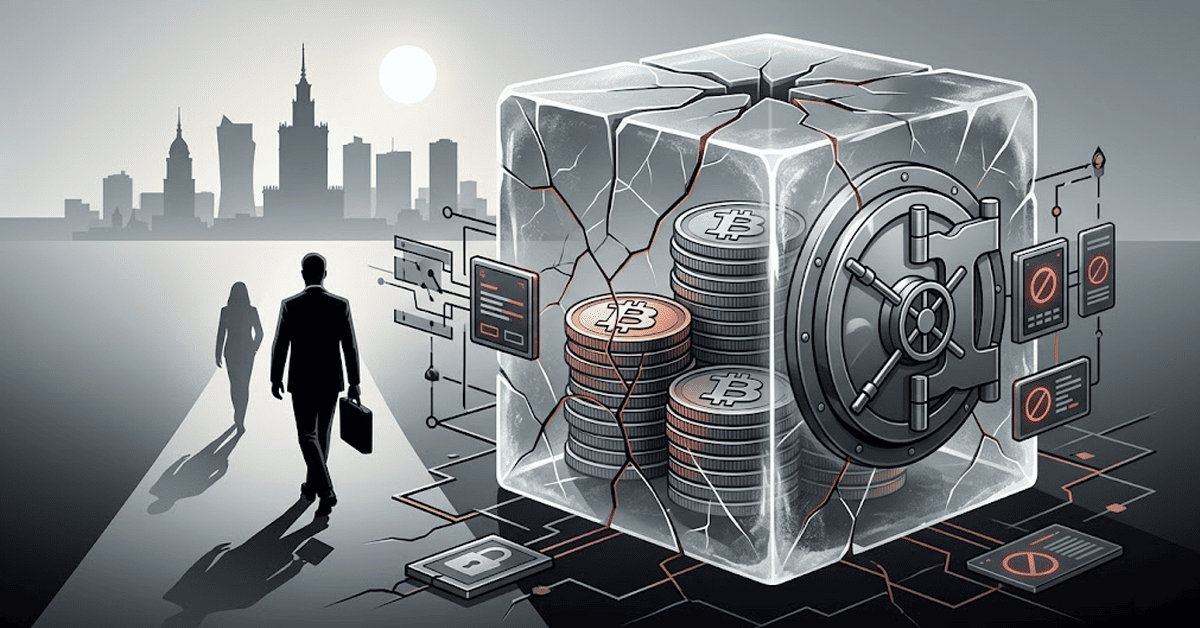
The company has previously denied insolvency claims and said it remains stable. But for users facing delayed or frozen withdrawals, the key issue is much simpler. A large Bitcoin wallet that Zondacrypto has pointed to as part of its reserves cannot currently be moved by the exchange.
The 4,500 BTC Wallet at the Center of the Case
A Reserve Claim That Raised More Questions
The dispute centers on a wallet said to contain around 4,500 BTC, worth hundreds of millions of dollars depending on Bitcoin’s market price. Kral publicly pointed to the wallet as evidence that Zondacrypto had substantial reserves, but he also acknowledged that the exchange does not have access to the private keys.
According to Notes from Poland, Kral said the keys were never handed over by Zondacrypto founder Sylwester Suszek, who disappeared in March 2022 after a business meeting. Suszek founded the exchange in 2014 under the BitBay name before the business was later sold and rebranded as Zondacrypto.
That makes the wallet a strange kind of reserve. On-chain, the coins may exist. Operationally, they may be useless unless the keys can be recovered. For customers, that distinction matters because Bitcoin that cannot be moved cannot easily support withdrawals.
A Missing Founder and a Missing Key
Suszek’s disappearance has become central to the story because he is reportedly the only person connected to the wallet’s private key. Polish authorities have been investigating his disappearance for years, and his current whereabouts remain unknown.
That creates an unusual custody problem. Crypto exchanges are supposed to maintain strict access controls, redundancy and segregation of customer assets. A wallet controlled by one missing person is the opposite of what users expect from a professional custody setup.
Withdrawals, Resignations and Prosecutors
Users Say They Cannot Access Funds
Reports of withdrawal problems appear to have been building for months. BeInCrypto reported that user complaints about delayed withdrawals began surfacing in late 2025 and grew more serious by March and April 2026.
The same report cited blockchain analysis showing a sharp decline in visible Bitcoin balances across known Zondacrypto hot wallets. Zondacrypto has challenged negative media coverage, but the decline in visible reserves and the admission that the 4,500 BTC wallet is inaccessible have fed a major confidence crisis.
Supervisory Board Members Resigned
The pressure grew further when members of the supervisory board of BB Trade Estonia OÜ, the Estonian company operating Zondacrypto, resigned. Notes from Poland reported that board members cited concerns about withdrawal issues, asset availability and material inconsistencies between public statements and information available to them.
Those resignations are important because they point to a governance breakdown, not just a technical wallet problem. When oversight figures say they cannot properly carry out their duties, users and regulators usually become more concerned, not less.
Polish Authorities Step In
Polish prosecutors have identified several hundred potential victims and possible losses of at least 350 million zloty, roughly $97 million, according to Notes from Poland. Prosecutor spokesperson Michał Binkiewicz said the number of complainants was still growing as more users came forward.
The case has also become political. Prime Minister Donald Tusk has publicly linked Zondacrypto to broader concerns about crypto regulation, political financing and alleged foreign influence. Zondacrypto has denied wrongdoing, but the exchange is now at the center of a national debate over whether Poland moved too slowly to strengthen investor protections for crypto users.
That political backdrop could accelerate regulatory action. It could also complicate the recovery process if the case becomes less about one exchange’s reserves and more about the country’s entire approach to crypto oversight.
Why This Matters Beyond Poland
The Zondacrypto case is a reminder that exchange risk is not only about hacks. It can also come from weak governance, unclear asset control, poor communication and overreliance on a small number of key people.
For crypto users, the lesson is familiar but painful. Proof of reserves is only useful if it proves more than the existence of coins. Users also need evidence that an exchange controls those assets, can move them when required and has proper procedures for emergencies.
The case also shows why regulators are focusing more closely on custody standards. A centralized exchange can market itself as a trusted gateway to crypto, but if customers cannot withdraw funds during stress, the platform starts to look less like an exchange and more like an unsecured creditor problem.
What Comes Next
The most important updates will come from Polish prosecutors, any official Zondacrypto restructuring or recovery plan and further information about whether the 4,500 BTC wallet can ever be accessed.
Users will also be watching for clear guidance on withdrawals. Without a credible timetable, transparent reserve reporting and a practical plan for inaccessible assets, confidence will remain difficult to rebuild.
For now, Zondacrypto’s crisis sits at the intersection of a missing founder, a reportedly absent CEO, a frozen reserve wallet and a growing criminal investigation. Until those pieces are resolved, the exchange’s future remains deeply uncertain.
Disclaimer: This article is for informational purposes only and does not constitute financial, investment, or legal advice. Always conduct your own research before making any investment decisions.