In 2013, a coffee shop in Vancouver installed the world’s first Bitcoin ATM. People lined up to try it. The media called it a glimpse of the future. Canada was proud.
Thirteen years later, Canada wants to rip them all out.


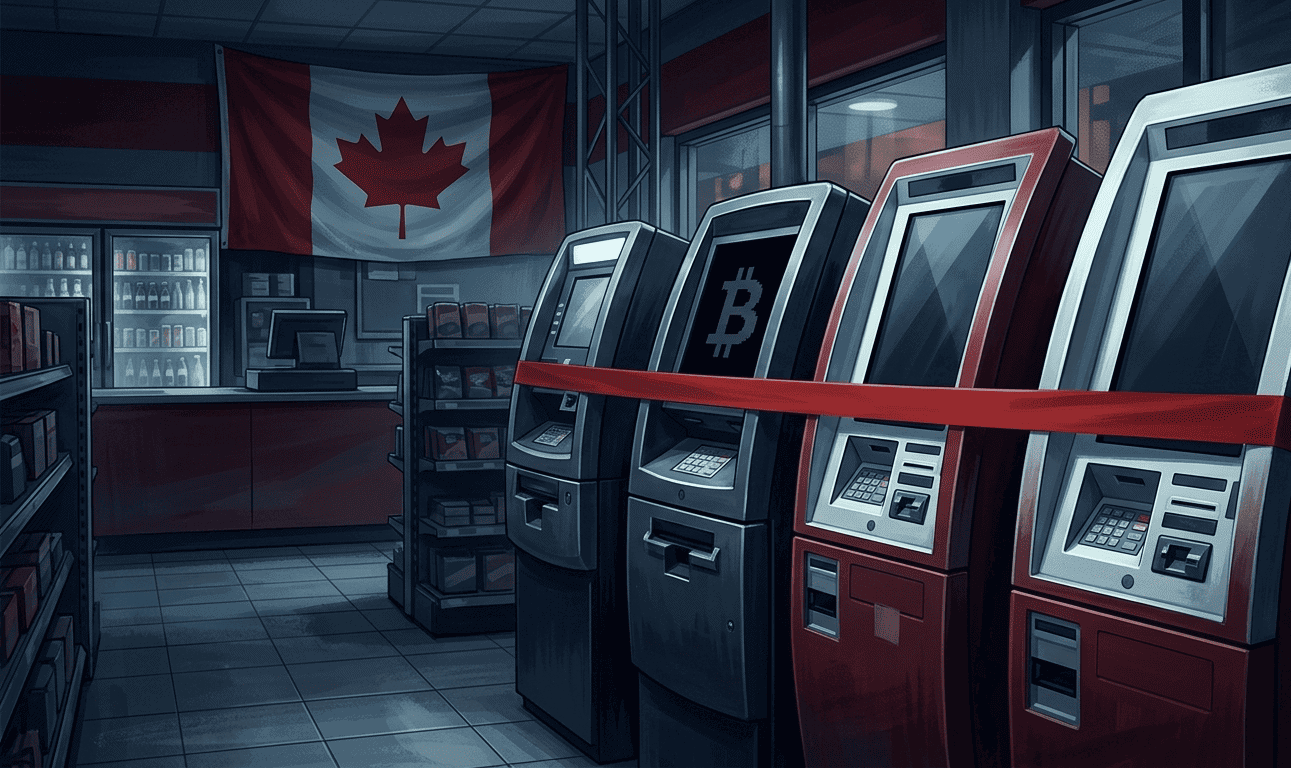
The federal government proposed a nationwide ban on crypto ATMs in its Spring Economic Update on April 28. The reason is blunt: the machines have become “a primary method for scammers to defraud victims and for criminals to place their cash proceeds of crime.”
Canada has nearly 4,000 crypto ATMs, the most per capita in the world. If the ban goes through, every single one of them goes dark.
Why Does Canada Want to Ban Them?
Because they have become crime machines. Not by design, but by how easy they are to exploit.
A crypto ATM lets you walk up, insert cash, and convert it to Bitcoin. The coins get sent to whatever wallet address you provide. Under $1,000, most machines only need a phone number. No bank account. No face-to-face interaction. No teller trained to spot a scam in progress.
That simplicity is what makes them useful for regular people. It is also what makes them perfect for criminals.
Canadians reported losing over $704 million to fraud in 2025. Total reported losses since 2022 exceed $2.4 billion. And the government estimates that only 5% to 10% of fraud cases are ever reported. The real numbers are likely much higher.
The scams follow a pattern. A victim gets a call from someone pretending to be the government, a bank, or law enforcement. The caller says the victim owes money or their accounts are compromised. They tell the victim to go to a nearby crypto ATM, deposit cash, and send the Bitcoin to a specific wallet. By the time the victim realises what happened, the money is gone. No chargeback. No reversal. No way to get it back.
Canada’s financial intelligence agency, FINTRAC, concluded that Bitcoin ATMs are “likely to remain the primary method” fraudsters use to collect and launder funds from victims.
Can People Still Buy Crypto After the Ban?
Yes. The ban targets the machines, not crypto itself. Canadians would still be able to buy digital assets through regulated money services businesses, licensed exchanges like Bitbuy, Newton, and Shakepay, and international platforms like Coinbase and Kraken.
The government is removing one specific on-ramp: the unattended cash-to-crypto pipeline sitting in corner stores and gas stations. Everything else stays open.
That distinction matters, but it also creates a problem. Some people use crypto ATMs because they do not have bank accounts or do not want to go through the identity verification required by online exchanges. For underbanked Canadians who rely on cash, the ATM was the easiest way in. Taking it away does not give them a replacement.
Are Other Countries Banning Crypto ATMs?
Canada is not alone, but it is going further than most.
The UK effectively banned crypto ATMs in 2021 by requiring all operators to register with the FCA. Nobody has gotten a licence. So every crypto ATM in Britain is technically illegal, and the FCA has been seizing them during enforcement raids.
Australia took a softer approach. Instead of banning the machines, it imposed daily transaction limits to reduce the amount of money that can flow through them in a single day.
Several US states have introduced their own rules. Some cap transaction fees. Some require refund mechanisms for scam victims. Tennessee became the second US state to ban them entirely earlier this year.
Canada’s approach is the most direct of any G7 country. A full nationwide ban, no exceptions, no transition period for operators to get licensed. The machines go away.
What Does the Crypto Industry Say?
Not happy. Alex Davis, founder of blockchain company Mavryk, told CNBC that “eliminating them may reduce certain fraud vectors, but it also removes one of the last public-access tools for financial privacy and cash-to-crypto conversion.”
That argument has merit. Banning the machines does not ban the scammers. If a criminal cannot direct a victim to a crypto ATM, they will direct them to a wire transfer, a gift card purchase, or a peer-to-peer exchange. The fraud adapts. The victim still loses money. The machine was just the tool, not the cause.
On the other hand, removing 4,000 easy-access cash-to-crypto conversion points makes the scam harder to execute. A victim who has to create an exchange account, verify their identity, and wait for approval is more likely to realise something is wrong before they send the money. The friction that makes exchanges annoying for regular users is exactly the friction that protects fraud victims.
What Comes Next?
The ban is a proposal, not a law yet. It was included in the Spring Economic Update, which is a policy roadmap, not legislation. Parliament would need to pass it. Given the current political environment in Canada, with elections approaching and crime as a top voter concern, the ban is likely to pass.
The government is also creating a new Financial Crimes Agency with $352.7 million in funding over five years. That agency would have the mandate and the resources to go after crypto fraud at a scale that FINTRAC, the current watchdog, does not.
For the global crypto industry, Canada’s move sets a precedent. If a G7 country can ban crypto ATMs entirely and frame it as consumer protection, other countries will consider the same. The UK already did it quietly through licensing. Australia went halfway with limits. Canada is going all the way.
The country that gave the world its first crypto ATM may also be the one that writes its obituary.
Disclaimer: This article is for informational purposes only and does not constitute financial, investment, or legal advice. Always conduct your own research before making any investment decisions.