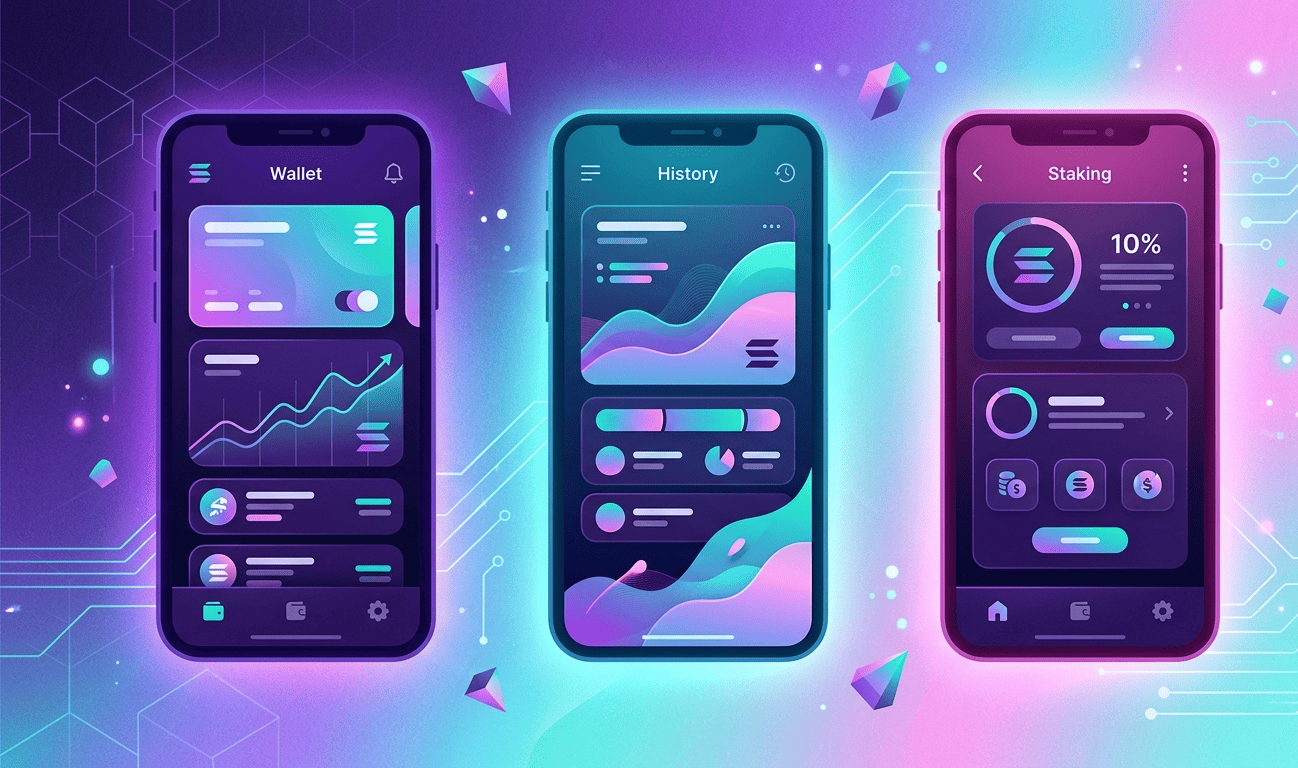
Solana is heading into one of the most important chapters in its history. The upcoming Alpenglow upgrade promises to slash transaction finality to 150 milliseconds, Jito just launched its new JTX self-custodial trading platform, and major institutions are now settling tokenized assets on Solana-compatible infrastructure.
Whether you’re staking SOL, trading memecoins, collecting NFTs, or using DeFi protocols, you need a wallet that actually works well with Solana’s fast-moving ecosystem. And not all wallets are created equal.


We’ve tested the three most popular Solana wallets in 2026 and broken down exactly what each one does best, where they fall short, and which one is right for you.
Phantom vs Solflare vs Backpack: At a Glance
Here’s a side-by-side comparison of the three wallets across the features that matter most:
| Feature | Phantom | Solflare | Backpack |
|---|---|---|---|
| Best For | Everyday use | SOL staking | NFTs and power users |
| Users | 15M+ | Not disclosed | Growing rapidly |
| Chains Supported | 8 (SOL, ETH, Base, Polygon, Sui, Monad, BTC, more) | Solana only | 14+ (SOL, ETH, Sui, Monad, Aptos, BNB, more) |
| Swap Fees | Standard (via Jupiter) | Standard | 0% platform fee on Solana |
| Built-in Staking | Yes | Yes (most advanced) | Yes |
| Multi-Validator Staking | Limited | Yes (full control) | Limited |
| NFT Support | Viewer + gallery | Basic viewer | xNFT apps (run dApps inside wallet) |
| Built-in DEX | Yes (Jupiter routing) | Yes | Yes (+ DeFi explorer) |
| Hardware Wallet Support | Ledger | Ledger | Ledger |
| Open Source | No | No | Yes |
| Anti-Phishing Protection | Yes | Yes | Yes (domain verification) |
| Mobile App | iOS, Android | iOS, Android | iOS, Android |
| Browser Extension | Chrome, Edge, Firefox | Chrome | Chrome |
| Beginner Friendly | ★★★★★ | ★★★★ | ★★★ |
| Customer Support | Help center + community | Live chat (weekdays) + help center | Help center + community |
Phantom: Best All-Round Solana Wallet
If you only download one Solana wallet, make it Phantom. With over 15 million active users, it’s the default connection point for virtually every Solana dApp, from Jupiter to Tensor to Drift.
Phantom started as a Solana-only wallet but has grown into a multi-chain app supporting eight networks including Ethereum, Base, Polygon, Sui, Monad, and Bitcoin. That means you can manage assets across multiple blockchains without juggling separate apps.
What Phantom does well. The user interface is clean, fast, and genuinely enjoyable to use. You can send, receive, stake, and swap SOL tokens directly in the app without needing third-party tools. Swaps route through Jupiter’s aggregation engine, so in-wallet quotes match what you’d get on Jupiter’s own site. The built-in NFT viewer is solid, anti-phishing protection helps flag dodgy sites, and Phantom Cloud Sync lets you back up securely across devices.
Where Phantom falls short. It’s not open-source, which limits independent code review. Performance can lag during peak congestion, particularly during major mints or memecoin surges. And while the multi-chain support is growing, it doesn’t yet cover Arbitrum, Optimism, BSC, or Avalanche, so if you have a broader portfolio you may still need a second wallet.
Best for: Beginners and everyday users who want a simple, reliable wallet that covers Solana and a handful of other chains.
Platforms: iOS, Android, Chrome, Edge, Firefox browser extensions.
Solflare: Best for SOL Staking
If staking SOL is your primary focus, Solflare is the wallet to beat. It’s been around since Solana launched in 2020 and has built a reputation as the most staking-focused wallet in the ecosystem. Over 20% of all staked SOL currently routes through Solflare.
What Solflare does well. The staking interface is in a league of its own. You get detailed validator information including commission rates, uptime history, and concentration risk. You can split your stake across multiple validators from a single screen, which helps with decentralization and reduces your risk if one validator goes down. Solflare also supports token swaps, DeFi integrations, and has live chat support on weekdays, which is rare for a crypto wallet.
Where Solflare falls short. Multi-chain support is limited. Solflare is Solana-first and doesn’t natively support Ethereum, Bitcoin, or other networks. If you need to manage assets across multiple chains, you’ll need a separate wallet for that. The interface, while powerful, can feel a bit overwhelming for complete beginners compared to Phantom’s simpler design.
Best for: SOL stakers who want granular control over validator selection and anyone who prioritizes Solana-specific features over multi-chain convenience.
Platforms: iOS, Android, Chrome browser extension, downloadable web app.
Backpack: Best for NFTs and Power Users
Backpack is the newest of the three, but it’s quickly become the go-to wallet for Solana power users, NFT collectors, and developers. Its standout feature is xNFTs, which are essentially apps that run directly inside the wallet. Instead of switching between browser tabs, you can interact with Solana dApps without ever leaving Backpack.
What Backpack does well. Zero platform fees on swaps and bridges on Solana is a huge advantage for active traders. It supports 14+ networks including Ethereum, Sui, Monad, Aptos, and BNB Chain, giving it the widest chain coverage of any Solana-native wallet. The built-in DeFi explorer lets you discover and interact with protocols without searching around. And if you use the Backpack exchange, the wallet integrates natively with trading features for a seamless experience.
Where Backpack falls short. The xNFT concept, while innovative, adds complexity that casual users might not need. The wallet is more developer-oriented than either Phantom or Solflare, which means the learning curve is steeper for beginners. And while the multi-chain coverage is impressive, Backpack’s community and dApp integrations are still smaller than Phantom’s massive ecosystem.
Best for: NFT collectors, active DeFi users, developers, and anyone who wants the widest multi-chain support from a single Solana-native wallet.
Platforms: iOS, Android, Chrome browser extension.
Which Wallet Should You Actually Pick?
Here’s the simplest way to think about it.
Pick Phantom if you’re new to Solana, want something that just works out of the box, and value a clean interface over advanced features. It covers the widest range of everyday use cases and connects to virtually every Solana dApp.
Pick Solflare if staking SOL is a major part of your crypto strategy. No other wallet gives you the same level of control over validator selection, and the staking analytics are genuinely useful for optimizing your returns.
Pick Backpack if you’re an active trader, NFT collector, or developer who wants zero-fee swaps, the widest multi-chain support, and a wallet that doubles as a platform for running decentralized apps.
And here’s a pro tip that a lot of experienced Solana users follow: don’t limit yourself to just one. Many people use a combination. Phantom for everyday transactions and dApp connections, Solflare for staking, and a Ledger hardware wallet paired with either one for long-term cold storage. That three-wallet setup keeps your day-to-day activity separate from your long-term holdings, which is one of the simplest ways to reduce your risk.
A Note on Security
No matter which wallet you choose, the basics of staying safe apply to all of them. Never share your seed phrase with anyone. Double-check URLs before connecting your wallet to a dApp. Be skeptical of unsolicited messages claiming to be “support.” And if a transaction approval looks unfamiliar or asks for permissions you don’t understand, reject it and investigate before proceeding.
All three wallets in this review support Ledger hardware wallet integration, which means you can use any of them as a frontend while keeping your private keys offline on a physical device. If you hold a significant amount of SOL or Solana-based tokens, pairing your software wallet with a hardware device is strongly recommended.
The recent Drift Protocol exploit, which drained $295 million from users, is a painful reminder that even well-known platforms can be compromised. Your wallet is your last line of defence. Choose wisely and use it carefully.
FAQ
What is the best Solana wallet for beginners?
Phantom is the best choice for beginners. It has the simplest interface, supports multiple chains, connects to virtually every Solana dApp, and has over 15 million active users. It’s available on iOS, Android, and as a browser extension.
Which Solana wallet has the lowest fees?
Backpack charges 0% platform fees on swaps and bridges on Solana, making it the cheapest option for active traders. Phantom and Solflare both route swaps through Jupiter’s aggregation engine with standard fees.
Can I use a hardware wallet with Solana?
Yes. All three wallets reviewed here (Phantom, Solflare, and Backpack) support Ledger hardware wallet integration. This lets you use the software wallet as a convenient interface while keeping your private keys stored safely offline on the Ledger device.
Disclaimer: This article is for informational purposes only and does not constitute financial advice. Cryptocurrency investments carry significant risk. Always conduct your own research before making any investment decisions.