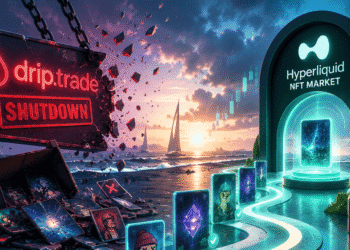

NFT marketplace shutdowns are becoming one of the most important reality checks for digital ownership.
The idea behind NFTs was simple: even if a platform disappears, the asset still exists on-chain. In theory, that means collectors are not dependent on one company, one website or one marketplace. But 2026 is showing that the truth is more complicated.


NFT Plazas recently framed the issue clearly: when NFT marketplaces shut down, users may still own the token, but access, trading, metadata, custody and discovery can all become harder. That is the part many buyers did not think about during the boom.
Owning the NFT is one thing. Actually using it after the marketplace disappears is another.
The Marketplace Is Not the NFT
The biggest misunderstanding is that people often confuse the marketplace with the asset.
An NFT usually lives on a blockchain. The marketplace is just the interface that helps users buy, sell, view or manage it. If the marketplace shuts down, the token may still remain in the user’s wallet or on-chain account.
That sounds reassuring, and sometimes it is. If the NFT was held in a self-custody wallet and uses durable metadata storage, the owner may still be able to access it through another marketplace or blockchain explorer.
But many users do not interact with NFTs that way. Some rely on platform accounts, social-login wallets, custodial systems or marketplace dashboards. When those services close, users may need to export assets, migrate wallets or recover tokens manually.
That is where the ownership promise starts to feel less simple.
Nifty Gateway Showed the Risk for Mainstream Collectors
Nifty Gateway was one of the most recognizable NFT platforms of the 2021 art boom.
Its shutdown showed how even established platforms can disappear when trading activity fades. The platform entered withdrawal-only mode before closure, telling users to withdraw NFTs and funds before the final deadline.
That is a very different experience from the original NFT pitch. Many buyers were told that blockchain ownership was permanent. But when the platform handling the user experience disappears, permanence becomes more technical than practical.
Collectors may still own their NFTs, but they need to know where the token lives, which wallet controls it, where the metadata is stored and which other platforms can display it.
That is not exactly mainstream-friendly.
JPG Store Shows the Chain-Specific Problem
JPG Store’s closure adds another layer because it was the leading Cardano NFT marketplace.
The platform announced it would permanently shut down on May 23, 2026, alongside its Comet platform. Users with self-custody wallets are expected to retain access to their NFTs, but social-login wallet users were told to migrate assets to standard Web3 wallets within a limited window.
That distinction matters.
Self-custody users may be fine if they understand how to use Cardano wallets and other marketplaces. Users who depended on simplified platform accounts may face more friction. If assets are locked in smart contracts or tied to platform-specific tools, recovery can become technical.
This is the hidden risk of making NFTs easy for mainstream users. The easier the onboarding, the more users may depend on the platform staying alive.
Metadata Is the Real Weak Point
The token is only one part of an NFT.
Many NFTs point to metadata, images or files stored somewhere else. If that storage depends on centralized servers, the NFT can survive on-chain while the artwork or media disappears. That is how collectors can end up with a token that technically exists, but points to a broken link.
Decentralized storage systems like IPFS can help, but only if files are properly pinned and maintained. Arweave and similar permanent-storage models can also reduce risk. But during the boom, not every project used durable storage practices.
That means marketplace shutdowns can expose weak infrastructure years later.
The token may still be yours. The image may not be as permanent as you thought.
Why This Matters for NFT Marketplaces
The next generation of NFT marketplaces cannot only focus on trading volume.
They need to help users understand custody, metadata, export options, royalties, chain support and recovery procedures. If a platform shuts down, users should have a clear path to keep control of their assets.
This could become a competitive advantage. A marketplace that offers strong self-custody support, metadata transparency and easy migration tools may earn more trust than one that simply lists collections.
The market has changed. During the boom, collectors cared about floors, rarity and hype. In 2026, serious collectors also need to care about infrastructure resilience.
That is less glamorous, but much more important.
What Collectors Should Check Now
NFT collectors should not wait for a shutdown notice.
They should know whether their NFTs are in a self-custody wallet or controlled by a platform account. They should check whether the collection’s metadata is stored on-chain, on IPFS, on Arweave or on centralized servers. They should also know whether another marketplace supports the chain and collection.
If a platform announces closure, users should read the withdrawal instructions carefully and act before deadlines. Waiting too long can turn a simple transfer into a technical recovery problem.
The best time to confirm asset control is before a platform is in crisis.
The Bottom Line
NFT marketplace shutdowns are forcing the industry to separate marketing from reality.
NFTs can provide durable digital ownership, but only when custody, metadata and access are handled properly. If users depend entirely on a marketplace, they may discover that ownership is more fragile than the slogan suggested.
This does not mean NFTs are dead. It means the market is maturing from hype into infrastructure.
The next NFT marketplace winner may not be the one with the loudest drops. It may be the one that proves collectors can still access their assets when the party ends.
Disclaimer: This article is for informational purposes only and does not constitute financial, investment, or legal advice. Always conduct your own research before making any investment decisions.