OpenSea used to be the eBay of NFTs. Now it is trying to become something closer to a crypto exchange.
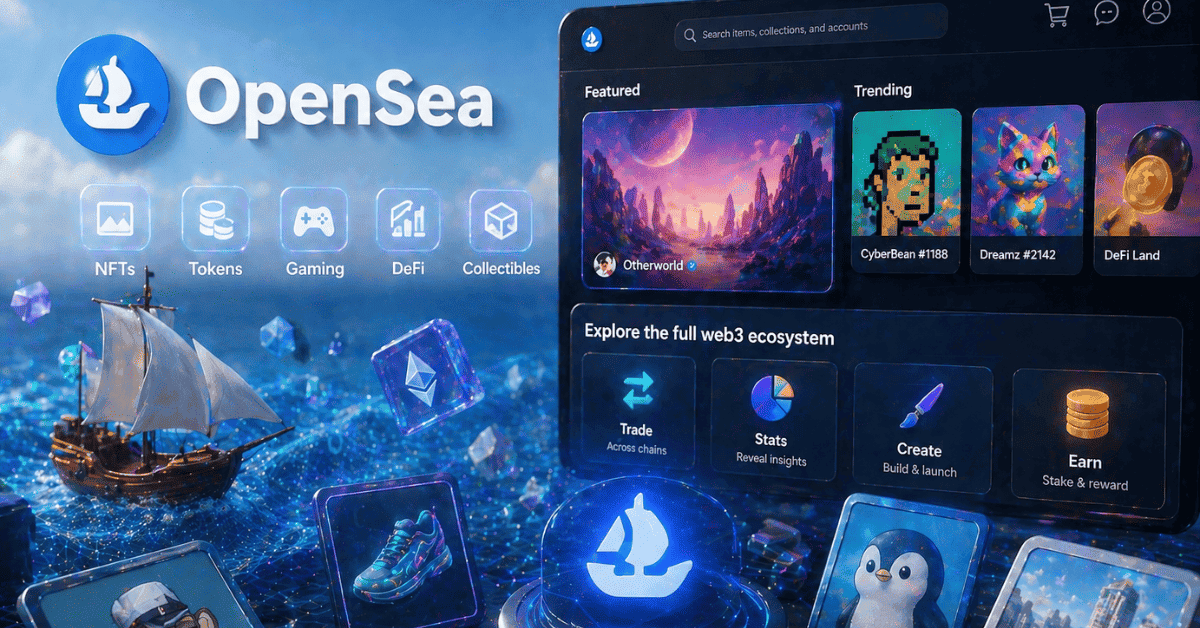
That is the big shift behind OS2, OpenSea’s redesigned platform that brings NFTs and fungible tokens into the same trading experience. OpenSea says OS2 gives users access to NFTs and tokens in one place, including fungible-token swaps through integrated liquidity aggregators, cross-chain purchasing and aggregated marketplace listings.


That is not just a product update. It is a business-model admission.
The biggest NFT marketplace is basically saying: selling NFTs alone is not a business model anymore.
OS2 Brings Tokens Into the OpenSea Experience
The most important change is that OpenSea is no longer treating NFTs as the entire product.
With OS2, users can trade tokens across multiple chains, access swaps through liquidity aggregators and buy assets across blockchains without manually bridging or swapping first. OpenSea later said OS2 was out of beta with token trading live across 19 chains, including full support for Solana fungible tokens.
That moves OpenSea into a much more competitive category. It is no longer only competing with NFT marketplaces such as Blur, Magic Eden or LooksRare. It is also edging closer to the territory of aggregators, decentralized exchanges, wallets and multichain trading apps.
The product logic is simple. If users already connect a wallet to buy NFTs, why should they leave the platform to swap tokens, bridge funds or source liquidity elsewhere?
Cross-Chain Buying Solves a Real User Problem
One of OS2’s more practical features is cross-chain purchasing.
For years, NFT users had to deal with one of crypto’s most annoying frictions: having the wrong asset on the wrong chain. A user might want to buy an NFT on one network while holding funds on another. That usually meant swapping, bridging and waiting before even making the purchase.
OpenSea says OS2 allows users to buy NFTs and tokens across multiple blockchains without manually swapping or bridging.
That is a meaningful usability upgrade. It makes OpenSea feel less like a single marketplace and more like a unified on-chain trading interface.
If OpenSea can abstract away some of the chain complexity, it can make NFTs and tokens easier for mainstream users. That matters because the NFT boom exposed one major weakness of crypto UX: too many steps, too many wallets, too many chains and too many ways to make a costly mistake.
Aggregated Listings Make OpenSea More Like a Trading Terminal
OS2 also includes aggregated marketplace listings, which OpenSea says help users source the best prices.
That is another quiet but important shift. In the old NFT marketplace model, a platform mainly competed by hosting listings and attracting buyers. In the newer model, users expect marketplaces to aggregate liquidity from multiple venues, compare prices and route trades more intelligently.
That is closer to how crypto traders already think about decentralized exchanges and liquidity aggregators. The user does not necessarily care where the liquidity comes from. They care about price, speed and execution.
For NFTs, that approach matters because liquidity is often fragmented. Collections can be listed across several marketplaces, chains and wrappers. Aggregation gives users a better chance of finding the best available price without manually checking every venue.
The NFT-Only Model Lost Momentum
The reason OpenSea’s pivot matters is that the NFT-only model has clearly struggled since the last boom.
NFT trading volumes are far below their euphoric highs, speculative profile-picture collections lost much of their momentum and many casual buyers left the market. OpenSea remained one of the most recognizable brands in NFTs, but the addressable market became smaller and more competitive.
That explains the OS2 strategy. If NFTs alone are not enough to sustain growth, OpenSea needs to capture more of the wallet’s broader activity.
The platform is now trying to become the place where users discover, buy and trade all kinds of on-chain assets, not only digital collectibles. OpenSea’s own homepage now describes the platform as “exchange everything,” with token trading and an NFT marketplace side by side.
That phrase says a lot. OpenSea is no longer only selling the dream of JPEG ownership. It is selling access to on-chain markets.
The Pivot Also Changes OpenSea’s Risk Profile
Becoming a broader crypto trading hub could help OpenSea grow, but it also changes the risks.
Token swaps bring different regulatory, liquidity and user-protection questions than NFT listings. Cross-chain transactions can introduce bridge and routing complexity. Aggregated listings can improve price discovery, but they also make the user experience dependent on external liquidity sources.
There is also brand risk. OpenSea became famous because it was the default NFT marketplace. Expanding into tokens may make the product more useful, but it also makes the identity less simple.
That is the trade-off. The NFT-only brand was clear, but the NFT-only market may not be large enough anymore. The multichain trading hub is bigger, but harder to explain and harder to defend.
OpenSea Is Following the User, Not the Old Narrative
The most charitable reading of OS2 is that OpenSea is following how crypto users actually behave.
NFT traders do not live only inside NFTs. They hold ETH, SOL, stablecoins, meme coins and governance tokens. They move across chains. They swap assets to fund purchases. They chase rewards, mints, drops and liquidity.
A platform that only lets them buy NFTs captures one slice of that behavior. A platform that lets them trade NFTs and tokens across chains captures more of the user’s on-chain life.
That does not guarantee success. OpenSea still has to compete with specialist token platforms, wallets and aggregators that already serve active traders. But the direction makes sense.
If the wallet is the center of crypto activity, OpenSea wants to be one of the main interfaces connected to it.
The Bottom Line
OpenSea’s OS2 pivot is one of the clearest signs that the NFT market has matured past its first simple business model.
The company is no longer just trying to be the biggest NFT marketplace. It is trying to become a broader crypto trading platform where users can buy NFTs, swap tokens, move across chains and source listings from multiple venues.
That is exciting, but also revealing. The biggest NFT marketplace is effectively saying that NFT trading alone is not enough.
OpenSea’s future may depend on whether it can turn its NFT audience into a wider base of on-chain traders. If it succeeds, OS2 could make OpenSea relevant beyond the next NFT cycle. If it fails, it may show how difficult it is for an NFT-native brand to become a full crypto exchange.
For now, the message is clear: OpenSea is not just a place for JPEGs anymore.
Disclaimer: This article is for informational purposes only and does not constitute financial, investment, or legal advice. Always conduct your own research before making any investment decisions.