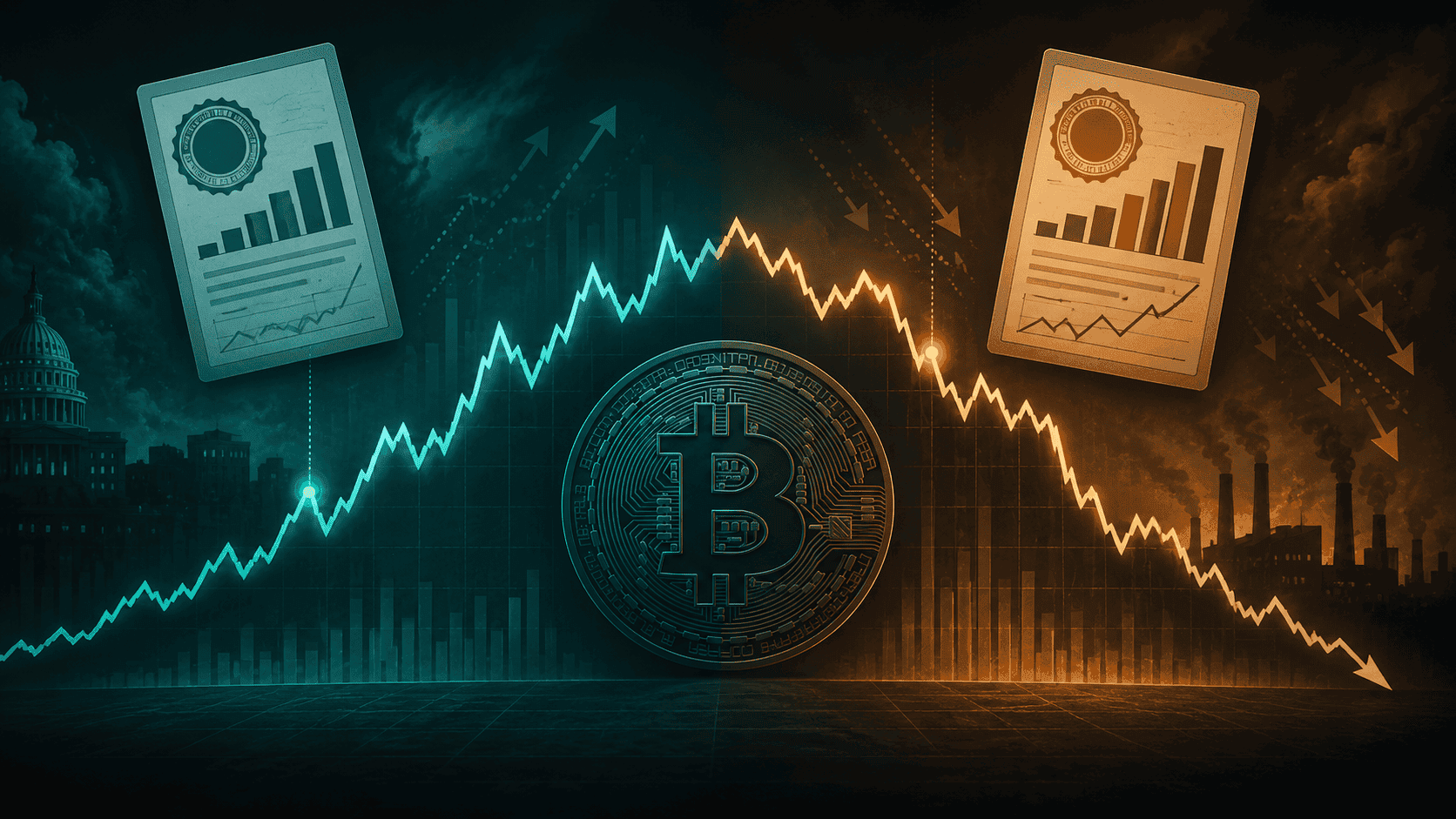
Bitcoin’s morning was a tale of two data releases. At 8:30 a.m. ET, the May CPI report dropped at 4.2% year-over-year, exactly matching consensus expectations. Bitcoin, which had been sliding for days on fears of a hotter print, bounced to $62,561 within minutes. The relief was visible.
Two hours later, the May Producer Price Index came in at 6.5%, hotter than forecasts. The second inflation data point of the day told a different story than the first. CPI suggested inflation was tracking expectations. PPI suggested pipeline price pressures are still building, foreshadowing potentially hotter consumer prices in the months ahead.


Bitcoin retraced. The clean “CPI in line equals relief rally” narrative that traders were positioning for got complicated by a PPI number that introduced new uncertainty just as the market was trying to stabilise.
The June 17-18 FOMC meeting now becomes the next critical catalyst. The CPI print removed the worst-case scenario where inflation overshot and forced the Fed into a hawkish corner. But the PPI spike means Warsh walks into his first rate decision with mixed inflation signals and no clear mandate to ease. The market’s hopes for any dovish surprise have just gotten harder to justify.
What the CPI Number Actually Showed
The May CPI report came in line with expectations at 4.2% year-over-year, up from April’s 3.8%. The data confirmed that inflation continues to run more than two percentage points above the Fed’s 2% target, but the absence of an upside surprise removed the worst-case scenario that markets had feared.
For traders who had been bracing for a hotter print, the in-line result was the best realistic outcome. Hot inflation would have triggered immediate selling, pushed Bitcoin back toward $60,000, and likely sent rate hike odds past 50%. The 4.2% number kept rate hike probabilities elevated but didn’t push them into certain territory.
Bitcoin’s reaction reflected that relief. The price climbed from around $61,200 to $62,561 within an hour of the release. Other risk assets bounced alongside. The dollar weakened modestly. Bond yields edged lower. The textbook response to a non-shock inflation print played out across markets.
The relief was real but limited. Bitcoin is still 50% below its all-time high. The Fear and Greed Index remains in extreme fear territory. ETF outflows continue. The CPI print didn’t fix anything fundamental. It just removed the immediate risk that things were about to get worse.
The PPI Number Changed the Picture
If CPI was the headline event traders prepared for, PPI was the secondary release that complicated everything.
Producer prices, which measure the cost of goods at the wholesale level before they reach consumers, rose 6.5% year-over-year in May, hotter than economist forecasts. PPI matters because it functions as a leading indicator for future consumer inflation. When producers face higher input costs, they typically pass those costs to consumers in subsequent months.
A 6.5% PPI print means inflation pressures are building at the wholesale level even as headline CPI tracks expectations. That dynamic suggests the May CPI number, which arrived in line at 4.2%, may not represent the peak. June, July, and August CPI readings could be pushed higher by the pipeline pressures that PPI is now revealing.
For the Federal Reserve, that’s a problem. The Fed cuts rates when inflation is decisively trending lower and economic activity needs support. The Fed holds rates when inflation is stuck above target. The Fed considers hikes when inflation is reaccelerating. A hot PPI print pushes the conversation toward the third scenario, not the first.
Bitcoin started retracing as the PPI data hit. The relief rally from CPI faded. Traders who had been positioned for sustained recovery on soft inflation began questioning whether the broader macro picture had genuinely improved or just paused.
What This Means for the FOMC Meeting
Kevin Warsh’s first rate decision as Fed Chair on June 17-18 just became significantly more complicated.
Before today’s data, the most likely outcome was a hold with hawkish language acknowledging persistent inflation but maintaining flexibility for the future. After today’s data, the path forward is murkier. CPI came in as expected, giving Warsh cover to maintain a measured tone. PPI came in hot, giving him reason to lean more hawkish to signal vigilance on inflation pressures building in the pipeline.
The dot plot accompanying the meeting is the most important component for markets. The dot plot shows where individual Fed officials expect interest rates to be in future periods. Three months ago, the dot plot showed two to three rate cuts expected by year-end. The June 17 dot plot will reveal how officials have updated their expectations after months of hot inflation data.
If the new dot plot shows zero cuts expected for 2026 and even one or two officials pencilling in hikes, the message to markets is clear: rate cuts are off the table, and the path is more likely to lead higher than lower. That outcome would weigh on Bitcoin and risk assets broadly.
If the dot plot somehow shows officials still expecting cuts later in 2026 despite the inflation data, Bitcoin would rally sharply. But that scenario looks increasingly unlikely with today’s data fresh in officials’ minds.
The Institutional Picture Continues to Deteriorate
Beyond the inflation data, the structural challenges facing Bitcoin haven’t improved.
Spot Bitcoin ETF total assets dropped to $77.58 billion on June 9, the same level reached when Trump won the election in November 2024. Eighteen months of institutional accumulation has been erased by five weeks of outflows. The product category that was supposed to provide a permanent source of demand has become a net source of supply.
The selling has been concentrated in the largest funds. BlackRock’s IBIT has been the primary engine of the outflows. Other major funds including those from Fidelity, Ark, and Bitwise have all posted net negative flows over the past three weeks.
The 14% to 17% weekly decline has shaken even committed holders. Glassnode data shows more than 8 million BTC are now underwater, meaning over 8 million Bitcoin were purchased at higher prices than the current level. At the cycle peak, nearly half of all circulating Bitcoin was in profit. That figure has collapsed as the correction deepened.
Despite the bleeding, some institutional buyers continue accumulating. Strategy bought 1,550 BTC for $101 million on June 9. BitMine added $123 million in Ethereum. Forward Industries is holding 6.9 million SOL through a $283 million loss. The conviction buyers exist, but their purchases haven’t been enough to offset the broader institutional selling.
Where Bitcoin Goes From Here
Three scenarios are in play for the next two weeks.
In the bullish scenario, the CPI in-line print marks the bottom of the inflation scare. PPI’s hot reading proves to be noise rather than signal. The FOMC delivers a measured statement that maintains flexibility. ETF outflows slow as macro fears ease. Bitcoin reclaims $65,000 to $68,000 and begins a recovery toward $75,000.
In the bearish scenario, PPI’s hot reading is the true picture. Warsh delivers a hawkish dot plot on June 17. ETF outflows accelerate as institutional investors fully price in higher-for-longer rates. Bitcoin breaks below $60,000 and tests the liquidity gap between $50,000 and $59,000.
In the muddling scenario, today’s mixed data extends the current range-bound environment. Bitcoin oscillates between $58,000 and $65,000 for weeks as the market digests conflicting signals. The eventual direction is determined by data prints over the summer rather than any single catalyst.
The base case has shifted toward the muddling scenario. The CPI relief is real but limited. The PPI shock is concerning but not catastrophic. The FOMC will likely deliver a measured statement that disappoints both bulls and bears. And Bitcoin will continue to trade based on data releases, ETF flows, and geopolitical developments.
For traders, today’s mixed data argues for patience rather than conviction trades. The market doesn’t have a clear directional catalyst, and the next major event isn’t for another week. For investors with longer horizons, Bitcoin at $62,500 with extreme fear, oversold technicals, and institutional accumulation continuing despite the macro headwinds remains a compelling entry point. The question is how much patience you have to wait for the macro environment to align with the structural case.
FAQ
What did the CPI and PPI reports show?
May CPI came in at 4.2% year-over-year, matching consensus expectations and up from April’s 3.8%. May PPI came in at 6.5%, hotter than forecasts. The mixed data suggests headline inflation is tracking expectations but pipeline pressures are still building, which could push future CPI readings higher.
Why did Bitcoin bounce then retrace?
Bitcoin bounced from $61,200 to $62,561 immediately after CPI came in as expected at 8:30 a.m. ET, removing the immediate risk of a hot inflation surprise. The price then retraced when PPI showed hotter-than-expected wholesale inflation at 6.5%, raising concerns that consumer inflation could accelerate in coming months.
What’s the next major catalyst?
The FOMC meeting on June 17-18 is the next critical event. Fed Chair Kevin Warsh’s first rate decision, accompanied by an updated dot plot, will reveal how officials view the inflation trajectory and the path of interest rates for the rest of 2026. The mixed CPI and PPI data make the meeting’s outcome more difficult to predict.
Disclaimer: This article is for informational purposes only and does not constitute financial advice. Cryptocurrency investments carry significant risk. Always conduct your own research before making any investment decisions.