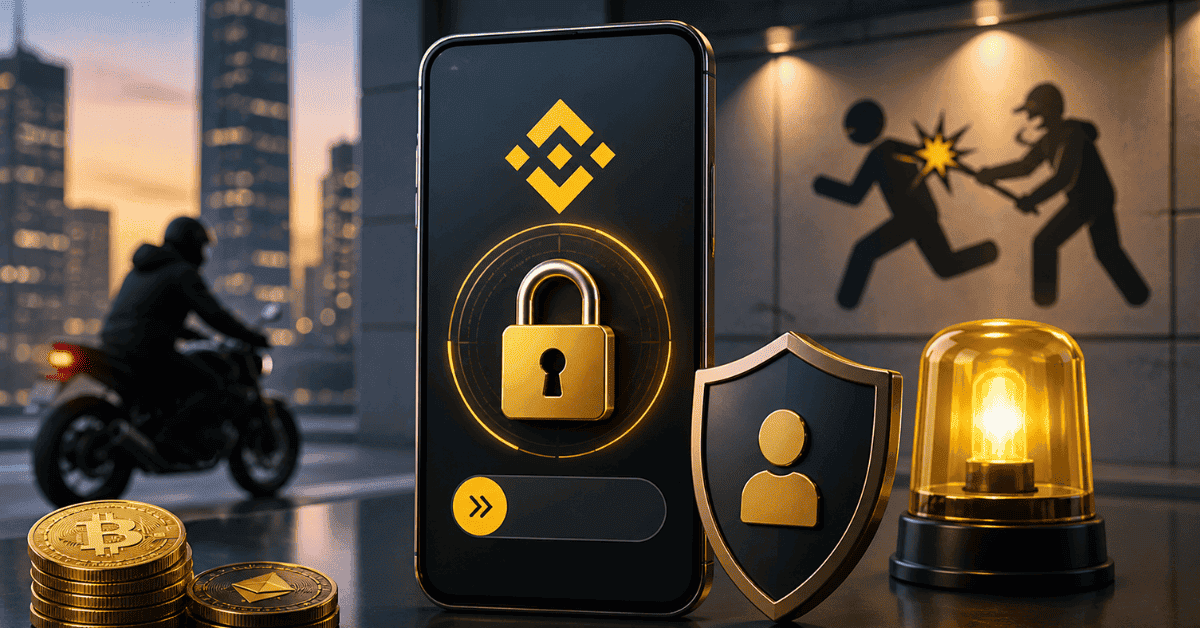
Binance withdrawal lock is designed for a type of crypto attack that no password manager can solve: someone threatening you in real life.
Binance is launching a new feature called Withdraw Protection, which lets users voluntarily lock crypto withdrawals for a chosen period of one to seven days. CoinDesk reported that the feature is intended to help deter so-called wrench attacks, where victims are physically threatened or coerced into sending crypto.


That makes the feature different from normal account security. Two-factor authentication protects against hackers. Address whitelisting protects against unauthorized withdrawals. A withdrawal lock is aimed at something darker: buying time when the attacker is standing in the room.
What a Wrench Attack Actually Means
A “wrench attack” is crypto slang for an attack where criminals use physical violence, kidnapping, intimidation or threats to force a victim to hand over funds.
The phrase comes from the old joke that even the strongest encryption can fail if someone hits the owner with a wrench until they reveal the password. In crypto, the problem is worse because transfers can be fast, global and irreversible.
That is why these attacks have become such a concern for high-profile crypto holders, founders, traders and executives. Binance Square posts have recently highlighted growing concern around physical attacks on crypto owners, including reports that wrench attacks rose sharply in 2025 and have become a more visible threat in Europe and elsewhere.
The basic security problem is simple: crypto can be technically secure and still physically vulnerable.
How Binance’s Withdraw Protection Works
According to CoinDesk, Binance’s Withdraw Protection is user-controlled. A user can set a withdrawal lock for one to seven days, during which withdrawals are blocked.
The idea is to make instant coercion less useful. If a criminal forces a victim to open Binance and withdraw funds, the victim can point to the lock. The account cannot immediately send crypto out, which may reduce the attacker’s ability to extract funds on the spot.
This does not make someone physically safe by itself. A determined attacker may still threaten, detain or pressure a victim. But it changes the risk equation. If funds cannot be moved immediately, the attacker’s plan becomes harder, slower and more dangerous.
In crypto security, time is protection.
Why This Is Different From Address Whitelisting
Many exchanges already offer address whitelisting, which limits withdrawals to pre-approved addresses.
That helps if a hacker gets into an account. If the hacker tries to add a new withdrawal address, the platform may impose a waiting period before funds can move. Binance’s anti-scam materials also describe temporary withdrawal restrictions as preventive measures designed to protect users from potential scams.
A withdrawal lock is more blunt. It is not only about which address funds can go to. It is about whether funds can leave at all during the lock period.
That makes it useful for a different threat model. Address whitelisting assumes the danger is unauthorized access. Withdraw Protection assumes the danger may be forced authorized access.
That distinction matters because wrench attacks turn the account owner into the attack vector.
The Feature Also Has Trade-Offs
A withdrawal lock can protect users, but it also reduces flexibility.
If a user locks withdrawals for seven days, they cannot quickly move funds during that period. That could be inconvenient during market volatility, exchange concerns or urgent personal needs. Security always comes with friction.
For long-term holders, that may be an acceptable trade-off. If someone keeps significant funds on an exchange and does not need instant withdrawals, a lock can add another layer of defense. For active traders or users who move funds often, the feature may feel restrictive.
That is why Binance’s user-controlled approach matters. The lock is voluntary, and users can choose the time window based on their own risk profile.
Crypto Security Is Becoming Physical Security
The bigger story is that crypto security is moving beyond seed phrases and smart contracts.
For years, the industry taught users to protect private keys, avoid phishing links, use hardware wallets and check contract approvals. Those lessons still matter. But wrench attacks reveal a different vulnerability: people.
If someone is known to hold valuable crypto, their risk may not only be online. Public wealth signaling, leaked personal data, conference visibility, social media bragging and poor operational security can all create real-world danger.
That is why features like withdrawal locks are becoming more relevant. Crypto wealth is highly portable, which is one of its strengths. It is also what makes coercion so dangerous.
The Bottom Line
Binance withdrawal lock is a practical response to one of crypto’s ugliest security problems.
Withdraw Protection will not stop every wrench attack, and users should not treat it as a substitute for personal safety, privacy and common sense. But it can make instant forced withdrawals harder, giving victims and platforms more time to respond.
That is important because crypto’s security model is changing. The industry already knows how to fight hackers. Now it also has to think about robbery, coercion and physical intimidation.
Crypto promised self-custody and financial freedom. The next challenge is making sure that freedom does not turn users into targets.
Disclaimer: This article is for informational purposes only and does not constitute financial, investment, or legal advice. Always conduct your own research before making any investment decisions.