
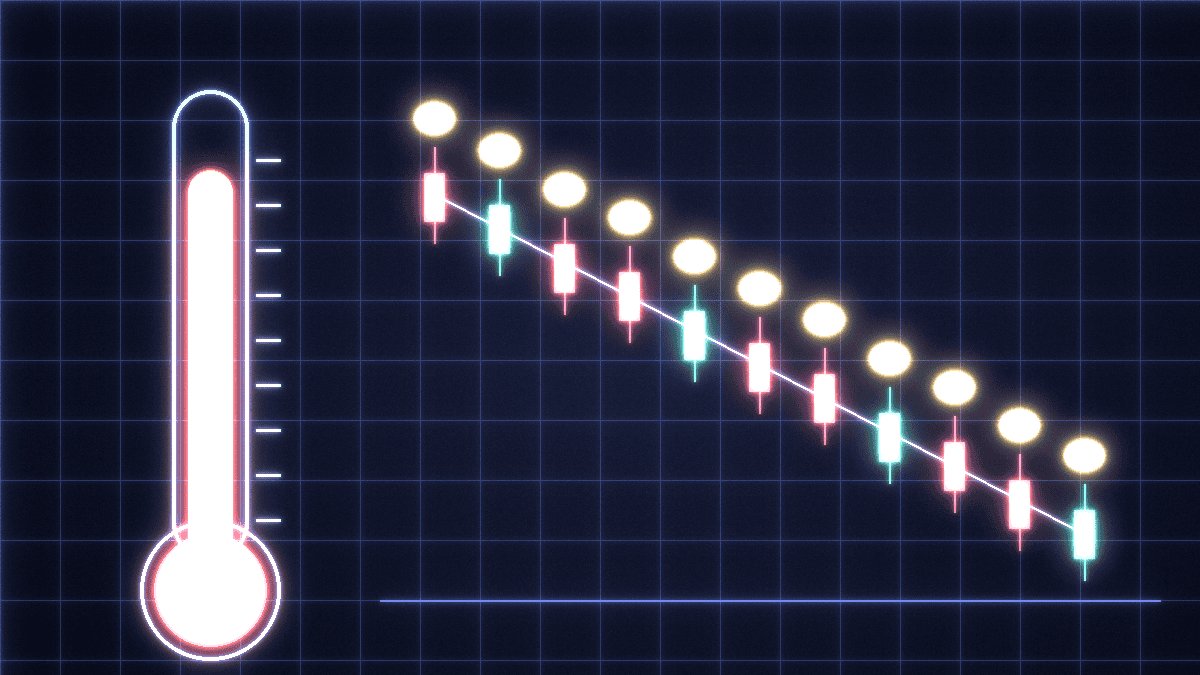
Bitcoin fell to $73,400 on Tuesday, its lowest price since Aug. 21, after U.S. consumer prices rose faster than expected in October and the core reading landed right on the threshold Federal Reserve Governor Christopher Waller had set hours earlier for considering a half-point rate hike in December. The drop was modest, about 1.2% from the pre-release price, but the repricing of rate expectations behind it could matter more over the next four weeks.
What the October CPI showed
The Consumer Price Index rose 0.4% on a seasonally adjusted basis in October, after a 0.6% rise in September, the Bureau of Labor Statistics reported. Core CPI, which strips out food and energy, rose 0.3%, the same pace as in August and September. Economists had expected 0.3% and 0.2%, according to CNBC’s Dow Jones poll.


The details were not one-off spikes. Shelter rose 0.3% and accounted for more than 30% of the monthly increase, food rose 0.5%, and energy added 0.7% after a 5.2% jump in September. Gasoline rose 1.0% on a seasonally adjusted basis. Used cars fell 1.2%, one of the few major categories to decline.
There is no annual inflation figure this time. The BLS said it did not collect October 2025 survey data during last year’s government shutdown, so it cannot publish 12-month changes for most series. That makes the run-rate the number to watch. Using the BLS index levels, core prices rose about 0.296% in October before rounding, and core inflation over the past three months works out to roughly 3.7% annualized, up from about 1.6% in the three months to July. Headline CPI rose about 0.35% before rounding, right on the line between 0.3% and 0.4%.
Waller set the bar before the data
The CPI report landed a few hours after Waller spoke in London. In his speech, he said he was “leaning toward supporting an increase in our policy rate of 25 basis points” at the Fed’s Dec. 8-9 meeting even if October inflation improved. He then went further. If the data came in with “core CPI inflation around 0.3 percent or even higher,” he said, “I believe a 50 basis point hike in the policy rate should be considered at the December meeting. Hiking only 25 basis points would put our credibility at risk, a risk I am not eager to take.”
Core came in at 0.3%. Waller is one voter on the Federal Open Market Committee, and his speech carried the usual note that the views were his own. But he has now put a specific marker on the table, and the data met it.
Bond markets moved first. The two-year Treasury yield, which tracks expectations for Fed policy most closely, rose more than 15 basis points to about 4.70%, and the 10-year climbed above 4.93%, CNBC reported. The Fed raised its target range to 3.75% to 4.00% in September, and a quarter-point hike in December would take it to 4.00% to 4.25%.
On Polymarket, traders priced about an 84% chance of a 25 basis point hike in December and about 12% for a move of 50 basis points or more shortly after the release. The market’s own data showed the half-point contract up about 11 points over the past day, while the probability of no change fell to under 3%.
How crypto reacted
Bitcoin was trading near $74,300 on Coinbase just before the 13:30 UTC release. It touched $73,400 within the first minute and was holding around $73,700 about half an hour later, according to Coinbase’s public price data. That takes out the $73,477 low from late Sunday, which AltcoinReporter covered on Monday, and leaves bitcoin at its lowest since Aug. 21, when it briefly traded near $73,000.
Ether fell further. It dropped from about $2,095 to $2,031 in the same 15-minute window on Coinbase, about 3%, before recovering to around $2,066. Solana and XRP each fell between 2% and 3% at the low. CoinDesk reported that U.S. stock index futures also turned lower after the report, with the Nasdaq 100 down more than 1%.
The reaction fits how bitcoin has tended to trade this autumn: with rate expectations, not as an inflation hedge. That pressure has come alongside heavy outflows from U.S. spot bitcoin ETFs, which AltcoinReporter reported wiped out their 2026 inflows last week.
What to watch next
Wholesale inflation data are due on Friday. The next CPI report, for November, is scheduled for Dec. 10, the day after the Fed’s decision, so October’s figures are the last CPI read policymakers will see before they meet. That raises the weight of other Fed speakers over the coming weeks, and in particular whether anyone else on the committee backs Waller’s case for a larger move.
For bitcoin, the nearest reference point is the late-August level around $73,000. Below that, Coinbase data show little trading history until the mid-August lows near $62,500. Moves after macro data are often partly reversed, so one session does not set a trend.
FAQ
What did the October 2026 CPI report show?
Headline CPI rose 0.4% and core CPI rose 0.3% in October, both above economists’ forecasts. The BLS did not publish year-over-year figures because October 2025 data were never collected.
Why does Waller’s speech matter for bitcoin?
Waller said a 50 basis point hike should be considered in December if core CPI came in around 0.3% or higher. It did, which pushed rate-hike odds and Treasury yields up and weighed on risk assets including bitcoin.
How low did bitcoin go after the CPI release?
Bitcoin touched $73,400 on Coinbase, its lowest price since Aug. 21, before trading near $73,700 about half an hour after the data.
Disclaimer: This article is for informational purposes only and does not constitute financial advice.