For most of 2026, one force has dominated Bitcoin’s story: inflation. Hot inflation readings pushed the Federal Reserve toward its most hawkish stance in years. Fear of rate hikes drove institutional money out of crypto and into the dollar and Treasury bonds. Every selloff traced back to the same root cause. The Fed’s fight against rising prices was crushing risk assets, and Bitcoin was caught in the crossfire.
This week, a quiet signal from the bond market suggested that story might be starting to change.


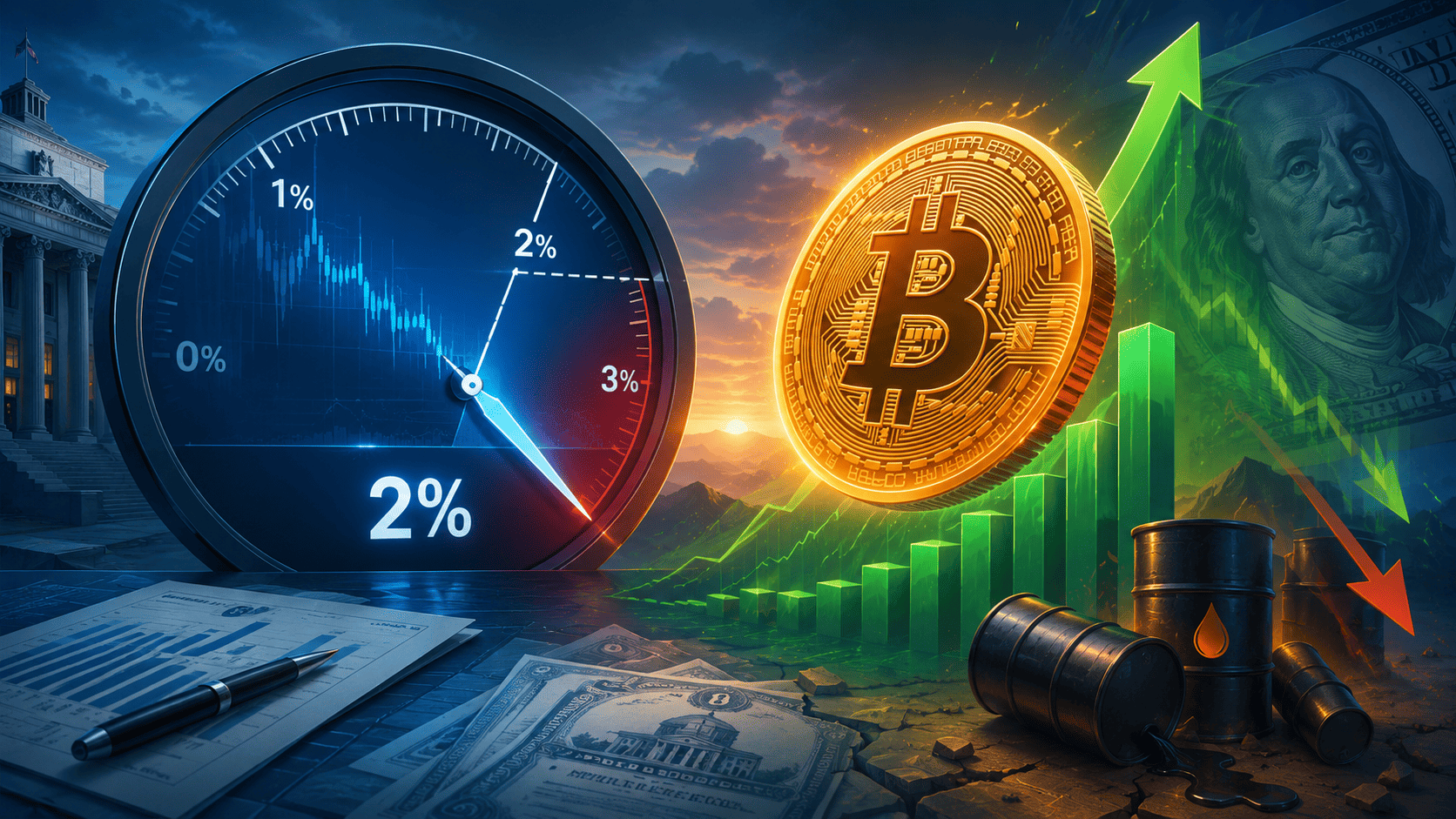
The US two-year breakeven inflation rate fell below 2% for the first time since 2024, according to CoinDesk. This helped power Bitcoin to a nearly 7% gain in the week ending July 5, its best weekly performance since March. The breakeven rate isn’t a household number, but for anyone trying to read where the Fed goes next, it’s one of the most important signals available. And right now it’s pointing in a direction that favors Bitcoin.
The message underneath is straightforward. The bond market is now betting that inflation will fall below the Fed’s own 2% target over the next two years. If that’s right, the case for further rate hikes weakens considerably, and the pressure that’s been weighing on Bitcoin all year could finally start to lift.
What Breakeven Inflation Actually Measures
The breakeven inflation rate sounds technical, but the concept is simple once you break it down.
It measures the market’s expectation of future inflation by comparing two types of US government bonds. Regular Treasury bonds pay a fixed rate. Treasury Inflation-Protected Securities, or TIPS, adjust their payouts based on inflation. The gap between the yields on these two bonds reveals what investors collectively expect inflation to average over a given period. If regular bonds yield 2% more than inflation-protected ones, the market is effectively predicting 2% average inflation.
The two-year breakeven, then, is the market’s forecast for average inflation over the next two years. When it sits above 2%, investors expect inflation to run hotter than the Fed’s target. When it drops below 2%, they’re betting inflation will actually undershoot the target.
For the first time since 2024, that number has fallen below 2%. The market is essentially saying that the inflation problem that has defined 2026 is on track to resolve itself, and possibly to overcorrect. Longer-dated breakeven rates have also traced a steep downward trajectory in recent weeks, reinforcing the signal rather than contradicting it.
This matters enormously for Fed policy expectations. The Federal Reserve’s hawkish stance under Chair Kevin Warsh has been justified by persistent inflation. If the market now believes inflation is heading below target, the entire rationale for continued rate hikes comes into question.
Why Oil Is Part of the Story
The collapse in inflation expectations didn’t happen in a vacuum. It’s been closely tied to a sharp drop in oil prices, and the connection reveals how quickly the macro picture has shifted.
Both the two-year breakeven rate and West Texas Intermediate crude oil prices have returned to levels last seen in late February, before the outbreak of the Iran conflict. That timing is significant. The Iran war and the threats to the Strait of Hormuz drove energy prices sharply higher earlier in 2026, and higher oil feeds directly into higher inflation through fuel, transport, and production costs. That energy shock was part of what pushed inflation readings to their hottest levels in years.
As the Iran situation de-escalated and the Strait reopened, oil prices retreated. With oil back to pre-war levels, one of the biggest drivers of 2026’s inflation surge has effectively reversed. The deflationary impulse from falling energy prices is now working in Bitcoin’s favor rather than against it.
Robin Brooks, a senior fellow at the Brookings Institution and former chief economist at the Institute of International Finance, captured the significance. He noted that the July 14 inflation report is when the deflationary impulse from falling oil prices should remind everyone that the Fed isn’t going to hike, and that if anything, the next move will be a cut. That’s a substantial shift from the three-hikes-this-year scenario that Bank of America was forecasting just weeks ago.
Why This Helps Bitcoin
The connection between falling inflation expectations and a higher Bitcoin price runs through a few clear channels.
The most direct is interest rates. Bitcoin pays no yield. When interest rates are high, holding a non-yielding asset carries a real opportunity cost, because that money could earn interest in Treasury bonds instead. Lower inflation expectations reduce the case for rate hikes and increase the odds of eventual cuts, which lowers that opportunity cost and makes Bitcoin relatively more attractive.
The second channel is the dollar. Reduced rate-hike expectations tend to weaken the US dollar. Bitcoin typically moves inversely to the dollar, so a softer dollar removes one of the barriers that’s been capping Bitcoin’s price all year. As some observers have noted, if the dollar’s strength is under question, the barrier to Bitcoin rising further looks weaker too.
The third is broader risk appetite. High rates and inflation fears pushed institutional money out of risk assets and into the safety of bonds and cash throughout 2026. If that macro weight lifts, capital that fled to safety could rotate back toward riskier, higher-return assets like Bitcoin. The return of buying volume this week, alongside a stabilization in the institutional ETF outflows that plagued June, suggests some of that rotation may already be beginning.
Together, these forces explain why a single bond-market signal could power Bitcoin’s best week in months. The macro headwind that defined the first half of 2026 is showing its first real signs of easing.
The Catch: July 14 Decides a Lot
Before declaring the bear market over, there are genuine reasons for caution, and they center on one date.
The bullish positioning that’s built up this week is, in the words of one analysis, lopsided and vulnerable to sudden unwinding. When too many traders crowd onto the same side of a bet, any surprise that goes against them can trigger a sharp reversal. That surprise could come on July 14, when the US reports the Consumer Price Index for June.
The setup is binary. If the CPI report comes in cool, it confirms the disinflationary trend the breakeven rates are signaling. That would strengthen bets on eventual rate cuts, weaken the dollar further, and potentially validate a sustained Bitcoin rally. If the report comes in hot, it revives fears about persistent inflation, restores strength to the dollar, and could quickly reverse this week’s gains.
The deeper caution is that annual inflation remains structurally elevated even as expectations fall. Services inflation in particular has been sticky. The Fed’s projections still show more officials expecting hikes than cuts, and markets give the Fed roughly a 70% chance of holding rates at its July 28-29 meeting, with any move more likely to be a hike than a cut. Warsh softened his tone this week by acknowledging inflation risks have eased, but traders have a habit of selling relief bounces, and one soft comment doesn’t rewrite the Fed’s own forecasts.
The Bottom Line
The breakeven inflation signal is genuinely bullish for Bitcoin, and it’s not just sentiment. It reflects the bond market, the most sober corner of finance, collectively betting that the inflation problem driving 2026’s crypto weakness is on track to resolve. Combined with falling oil prices and a potentially softening dollar, it removes the single biggest weight that’s been holding Bitcoin down all year.
But a signal is not a confirmation. The July 14 CPI report is the near-term test that could either validate this optimism or puncture it. Beyond that, the July 28-29 Fed meeting will show whether the central bank actually shifts its stance or maintains the hawkish positioning that markets are increasingly betting against.
For investors, the useful framing is that the macro backdrop that hurt Bitcoin is showing its first real crack, but the crack hasn’t yet become a break. If the inflation data confirms the disinflationary trend, the conditions for a sustained recovery fall into place. If it doesn’t, this week’s rally risks becoming another relief bounce that fades. The bond market has placed its bet. The next two weeks of data will reveal whether it’s right.
Disclaimer: This article is for informational purposes only and does not constitute financial advice. Cryptocurrency investments carry significant risk. Always conduct your own research before making any investment decisions.