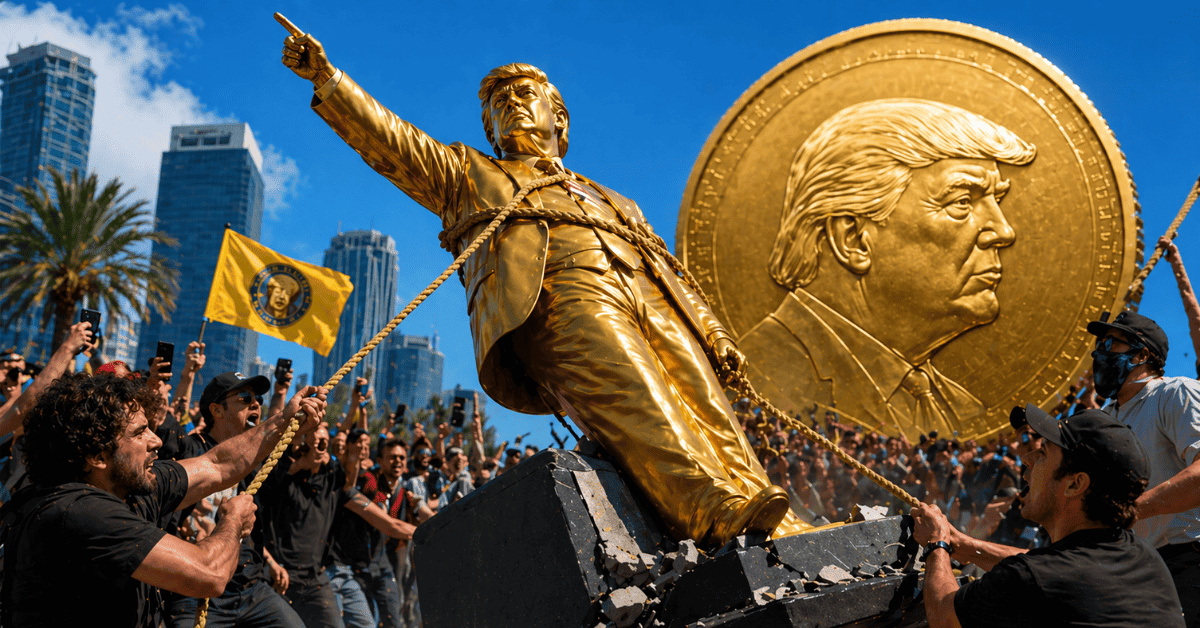
A giant gold-leaf statue of Donald Trump has become the latest strange symbol of political meme coin mania, after the sculptor who made it reportedly withheld the artwork during a dispute over money and image rights.
The 15-foot bronze statue, called Don Colossus, was created by Ohio sculptor Alan Cottrill and commissioned by backers of the $PATRIOT meme coin. The project was meant to generate attention around the token, with supporters hoping the statue would eventually be unveiled at a Trump property and used as a major promotional moment for the community.


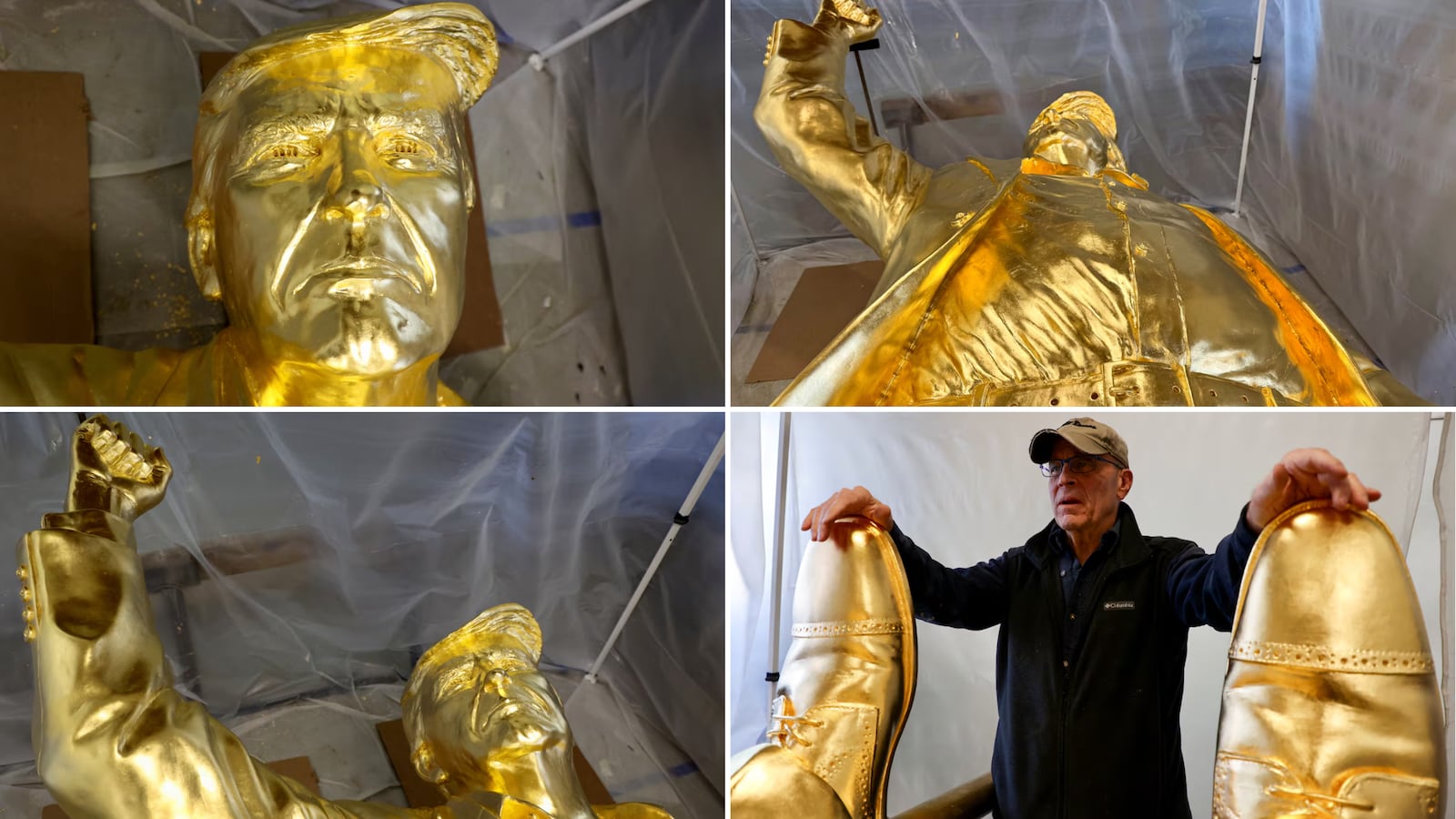
Image Credit: Reuters
Instead, the project became messy. Cottrill reportedly kept the statue in an undisclosed location in Ohio while arguing that the crypto group still owed him money tied to intellectual property rights after using images of the work to promote the token.
The Statue Was Built for Crypto Hype
$PATRIOT Wanted a Political Spectacle
The statue was not just an art commission. It was part of a larger attempt to turn Trump-themed political energy into meme coin momentum.
According to reporting from The Daily Beast, $PATRIOT commissioned the work in August 2024. The sculpture reportedly cost $300,000, with another $60,000 paid for the gold-leaf finish. The statue was intended to be a showpiece for the token’s online community and a physical symbol of the project’s connection to pro-Trump political culture.
Backers of the project had reportedly floated ambitious plans, including a national tour and possible installation at Trump National Doral, the Republican National Committee headquarters, or a future presidential library.
That kind of spectacle is familiar in meme coin culture. Projects often rely on attention, symbolism and social media buzz more than fundamentals. A massive gold Trump statue was an extreme version of the same strategy.
The Artist Wanted the IP Dispute Settled
The problem was not only payment for the physical statue. Cottrill also claimed the group used images of his work to promote its cryptocurrency without settling the rights issue.
That distinction matters. In crypto marketing, images, memes and social-media posts can become part of a project’s value story. If a token uses artwork to sell a community vision, the rights to that artwork become commercially important.
Cottrill’s position was simple: he would not hand over the statue until the dispute was resolved. That turned Don Colossus from a marketing asset into leverage.
Eric Trump Distanced the Family From $PATRIOT
The Trump Organization Denied Any Connection
The project’s momentum took a serious hit in February when Eric Trump publicly said the Trump Organization had no association with the Patriot Token or meme coin.
That denial mattered because the token’s entire marketing appeal depended on perceived proximity to Trump. Even if the project did not claim formal authorization, the statue, the proposed Trump property unveiling and the political branding created an impression that the project wanted investors to connect it with Trump’s orbit.
Once Eric Trump drew a clear line between the family and the token, the hype became harder to sustain. For any political meme coin, perceived endorsement can be the difference between a viral narrative and a credibility problem.
Political Tokens Live and Die on Association
The $PATRIOT episode shows why political meme coins are risky. Their value often depends on attention, identity and implied association rather than utility.
If the political figure embraces the project, traders may pile in. If the figure distances themselves, the narrative can collapse quickly. That creates a fragile market where social perception matters as much as token design.
The statue dispute made that fragility visible. A token project tried to build a real-world monument to generate hype, but the monument itself became trapped in a dispute over money, rights and legitimacy.
An Anonymous Donor Reportedly Stepped In
The Statue May Finally Be Moving
The Daily Beast reported that Patriot later claimed an anonymous donor covered the remaining balance owed to Cottrill. The group said the payment cleared the way for the sculptor and his team to drive the statue from Ohio to Miami.
That claim has added another layer of uncertainty. The Daily Beast said it contacted Cottrill to verify Patriot’s account. At the time of its report, the future of the statue still appeared unclear.
Even if the statue eventually reaches a Trump property, the episode has already changed the story. What was supposed to be a triumphant unveiling became a public dispute about unpaid rights, meme coin marketing and the dangers of building hype around someone else’s brand.
What This Says About Meme Coin Marketing
Meme coins often sell culture before they sell product. That can work when the culture is organic, transparent and community-driven. It becomes dangerous when projects blur the line between tribute, endorsement and commercial promotion.
The $PATRIOT statue shows how quickly that line can become costly. A physical statue worth hundreds of thousands of dollars is not a meme on a screen. It involves contracts, artists, intellectual property, logistics and reputation risk.
Crypto projects that use celebrities, politicians or public figures as marketing fuel need to understand that attention can create legal and commercial exposure. If the figure denies involvement, if the artist disputes rights, or if investors feel misled, the campaign can backfire.
Why Investors Should Be Careful
Political meme coins can move quickly because they tap into emotion. Supporters may buy because they like the message, not because they understand the token structure, liquidity or legal risks.
That is exactly why caution matters. A token’s branding may be loud, but investors still need to ask basic questions. Is the project officially connected to the person it references? Who controls the supply? What rights does the project actually have to the images it uses? Is there a real product, or only a promotional campaign?
The Don Colossus story does not prove every political meme coin is a scam. It does show that flashy marketing can hide messy execution.
What Comes Next
The next thing to watch is whether the statue is formally unveiled and where it ends up. If Patriot succeeds in placing it at a high-profile Trump-linked location, the project may try to revive its narrative.
The second issue is whether Cottrill or the token backers provide more detail about the final settlement. The intellectual property dispute is central because it explains why the artist had leverage over the project.
The third signal is investor reaction. Political meme coins remain a volatile corner of crypto, and $PATRIOT’s statue saga is a reminder that hype can create attention without creating trust.
For now, Don Colossus stands as one of the strangest examples of meme coin marketing crossing into the physical world. A crypto project wanted a golden symbol of power. It ended up with a public lesson in contracts, image rights and the cost of chasing political spectacle.
Disclaimer: This article is for informational purposes only and does not constitute financial, investment, or legal advice. Always conduct your own research before making any investment decisions.