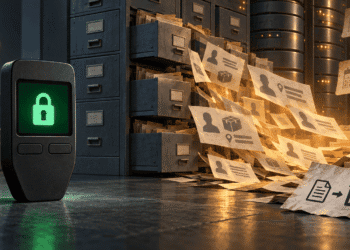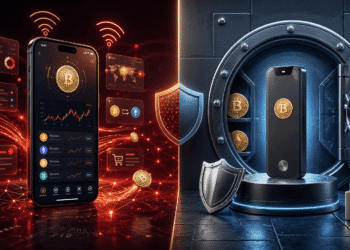

The next person using a crypto wallet might not be a person.
Binance Wallet has introduced an Agentic Wallet, a dedicated keyless wallet designed for AI agents to trade, transfer and manage assets on behalf of users. The wallet keeps a separate balance from the user’s main wallet and allows users to set configurable controls before an AI agent can act.


That is a major shift in how crypto wallets are being imagined. For years, the industry focused on teaching humans not to lose seed phrases, click phishing links or sign dangerous transactions. Now the next challenge is different: how do you safely give a bot permission to move money?
We spent years teaching humans not to lose seed phrases. Now we’re giving wallets to bots.
Binance’s Agentic Wallet Is Built Around Boundaries
Binance describes Agentic Wallets as wallets purpose-built for AI agents that can securely trade, transfer and manage assets on behalf of users. The key feature is separation. The user’s main wallet stays isolated, while the agent operates only inside a dedicated wallet with its own balance and rules.
That design matters because giving an AI agent direct access to a main wallet would be risky. A bad prompt, software bug, malicious instruction or compromised agent could result in irreversible losses.
With a dedicated agent wallet, the user can limit how much capital the agent controls. They can also monitor activity in real time and define what the agent is allowed to do. Binance’s FAQ says the wallet is created under the user’s Binance account, but operates only within the rules and limits the user defines.
That does not eliminate risk, but it changes the risk model. Instead of trusting an AI agent with everything, users can give it a smaller sandbox.
Kite Is Building Passports for AI Payments
Binance is not the only company moving in this direction.
Kite launched its mainnet and Kite Agent Passport on April 30, describing it as identity and payment infrastructure for autonomous AI agents. The system gives agents programmable wallets that can hold funds and make purchases on behalf of users, while users retain control over spending limits and authorized destinations.
Kite’s own documentation frames the problem clearly. AI agents need autonomy to make payments without requiring a human signature every time, but users still need control through pre-approved spending rules. The system combines identity, authentication, delegation and on-chain payment processing.
That is the core idea behind agentic payments. A user should not have to manually approve every small transaction, but an agent should not have unlimited freedom either.
Why AI Agents Need Wallets at All
The simplest answer is that AI agents are starting to act more like software workers.
An AI agent might book travel, pay for data, purchase cloud services, subscribe to tools, rebalance a portfolio, execute a trading strategy or pay another agent for a task. If agents are going to do those things automatically, they need a way to send and receive value.
Traditional payment systems were not designed for autonomous software agents. Credit cards and bank transfers are built around human account holders, merchant relationships and legacy compliance systems. Crypto wallets, smart contracts and stablecoins are more naturally programmable.
That does not mean every agent needs Bitcoin or stablecoins. But crypto rails make it easier to create wallets with automated rules, spending limits, instant settlement and transparent audit trails.
For AI developers, that is powerful. For users, it is also scary.
The Big Risk Is Delegation
The hardest part of agent wallets is not the wallet. It is delegation.
When a user gives an AI agent permission to spend, trade or transfer, they are trusting the agent to understand intent. That is dangerous because AI agents can make mistakes. They can misread instructions, get manipulated by malicious content or perform actions that look technically valid but economically harmful.
This is why spending limits, approved destinations and transaction scopes are so important. Kite’s Agent Passport lets users set rules around budget, duration, merchant scope and transaction limits. Its documentation says payments are tied to a user, the agent acting on their behalf and the service receiving payment, creating a clearer accountability trail.
That model could become the standard for agentic crypto wallets: identity plus permissions plus limits.
Bots Could Become the Next Wallet Users
Crypto wallets were originally built for people. Then they expanded to institutions, apps, multisigs and smart contracts. AI agents may be the next user class.
That could change wallet design. Instead of only asking whether a wallet is easy for humans to use, developers will need to ask whether it is safe for agents to use. Can an agent check balances? Can it place limit orders? Can it pay invoices? Can it interact with DeFi? Can it only use approved apps? Can it be paused instantly?
Binance says its Agentic Wallet supports a dedicated balance, configurable controls and real-time visibility. Kite says its Passport gives agents programmable wallets with spending limits and authorized destinations. Those are early versions of a bigger design pattern.
Wallets may become less like static vaults and more like permission systems for humans, bots and apps.
This Could Be Useful, But It Needs Guardrails
There are obvious use cases.
A trading agent could manage a small portfolio within strict loss limits. A shopping agent could buy approved products below a budget. A business agent could pay recurring software bills. A travel agent could book hotels only from approved merchants. A treasury agent could move funds between whitelisted wallets.
But there are also obvious dangers. An agent could be tricked into paying a fake invoice. It could follow bad trading signals. It could approve a malicious contract. It could be socially engineered through web content or poisoned instructions.
That is why the best agent wallets will probably be conservative. They will use small balances, whitelisted destinations, time limits, transaction caps and real-time alerts. They may also require human approval for larger or unusual transactions.
The future is not “let the bot control everything.” The future is more likely “let the bot act inside a locked room.”
The Bottom Line
AI agents are starting to get their own crypto wallets, and that could become one of the most important wallet trends in Web3.
Binance’s Agentic Wallet and Kite’s Agent Passport both point in the same direction: users will increasingly delegate financial actions to software agents, but only within controlled limits.
That changes the crypto wallet from a personal storage tool into an automation layer. The wallet is no longer just where funds sit. It becomes the place where rules are defined, agents are authorized and machine-driven transactions happen.
The next wallet user might not be human. The real question is whether the industry can make that useful without making it reckless.
Disclaimer: This article is for informational purposes only and does not constitute financial, investment, or legal advice. Always conduct your own research before making any investment decisions.