
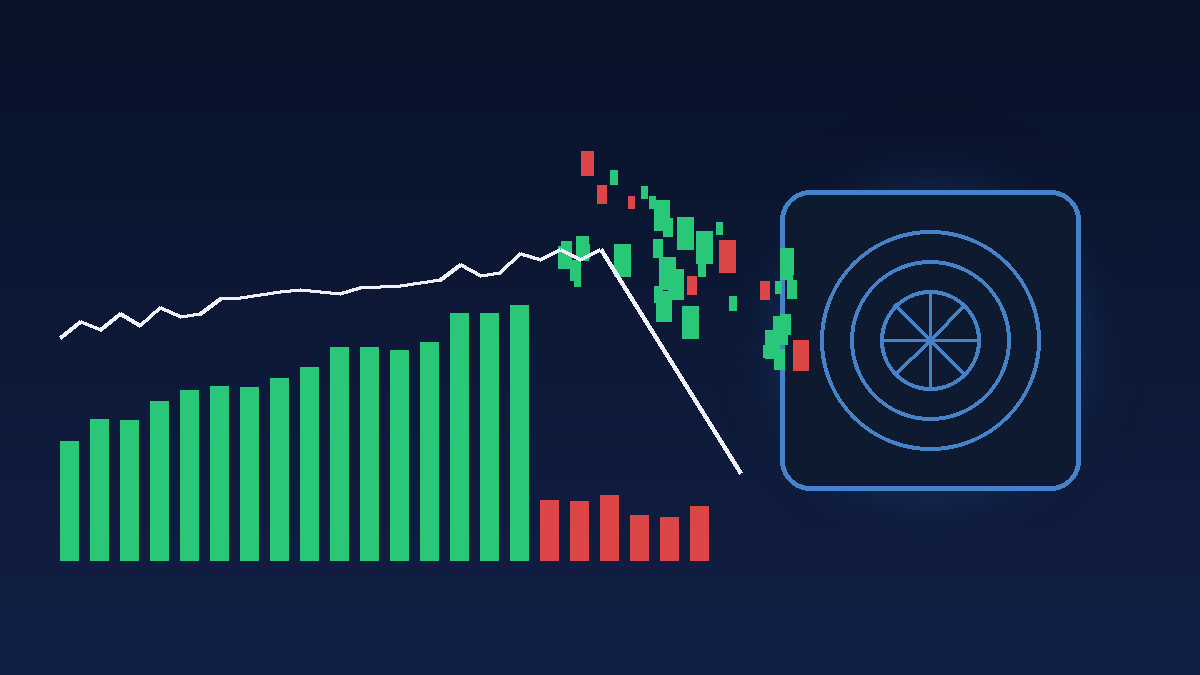
Hyperliquid’s community-owned HLP vault took a loss of about $556,000 on Sunday after a sudden drop in XPL, the token of stablecoin blockchain Plasma, wiped out a cluster of large long positions and left the vault holding them. Account data on Hyperliquid shows that 10 of the 11 accounts behind those longs pulled about $1.62 million in margin out in the eight minutes before the drop.
XPL fell from about $0.0864 to as low as $0.0694 on Hyperliquid over roughly two minutes, a slide of nearly 20%. Almost all of it came in a single one-minute candle at 04:32 UTC. The token traded near $0.075 on both Hyperliquid and Binance at about 10:10 UTC, still well below where it started the day.


What the account data shows
AltcoinReporter pulled trade fills and ledger records from Hyperliquid’s public info API for 11 accounts that on-chain analyst kenni flagged on Sunday morning. Between them, the accounts held a little over 160 million XPL in long positions. That was about $12.3 million of exposure at the liquidation prices.
The ledgers show a clear sequence. From 03:42 UTC, 10 of the accounts made small withdrawals of between $500 and $1,600 each, which looks like each account was checking that withdrawals went through. Then, between 04:24 and 04:31 UTC, the same 10 accounts requested larger withdrawals. Each account took out between about $98,000 and $232,000 in one or two transfers, for a total of about $1.62 million. The 11th account did not withdraw before the drop.
Taking margin out of a leveraged position pushes its liquidation price closer to the market. When XPL dropped, all 11 accounts were liquidated between 04:32:50 and 04:32:59 UTC. Every one of them now shows a balance of zero. Ten of the accounts had been funded with a single USDC transfer each, of between about $145,000 and $243,000, from the same sending address between October 29 and October 31.
That does not prove who controls the accounts, or whether they had positions anywhere else. Kenni made the same point, writing that whether the operator was short XPL on Binance was something “I can’t see.” Another analyst, Naeven, tracked a wider group of 16 wallets holding about 269 million XPL. TechFlow reported Naeven’s finding that 12 of those wallets withdrew about $2.02 million before the crash.
Where the loss landed
The positions were not closed on the order book. Instead they went to HLP Liquidator 3, a sub-vault of HLP that takes over positions through what Hyperliquid’s documentation calls backstop liquidation. A backstop liquidation happens once an account’s equity drops below two-thirds of its maintenance margin. At that point the positions and any remaining margin pass to the liquidator, and the trader keeps nothing.
Fills for Liquidator 3 show it took on about 160.4 million XPL at an average price of $0.07592, or roughly $12.18 million, in those nine seconds. It then sold the position into a market that was still falling. The sub-vault has no open positions now. Its balance has dropped from about $1 million to $444,213, a 24-hour loss of $555,787. The parent HLP vault showed a 24-hour loss of about $531,000 on Sunday morning, against roughly $169.6 million in vault equity. That is about a third of one percent.
The move was not confined to Hyperliquid. On Binance’s XPL perpetual market, about 144 million XPL, worth around $11.2 million, changed hands in the 04:32 UTC minute alone.
A familiar pattern for HLP
The structure matches the March 2025 ether trade that cost HLP about $4 million. In that case a single wallet withdrew collateral from a 50x ETH long, was liquidated into the vault and kept about $1.8 million in profit. Hyperliquid said at the time that there was “no protocol exploit or hack” and that “HLP is not a risk-free strategy,” and it cut maximum leverage on BTC and ETH to 40x and 25x, CoinDesk reported.
The difference this time is that the exposure was spread over at least 11 accounts in a smaller-cap token, not one large position in a major asset. Spreading exposure this way makes per-account limits less effective. The loss was also much smaller relative to the vault, and HLP still shows an all-time profit of about $138.5 million. Hyperliquid had not commented publicly on the XPL liquidations as of Sunday morning.
Leverage on perpetual futures has been drawing regulators’ attention too. In June, ASIC warned that crypto perps resemble CFDs. Hyperliquid’s own token has had a volatile year, but HYPE barely reacted to the XPL loss and traded near $88 on Sunday.
What to watch
The main question is whether Hyperliquid changes XPL’s leverage or open-interest limits, as it did for BTC and ETH last year, or adds rules aimed at groups of linked accounts. HLP depositors will also be watching for any outflows from the vault. XPL open interest on Hyperliquid was still about 966 million tokens on Sunday, so leveraged positioning in the token remains large.
FAQ
What is HLP on Hyperliquid?
HLP is a community vault that provides liquidity on Hyperliquid and runs its liquidator. Depositors share its profits and losses, which is why they bear losses like this one.
How much did HLP lose on the XPL drop?
Its liquidator sub-vault shows a 24-hour loss of about $556,000. The full HLP vault was down about $531,000 over the same window, out of roughly $169.6 million in equity.
Was this a hack?
No exploit has been reported. The data points to leveraged longs that had their margin withdrawn shortly before a sharp price drop, which pushed their liquidation onto the vault.
Disclaimer: This article is for informational purposes only and does not constitute financial advice.