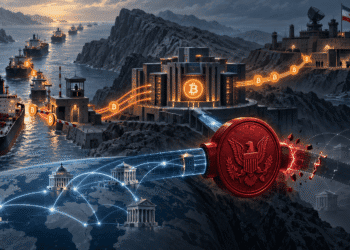


Iran has launched Hormuz Safe, a digital maritime insurance platform for vessels crossing the Strait of Hormuz, with reports saying the system allows crypto payments for coverage tied to one of the world’s most sensitive shipping routes.
The platform was introduced to provide insurance coverage for maritime cargo moving through the strategic waterway, according to Iran International, which cited IRGC-affiliated Fars News. CryptoBriefing also said the platform offers digital insurance policies with cryptocurrency payment options for ships transiting the strait.


The launch comes during a period of extreme tension around Hormuz, where shipping risks, war-risk insurance costs, and safe-passage questions have all become major concerns for energy markets. It also arrives after warnings that scammers had used fake crypto payment messages to target shipping companies, which means operators will need to separate official insurance channels from fraudulent “safe transit” demands.
A Shipping Crisis Creates a New Insurance Market
The Strait of Hormuz is one of the most important energy chokepoints in the world, so any disruption there quickly affects shipping companies, insurers, oil markets, and governments.
Hormuz Safe appears to be Iran’s attempt to offer a digital insurance route at a time when normal maritime risk coverage has become more expensive and harder to secure. War-risk insurance premiums for vessels moving through the strait have surged sharply during the crisis.
For a large vessel, that kind of increase can turn a normal transit into a multimillion-dollar cost decision. It also gives Iran a reason to build its own insurance mechanism, especially if international insurers and Western-linked payment systems are difficult to use because of sanctions, conflict risk, or compliance concerns.
The crypto angle makes the platform even more important. Crypto payments can move outside traditional banking channels, which may be attractive for sanctioned or restricted markets. But that same feature also creates legal, compliance, and sanctions risks for shipping companies that need to know exactly who they are paying and why.
⚡️JUST IN
Iran has created an Insurance Company to guarantee safe passage through the Strait of Hormuz
Vessels pay their Insurance Premiums in Bitcoin
This move will hurt the World’s largest Marine insurers pic.twitter.com/80iGCqmnKW
— Iran Observer (@IranObserver0) May 16, 2026
Why Crypto Payments Make Hormuz Safe Sensitive
Crypto payments are not just a payment option in this story. They are the most sensitive part of the platform.
Iran has been under heavy international sanctions for years, which means many normal banking and insurance payment routes are difficult or blocked. A crypto-enabled insurance system could make it easier for certain operators to pay for coverage without using standard banking rails.
That does not make the system simple or risk-free. If payments are tied to Iranian state entities, sanctioned parties, or groups linked to the Islamic Revolutionary Guard Corps, shipowners and insurers could face serious compliance questions. Crypto transactions may be fast, but they are also traceable, and regulators can examine wallet flows later.
This is why shipping companies will likely treat Hormuz Safe cautiously. A lower-cost or more accessible insurance policy may sound useful, but maritime firms must weigh that against sanctions exposure, cargo rules, flag-state obligations, and the risk of dealing with a platform that governments may challenge.
For crypto markets, the story shows how digital assets are being pulled into real-world geopolitical infrastructure. This is not a DeFi app or a trading product. It is crypto being used in a high-stakes shipping corridor with global energy consequences.
Scam Warnings Make Verification Critical
The Hormuz Safe launch also comes after a wave of fake crypto payment messages targeting shipping companies.
In April, maritime risk firm MARISKS warned that unknown actors had sent fraudulent messages claiming to represent Iranian authorities and demanding Bitcoin or Tether payments for vessel clearance. Reuters reported that the firm described those specific messages as scams and said they were not sent by Iranian authorities.
That history matters because it creates confusion around any new crypto-linked Hormuz payment system. Shipowners may now face official channels, unofficial brokers, scam messages, and political pressure at the same time.
The safest approach for operators is verification. Any insurance or transit-related payment request needs to be checked through trusted maritime counsel, insurers, flag-state authorities, and recognized compliance teams before funds move. A wrong payment could mean losing money to scammers, violating sanctions, or creating a record that later attracts regulatory scrutiny.
This is also why crypto users should be careful with viral claims about Hormuz payments. Not every wallet address, invoice, or “safe passage” demand should be treated as official. The difference between a state-backed platform and a scam message can be very costly.
Maritime Insurance Is Becoming a Geopolitical Tool
Hormuz Safe shows how insurance can become part of geopolitical leverage.
In calm markets, maritime insurance is mostly a commercial issue. Ships need coverage, insurers price risk, and voyages continue. During a crisis, insurance can become a pressure point. If coverage becomes too expensive or unavailable, ships may stop moving even if the waterway is technically open.
That is what makes this platform strategically important. Iran is not only offering a digital product. It is trying to influence the economics of passage through a route that carries a major share of global oil and gas trade.
The U.S. has also been involved in the insurance discussion. CryptoBriefing noted that Washington has proposed a large reinsurance framework for Hormuz-related shipping risk, showing that insurance has become part of the wider contest over who can keep trade moving through the strait.
For shipping companies, the result is a complicated market. They need coverage, but they also need political clarity. A policy is only useful if it is recognized, enforceable, and compliant with the rules that apply to the vessel, cargo, owner, lender, and insurer.
What This Means for Crypto
Hormuz Safe is a reminder that crypto payments are no longer only about trading and speculation.
Digital assets are increasingly appearing in payment systems, sanctions workarounds, remittances, shipping, and crisis finance. That does not mean every use case is positive for the industry. Some uses can attract regulatory scrutiny, especially when they involve sanctioned jurisdictions or conflict zones.
For crypto firms, the risk is reputational and legal. If certain tokens, exchanges, wallets, or infrastructure providers are seen as helping sanctioned payments, they may face attention from regulators such as the U.S. Treasury’s Office of Foreign Assets Control.
For blockchain analysts, the platform may also become a monitoring target. If Hormuz Safe uses identifiable wallets, those flows could be tracked, mapped, and investigated. Crypto may avoid some banking friction, but it does not erase the transaction trail.
The broader lesson is that real-world crypto adoption can be messy. A payment system used in a shipping crisis is very different from a retail payments app or a stablecoin checkout tool. It brings higher stakes, more legal risk, and more geopolitical attention.
What Happens Next?
The next question is whether shipowners actually use Hormuz Safe.
A platform launch does not automatically mean adoption. Shipping companies will want to know who underwrites the coverage, how claims are handled, what payment tokens are accepted, whether policies are legally enforceable, and whether using the system creates sanctions risk.
Governments and insurers will also watch closely. If Hormuz Safe becomes a major payment channel, regulators may examine the wallets, counterparties, and intermediaries involved. If adoption is low, the platform may remain more of a political signal than a major maritime insurance tool.
For now, the launch is still important because it connects crypto payments to one of the world’s most important shipping routes. Iran is using digital insurance to respond to a maritime crisis, while shipowners are left to weigh cost, safety, legality, and verification before making any move.
Key Takeaway
Iran’s Hormuz Safe platform turns crypto payments into part of a much larger shipping and insurance story.
The platform may help Iran offer digital maritime coverage during a crisis in the Strait of Hormuz, but it also creates serious questions around sanctions, scam risks, payment verification, and legal enforceability. For crypto, the story shows how digital assets are moving into real-world infrastructure, where adoption can bring both practical utility and major geopolitical risk.
Disclaimer: This article is for informational purposes only and does not constitute financial, investment, or legal advice. Always conduct your own research before making any investment decisions.