On July 1, Robinhood flipped the switch on its own blockchain at a London keynote grandly titled “The World Is Flat.” Robinhood Chain was pitched as serious infrastructure: a permissionless Layer 2 built on Arbitrum for tokenized stocks, real-world assets, DeFi lending, and what the company called “AI-native finance.” CEO Vlad Tenev held up tokenized shares of NVIDIA and Apple as the flagship use cases. This was crypto for grown-ups.
The market took one look at the shiny new chain and built a cat coin.


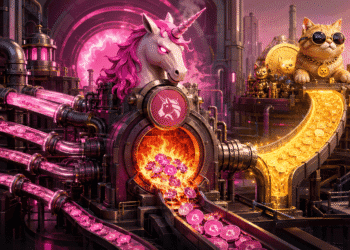
Within a week, the loudest thing on Robinhood Chain wasn’t a tokenized blue-chip stock. It was CASHCAT, a memecoin that reached nearly $150 million in market cap with over $159 million in 24-hour volume. And the punchline writes itself: CASHCAT is named after the name Robinhood almost used for itself. Before founders Vlad Tenev and Baiju Bhatt settled on “Robinhood,” they nearly called the company “CashCat,” a nod to Bhatt’s fondness for cats. An anonymous memecoin creator dug that trivia out of company lore and turned it into a hundred-million-dollar joke on Robinhood’s own infrastructure.
The CEO Who Changed His Mind in Five Days
The most telling part of the story is how quickly Robinhood’s boss shifted his stance.
On July 2, the day after the chain went live, Tenev told CNBC that memecoins were largely a dead end. His argument was that “assets without utility do not serve a lasting purpose,” and that tokenized real-world assets were the durable future of crypto. It was a clean, mature message aimed at institutions and regulators.
Then CASHCAT went parabolic. By July 8, Tenev was back on X with a notably softer tone. Robinhood Chain, he wrote, is being built to be the best chain for real-world assets, before adding that it “works great for memes too.” He also started following the CASHCAT account. Days after dismissing memecoins as pointless, the CEO was embracing the biggest one on his own network.
The reversal is understandable. A brand-new blockchain needs transactions and active wallets to look alive, and speculative trading delivers both far faster than tokenized Treasuries do. CASHCAT drove Robinhood Chain’s daily transactions from about 1.2 million on July 7 to nearly 2.8 million on July 8, a 133% jump in a single day. For a chain trying to prove it has a pulse, a viral cat coin is arguably more useful than a quiet, orderly RWA launch.
How a Memecoin Slipped Past the Front Door
What makes CASHCAT genuinely interesting isn’t the price. It’s what it reveals about permissionless infrastructure.
CASHCAT never went through Robinhood’s app-listing process. It didn’t need to. Robinhood built its chain with partners like Uniswap and Chainlink live on day one, and that same open architecture, designed to support tokenized equities and RWA collateral, also lets any token deployed on the chain reach external liquidity, price charts, and aggregator pages. CASHCAT gained all the trappings of a real listing through Uniswap pools and third-party launchpads like Noxa.fun, entirely outside Robinhood’s control. Solana’s Pump.fun even added support for Robinhood Chain tokens, letting users trade them without bridging.
In other words, the moment Robinhood opened its chain to any builder, it lost the ability to decide what the chain became known for. The market picked its own breakout asset, and there was nothing Robinhood could do but follow the token’s account and change its messaging. That’s the double edge of “permissionless.” It’s a feature for building open finance, and it means the world’s most talked-about asset on your institutional blockchain can be a cat holding a fistful of cash.
The Fortunes and the Warning
As with every memecoin frenzy, CASHCAT minted a handful of fortunes on the backs of a much larger crowd.
One early buyer spent $838 on roughly 15 million tokens about three weeks ago and has since sold most of them for around $917,600, with the remainder worth another $133,700, a return of roughly 1,250 times the original stake. Another wallet turned $85 into over $1.2 million on paper. The five most profitable wallets banked close to $3.7 million between them. Every dollar of that came from someone on the other side, across roughly 12,300 sell orders from later buyers providing the exit liquidity.
That asymmetry is the standard, unavoidable shape of memecoin trading, and CASHCAT carries the standard risks. Liquidity is concentrated in a single new-chain DEX pair prone to slippage and sharp price wicks. Copycat tokens and impersonator accounts are already circulating, so buyers can easily end up in the wrong contract. And the base rates are brutal: a 2026 academic study of nearly 35,000 memecoins across major chains found that more than 5% stopped trading entirely within 24 hours of launch. CASHCAT is well outside that failure group today, but the same permissionless rails that lifted it host thousands of tokens designed to do nothing but separate latecomers from their money.
What It Means for Robinhood
Beneath the comedy, there’s a real strategic question for Robinhood.
The company has spent months positioning Robinhood Chain as the serious bridge between traditional finance and crypto. Its crypto revenue actually fell 47% year over year to $134 million in Q1 2026, so a new engagement surface that grows independently of app-listed tokens has genuine value. A chain buzzing with activity, even memecoin activity, is a chain that looks successful and keeps users on-platform.
But there’s a cost. One of the cleaner narratives heading into 2026 was that tokenized real-world assets represented crypto’s maturation, a story regulators could understand and institutions could trust. Having your flagship “Wall Street” blockchain become famous for a speculative cat coin muddies that message considerably. Robinhood Chain’s RWA ambitions still depend on years of institutional adoption that even Citi’s own forecast treats as a decade-long build. The memecoins arrived in a week.
CASHCAT proved something the moment Robinhood’s permissionless infrastructure went live: the market will build its own hundred-million-dollar listing, with or without the company’s approval. Robinhood wanted to build the chain where the future of finance settles. It may have to settle, at least for now, for being the chain where the internet’s favorite cash-carrying cat lives. Whether the serious use cases eventually eclipse the memes, or whether the memes remain the main event, is the question Robinhood now has to answer on infrastructure it deliberately gave up control over.
FAQ
What is CASHCAT?
CASHCAT is a memecoin that became the first breakout hit on Robinhood Chain, Robinhood’s new Arbitrum-based Layer 2 blockchain launched July 1, 2026. It’s named after “CashCat,” the name Robinhood’s founders nearly gave the company before choosing “Robinhood.” Within a week it reached nearly $150 million in market cap and over $159 million in daily volume. It was created by an anonymous party, is not officially affiliated with Robinhood, and its creators describe it as having “zero utility.”
Did Robinhood create or endorse CASHCAT?
No. CASHCAT was built by an anonymous creator outside Robinhood and never went through any official listing process. It gained liquidity and visibility through Uniswap pools and third-party launchpads on Robinhood’s permissionless chain. CEO Vlad Tenev initially dismissed memecoins on July 2 but by July 8 posted that the chain “works great for memes too” and followed the token’s account. The token’s own website stresses it is community-built and not affiliated with Robinhood.
Why does this matter beyond the memecoin itself?
It demonstrates the double edge of permissionless blockchains. Robinhood built its chain for tokenized stocks and real-world assets, but because anyone can deploy tokens without approval, the market chose a memecoin as the breakout asset. Robinhood couldn’t prevent it. The activity helps the chain look alive (transactions jumped 133% in a day), but it complicates Robinhood’s effort to position the chain as serious institutional infrastructure. It’s a live example of platforms losing control over how their open infrastructure gets used.
Disclaimer: This article is for informational purposes only and does not constitute financial advice. Cryptocurrency investments carry significant risk. Always conduct your own research before making any investment decisions.