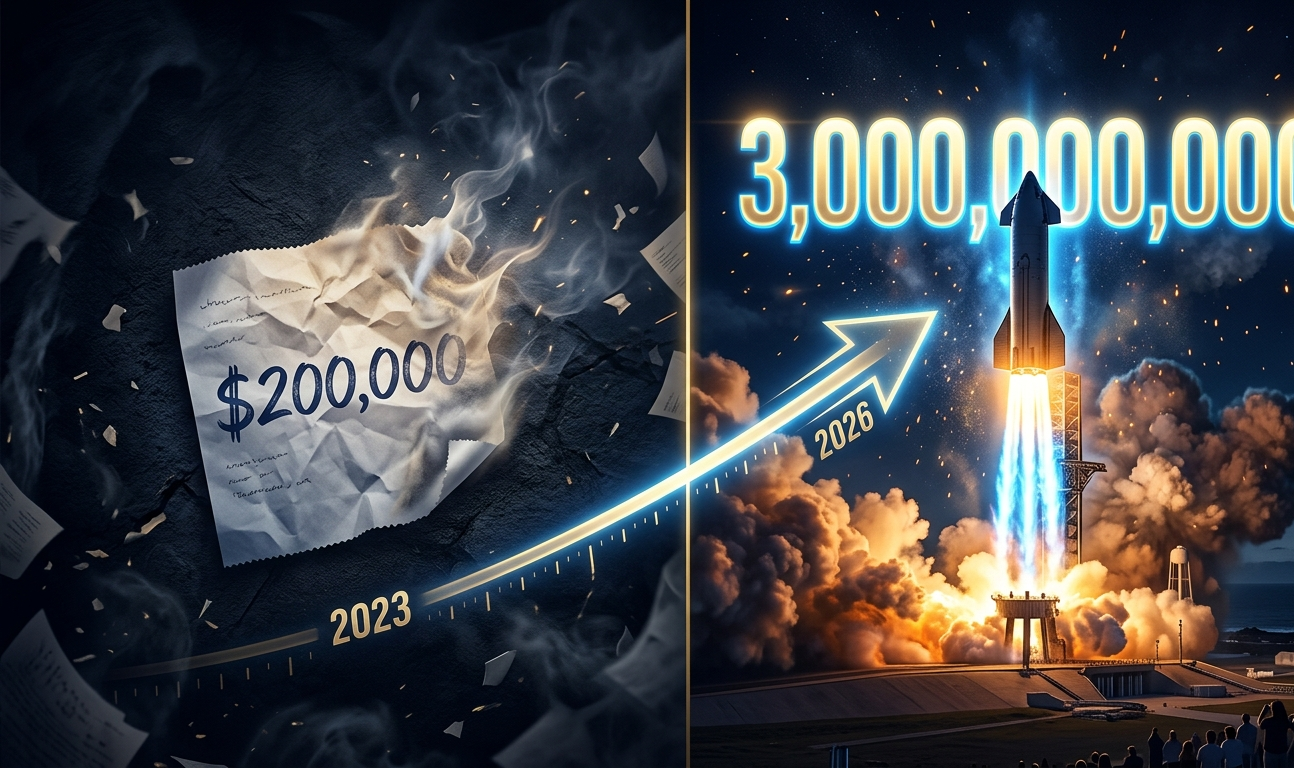
This is the kind of story that makes you stare at the ceiling. In April 2022, Alameda Research put $200,000 into a tiny AI coding startup called Anysphere. That startup built Cursor, the code editor that developers cannot stop talking about. FTX’s bankruptcy estate sold that stake in 2023 for the same $200,000. No profit. No upside captured. Just in and out at cost.
This week, SpaceX announced it has the option to acquire Cursor at a $60 billion valuation. That 5% stake FTX dumped for $200,000? It would be worth approximately $3 billion today. A 15,000x return that went to whoever bought it from the bankruptcy estate instead of the creditors it was supposed to help.


How Did FTX End Up Owning a Piece of Cursor?
Alameda Research was Sam Bankman-Fried’s trading firm, the one that operated alongside FTX and ultimately helped bring the whole thing crashing down. Before the collapse, Alameda made dozens of venture investments across crypto, AI, and tech. One of those bets was a $200,000 contribution to Anysphere’s $400,000 pre-seed round in April 2022, which bought roughly 5% of the company at a $4 million valuation.
At the time, Cursor barely existed. It was a small team building an AI-powered code editor. The investment was pocket change for Alameda, which was moving billions through FTX on a daily basis. Nobody thought twice about it.
Seven months later, FTX collapsed. Alameda and FTX filed for bankruptcy. The court-appointed administrators began selling everything they could to raise cash for creditors. The Anysphere stake was categorised as a “non-strategic” venture investment and sold in April 2023 for the same $200,000 that Alameda had originally paid. No markup. No auction. No effort to capture any upside.
What Happened to Cursor After FTX Sold?
Cursor exploded. The AI coding tool went from a niche product to an industry standard. By April 2026, Cursor had over one million daily active users, generated more than 150 million lines of enterprise code per day, and counted 67% of Fortune 500 companies among its clients. Annual recurring revenue crossed $1 billion.
Anysphere raised $900 million in a funding round led by Thrive Capital, pushing its valuation to $9 billion. Then SpaceX came knocking.
On April 21, SpaceX announced it has the right to acquire Cursor for $60 billion later this year. If the deal does not go through, SpaceX must pay a $10 billion breakup fee. Elon Musk is making the move to close the gap with OpenAI and Anthropic on AI coding tools, integrating Cursor’s technology into xAI, the Musk-run AI company that merged with SpaceX.
At $60 billion, FTX’s old 5% stake would be worth $3 billion. The gap between what the estate received ($200,000) and what the stake is now worth ($3 billion) is one of the largest missed recoveries in bankruptcy history.
What Is SBF Saying From Prison?
Bankman-Fried, currently serving a 25-year federal sentence, has been arguing exactly this point for over a year. He claims the bankruptcy estate destroyed tens of billions in value by liquidating assets too quickly during a market downturn, selling at the bottom instead of holding through the recovery.
In February 2026, he shared a projection from prison suggesting FTX’s net asset value would have reached $78 billion if the estate had held assets through the subsequent recovery instead of selling in 2023 and 2024. His parents have publicly advocated for a pardon, appearing on CNN in March arguing that FTX customers were ultimately repaid and that the case should be revisited.
The Cursor stake is now the single clearest data point supporting that argument. It is hard to look at a $200,000 sale that left $3 billion on the table and not ask whether the process could have been handled differently.
Was the Estate Wrong to Sell?
That depends on how you think about bankruptcy. The estate’s job was to raise cash, reduce risk, and repay creditors as quickly as possible. In 2023, crypto was in a deep bear market. AI valuations were uncertain. Holding illiquid venture stakes while creditors waited for their money back would have been a gamble, and bankruptcy administrators are not paid to gamble.
FTX creditors have since been made whole in dollar terms. The estate completed its fourth major distribution of about $2.2 billion on March 31, 2026. Claim values plus interest have been returned. By the standard measure of bankruptcy success, the process worked.
But “made whole in dollar terms” does not mean creditors captured the full upside of what FTX held. The Cursor stake is the most dramatic example, but it is not the only one. SBF’s projection claims that Anthropic alone would now be worth $82.3 billion to the estate, SpaceX holdings $15 billion, Solana $5.1 billion, and Robinhood $4.9 billion. The total projected value across the top six holdings reaches $114 billion.
Those numbers rely on hindsight. Nobody knew in 2023 that Cursor would become a $60 billion company. Nobody knew Anthropic would be worth $82 billion. But the scale of the missed opportunity is hard to ignore, and it is fuelling a genuine debate about whether bankruptcy law is equipped to handle crypto and tech estates where assets can appreciate by orders of magnitude in a few years.
What Does This Mean for Crypto?
The Cursor story is not really about Cursor. It is about what happens when a crypto company holds venture assets and then goes bankrupt. The current system treats everything as something to be sold immediately. That made sense when bankruptcies involved warehouses and inventory. It makes less sense when the assets include early-stage stakes in companies that might be worth 15,000x more in three years.
For SBF, the Cursor number strengthens his argument but does not change his situation. He was convicted of fraud, not bad investment timing. The $3 billion missed return does not undo the fact that customer funds were misused. But it does make the conversation more complicated, and it gives his family one more piece of ammunition in their push for a pardon.
For everyone else, it is a reminder that in crypto and AI, the line between a worthless holding and a $3 billion asset can be as thin as 18 months of patience.