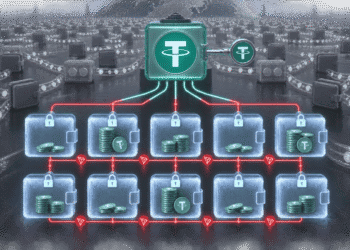

Sui Network has introduced Sui Spheres, a new model designed to help institutions run private workflows while still keeping a connection to the wider public Sui blockchain.
The idea is simple. Many banks, asset managers, payment firms, and enterprise teams like the benefits of blockchain, but they cannot expose every transaction, business process, or customer detail on a fully public network. Sui Spheres is meant to give those organizations a more controlled space where approved participants can work together, share selected information, and connect back to the broader Sui ecosystem when needed.


This is not just a technical update for developers. It speaks to one of the biggest problems in institutional blockchain adoption: companies want the benefits of public blockchains, but they also need privacy, compliance, and control.
Why Sui Spheres Matters
Public blockchains are useful because they are open, shared, and easy to connect with. That openness is also the reason some institutions avoid using them for sensitive work.
A bank cannot put every internal settlement process on a public chain where anyone can see the details. A private markets platform may not want investor positions, deal terms, or workflow steps exposed to the whole internet. An enterprise supply chain may need different companies to see different parts of the same process.
Private blockchains tried to solve this problem, but they often created another issue. When every company builds its own closed system, the market becomes fragmented. Those systems may protect data, but they do not always connect well with public liquidity, apps, wallets, or settlement networks.
Sui Spheres is trying to sit between those two worlds. It gives institutions a controlled environment without forcing them to cut themselves off from the public Sui network.
What Are Sui Spheres?
Sui describes Spheres as controlled execution environments for multi-party workflows.
In plain English, that means a group of approved participants can work inside a shared blockchain space with custom rules. One participant may be allowed to see certain information, while another only sees what they need for their role. The system can also be designed around more predictable performance and flexible costs.
That matters because real business processes are rarely fully public. A transaction between financial firms may involve issuers, custodians, brokers, auditors, and regulators. Each party may need access to different information. Sui Spheres is designed for those situations, where several parties need to coordinate without showing everything to everyone.
A simple way to think about it is a private meeting room inside a large public building. The meeting is controlled, but the room is still connected to the wider building when people need to interact with others outside it.
Why Institutions Need Selective Visibility
Selective visibility is one of the most important parts of the Sui Spheres model.
On a normal public blockchain, transactions are usually visible to everyone. That is good for transparency, but it can be a problem for regulated businesses. Institutions may need to protect customer data, trading strategies, commercial terms, settlement details, or private market information.
Sui Spheres lets visibility become part of the design. Instead of every participant seeing everything, access can be based on role and permission. That could make the model more useful for financial infrastructure, private markets, and enterprise systems where full public transparency is not realistic.
The goal is not to make blockchain secret for the sake of secrecy. The goal is to let institutions use shared infrastructure without exposing sensitive information that would normally never be public in traditional finance.
How Spheres Connect Back to Public Blockchain Rails
The most important part of Sui’s announcement is that Spheres are not meant to become isolated private chains.
Sui says selected outcomes from a Sphere can connect back to the broader Sui network when the use case requires it. That means an institution could keep sensitive workflow details private while still using public blockchain rails for liquidity, settlement, interoperability, or other shared services.
This matters because private systems often fail when they cannot connect to anything else. A closed network may work well for one group, but it loses value if assets, data, or settlement cannot move beyond that small environment.
Sui is trying to avoid that problem by giving institutions a controlled starting point with the option to reach outward. For blockchain adoption, that could be more practical than asking every institution to choose between full public exposure and fully private silos.
What Sui Says Comes Next
Sui says the Spheres model is still early and evolving.
The network is working with a small group of design partners across financial infrastructure, private markets, and multi-party systems. Those partners have not been broadly named, but the direction is clear: Sui wants Spheres to serve real institutional workflows, not only demo use cases.
That early-stage wording is important for readers. Sui Spheres should not be treated as a finished institutional standard yet. It is a model being introduced and tested with partners. The next test will be whether real businesses use it for meaningful workflows and whether those workflows can scale without losing the privacy and control institutions need.
If Sui can prove that balance, Spheres could become an important part of its enterprise strategy.
Why This Matters for the Sui Ecosystem
For Sui, Spheres gives the network a clearer story for institutional adoption.
Sui already competes in a crowded Layer 1 market where networks need more than speed claims and developer tools to stand out. Institutional blockchain products can help create a different kind of demand because they focus on real workflows, regulated users, and business infrastructure.
The challenge is adoption. Institutions move slowly, especially when money, compliance, and sensitive data are involved. They will want to see security, reliability, legal clarity, and strong partner support before moving important workflows onto any blockchain environment.
Spheres gives Sui a way to make that pitch. It tells institutions they do not have to expose everything publicly, but they also do not have to build another closed system with limited outside value.
What Users Should Watch
Crypto users should watch whether Sui Spheres leads to real deployments rather than only announcements.
The most important signs will be named partners, live workflows, transaction activity, and clear examples of how Spheres connect back to public Sui infrastructure. If those pieces appear, the model could become a stronger part of Sui’s long-term growth story.
Users should also avoid assuming that institutional adoption automatically means token price gains. Enterprise blockchain use can support network credibility, but markets still depend on liquidity, developer activity, user demand, token supply, and broader crypto conditions.
For now, Sui Spheres is best viewed as an institutional infrastructure move. It gives Sui a practical answer to a problem that has slowed blockchain adoption for years: how to combine privacy, control, and public network access in one system.
FAQ
What is Sui Spheres?
Sui Spheres is a model for controlled execution environments where approved participants can run private, multi-party workflows while staying connected to the broader Sui network.
Why do institutions need private blockchain workflows?
Institutions often handle sensitive customer data, trading details, settlement information, and business processes that cannot be fully exposed on a public blockchain.
Is Sui Spheres a private blockchain?
Sui Spheres is better understood as a controlled environment connected to Sui, rather than a fully separate private blockchain. It is designed to provide privacy and permissions without creating isolated silos.
Disclaimer: This article is for informational purposes only and does not constitute financial, investment, or legal advice. Always conduct your own research before making any investment decisions.