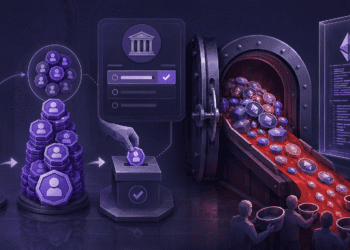
The U.S. Securities and Exchange Commission is preparing a possible innovation exemption that could allow crypto platforms to trade tokenized versions of public stocks, including through decentralized finance venues.
The proposal has not been formally released, but current reporting says the framework could allow tokenized stock products to trade on crypto platforms and possibly on decentralized platforms. Some of those tokens may be issued by third parties without the approval or backing of the public companies whose shares they track, and they may not carry the same shareholder rights as traditional stock, such as voting power or dividends.


That makes this one of the most important U.S. crypto regulation stories of the week. If the SEC moves forward, tokenized equities could become a much larger part of DeFi. But the same plan could also raise difficult questions about investor protection, issuer rights, market structure, and whether tokenized stock products should be allowed to trade outside the normal exchange system.
A New Opening for Tokenized Stocks
The proposed innovation exemption would create a possible path for stock-like tokens to trade through crypto infrastructure.
Tokenized stocks are digital tokens designed to track public equities. Some versions are backed by real shares held by a broker or custodian. Others can operate more like synthetic exposure, where the token follows the price of a stock but does not give the holder full shareholder rights.
That difference matters. A token linked to Apple, Tesla, Nvidia, or another public company may look simple to a retail user, but the legal structure underneath can be very different from owning a real share in a brokerage account. The SEC’s own January statement on tokenized securities separated products tokenized by or for issuers from tokens created by unaffiliated third parties, showing that the agency already sees different risk profiles inside the category.
For DeFi platforms, the exemption could open a large new market. For public companies and investors, it could also create a parallel trading system that may not follow the same rules as traditional equity markets.
Why Issuer Approval Matters
The most sensitive part of the reported plan is that some tokenized stocks may not require approval from the companies whose shares they track.
In traditional markets, a public company has a direct relationship with its listed shares. Shareholders may receive voting rights, dividends, disclosures, and protections tied to securities law and exchange rules. If a third party creates a token that tracks the stock price without company approval, investors may be buying price exposure rather than actual shareholder status.
That is where confusion can become a problem. A user may see a token named after a public company and assume it behaves like stock. But if the token does not provide voting rights, dividends, claims on company assets, or the same settlement protections, the product is not the same as holding the company’s share.
The SEC could try to address that through disclosures, delisting conditions, or requirements that tokenized products provide benefits similar to common stock. Current market coverage says the agency has discussed whether third-party tokens should carry stock-like benefits or face removal from trading venues.
That would be a major design issue. Without strong disclosure and product standards, tokenized stocks could give users easier access while weakening their understanding of what they actually own.
DeFi Could Get a Major Real-World Asset Boost
If the exemption moves forward, DeFi could gain access to one of the largest possible real-world asset categories: public equities.
So far, much of the RWA market has focused on tokenized Treasury bills, private credit, money-market products, and yield-bearing assets. Tokenized stocks would be different because they could bring retail familiarity, 24/7 trading expectations, fractional access, and deeper links between crypto markets and traditional finance.
A DeFi user could theoretically trade tokenized equities alongside stablecoins, Bitcoin wrappers, Ethereum assets, and other on-chain products. That would make crypto platforms more competitive with traditional brokerages in some areas, especially if users want around-the-clock access or programmable trading logic.
The risk is that equities are not just another crypto asset. Public stock markets have rules around disclosures, market manipulation, best execution, settlement, custody, shareholder rights, and corporate actions. Bringing stocks into DeFi without carrying over enough of those protections could create a market that looks modern but leaves investors exposed.
Traditional Exchanges Could Face New Pressure
The innovation exemption could also challenge traditional exchanges such as Nasdaq and the New York Stock Exchange.
Earlier this year, Nasdaq received SEC approval for trading and settlement of certain tokenized securities, with eligible securities initially limited to Russell 1000 companies and some large ETFs, and settlement through the Depository Trust Company. That approach keeps tokenized trading closer to existing market plumbing.
A DeFi-linked exemption could be very different. If tokenized stocks can trade on crypto platforms, including decentralized venues, then part of the equity market could move into a new structure with different trading hours, infrastructure, and compliance responsibilities.
That does not mean traditional exchanges disappear. It does mean they may have to compete with tokenized versions of their own listed products. It also means regulators will need to decide how much activity can move outside the traditional system before investor-protection and market-stability concerns become too large.
Investor Protection Will Be the Hardest Question
The biggest issue is not whether tokenized stocks are useful. They are useful if designed well.
A good tokenized stock product could offer faster settlement, fractional ownership, better collateral use, programmable trading, and broader access. Those are real advantages. The problem is that the same product can become risky if users do not understand custody, backing, rights, liquidity, or what happens during corporate actions such as stock splits, dividends, mergers, or delistings.
The SEC’s exemptive authority also has limits. A January white paper from the SEC’s Crypto Task Force materials noted that Section 36 of the Securities Exchange Act allows exemptions only when they are necessary or appropriate in the public interest and consistent with investor protection.
That standard will matter. If the SEC grants relief too broadly, critics may argue that it created a weaker parallel stock market. If the agency is too restrictive, crypto platforms may argue that the United States is blocking financial innovation and pushing tokenized markets offshore.
What Happens Next?
Current reporting says the SEC could unveil the plan as soon as this week, but the details will decide how important the proposal really is. Traders, exchanges, DeFi teams, public companies, brokers, and investor advocates will all be watching the conditions attached to any relief.
The most important details will include whether tokenized stocks must be backed by real shares, whether issuer consent is required, whether tokens must carry voting and dividend rights, who can list them, what disclosures are needed, and how decentralized platforms are expected to comply.
For crypto, this could become a major regulatory opening. For public markets, it could become a fight over whether stock trading should move onto blockchain rails without the same issuer control and investor protections that exist today.
Key Takeaway
The SEC’s reported innovation exemption could be a major turning point for tokenized stocks and DeFi.
If approved, the framework may let crypto platforms trade stock-linked tokens in ways that are faster, more flexible, and more accessible than traditional markets. But the hardest questions are still unresolved. Investors need to know whether these tokens are backed, whether companies approve them, whether holders get shareholder rights, and how DeFi platforms can protect users when public equities move on-chain.
Disclaimer: This article is for informational purposes only and does not constitute financial, investment, or legal advice. Always conduct your own research before making any investment decisions.