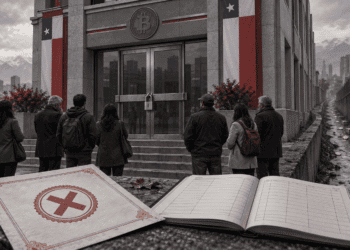

Binance EU shutdown fears are spreading as the world’s largest crypto exchange faces growing uncertainty over its ability to keep serving European users under the EU’s MiCA rulebook.
The situation is serious, but it needs careful wording. Binance is not shutting down globally. It has also not said it is leaving Europe permanently. The issue is more specific: Binance needs a compliant MiCA licensing route to continue offering regulated crypto services to EU clients after the transition period ends on July 1, 2026.


Reuters reported that Binance’s MiCA licence application through Greece suffered a major setback, while the exchange has said it remains committed to Europe and is exploring other options. That leaves users with a simple but important question: could Binance services in the EU be disrupted?
The answer is yes, unless the company finds a valid regulatory path in time.
Why MiCA Is Creating Pressure
MiCA, short for Markets in Crypto-Assets Regulation, is the European Union’s first broad crypto rulebook.
It allows licensed crypto-asset service providers to operate across the EU through passporting. That means a firm authorised in one member state can offer services across all 27 EU countries.
But the benefit comes with a hard requirement. Firms need approval. Once the transition period ends, unlicensed platforms cannot simply continue serving EU customers as before.
That is why Binance’s situation matters. The exchange has enormous global scale, but MiCA turns EU access into a regulatory privilege, not a default right.
What Happened With Binance’s Licence Bid?
Binance had been pursuing authorisation through Greece, which could have given it a route into the wider EU market.
According to Reuters, the application ran into trouble after regulators raised concerns linked to Binance’s past compliance record, including previous money laundering-related penalties and questions around its corporate structure.
Binance has pushed back against the idea that it is abandoning Europe. The company has said it has invested heavily in compliance and remains committed to the region. It has also stressed that founder Changpeng Zhao is no longer involved in running the exchange.
Still, timing is the problem. With the July 1 deadline approaching, Binance has limited room to fix the issue without some form of service disruption.
Is Binance Actually Shutting Down in the EU?
Not exactly.
A better reading is that Binance may need to restrict, pause or restructure some EU services if it does not secure MiCA authorisation in time.
That could mean limits on onboarding new users, changes to product availability, account migration notices, or a controlled wind-down for certain services. It does not mean Binance as a company is disappearing. It means EU users may face changes if the exchange cannot meet local regulatory requirements.
Binance is reportedly looking at alternative options in other EU jurisdictions, including countries such as Ireland and Latvia. However, European regulators are coordinating more closely under MiCA, so moving from one country to another may not guarantee an easier approval.
This is the real test of MiCA: whether large exchanges can meet the new standard, not simply find the friendliest regulator.
What EU Users Should Watch
For Binance users in Europe, the most important thing is official communication.
If Binance changes services, restricts access or begins moving users to another entity, customers should receive instructions through official channels. Users should be cautious with social media posts, screenshots or links claiming to offer urgent withdrawal help.
Regulatory deadlines often attract scams. Fake support accounts, fake migration pages and phishing links can appear quickly when users are worried.
The practical steps are simple. Users should review open positions, check withdrawal options, watch account notifications and avoid sharing seed phrases or private keys under any circumstances.
Why Competitors Are Watching Closely
Binance’s uncertainty could become an opportunity for licensed competitors.
Exchanges that already hold MiCA authorisation may gain users if Binance has to pause or limit services. That could shift market share toward platforms with clearer regulatory status.
This is one of the biggest changes MiCA could bring. European crypto users may start choosing exchanges not only by fees, liquidity or token listings, but also by whether the platform is properly authorised.
That could make the market more stable, but also less flexible. Some users may gain stronger protections, while others may lose access to the products they prefer.
The Bigger Message for Crypto Exchanges
The Binance situation shows how much the crypto exchange business has changed.
In earlier cycles, large platforms could grow globally first and deal with regulators later. In Europe, that model is ending. MiCA puts licensing, governance and compliance at the center of market access.
For Binance, the next few days will be important. For the wider industry, the lesson is already clear: size is no longer enough.
The exchange is not shutting down globally, and it may still find a way to stay in Europe. But the EU is making one thing clear. If a crypto platform wants access to European users, it needs to meet the new rules.
For Binance, that means the question is not whether it wants Europe. The question is whether Europe is ready to approve Binance.
Disclaimer: This article is for informational purposes only and does not constitute financial, investment, or legal advice. Always conduct your own research before making any investment decisions.