For most of its life, the CLARITY Act has been sold on a single premise: American crypto firms need to know which regulator governs them. The pitch was about certainty, competitiveness and keeping innovation onshore. That argument carried the bill through the House with a bipartisan 294-134 vote in July 2025 and through the Senate Banking Committee in May.
It has not been enough to get it to the floor.


With Polymarket odds of 2026 passage down to roughly 33% to 38%, from above 80% in February, and Senate Majority Leader John Thune saying he does not expect a final vote before the August 7 recess, the bill’s lead sponsor has reframed the case entirely.
“North Korea’s Lazarus Group and other bad actors thrive on gaps in our financial rules,” Senator Cynthia Lummis wrote on X on July 26. “The Clarity Act gives Treasury new sanctions authority and a safe harbor for companies to freeze suspicious transactions before the money moves.” In a separate post she was more specific: “Sec. 303 enables new crypto sanctions on Iran. Sec. 305 lets exchanges stop illicit funds before they reach North Korea.”
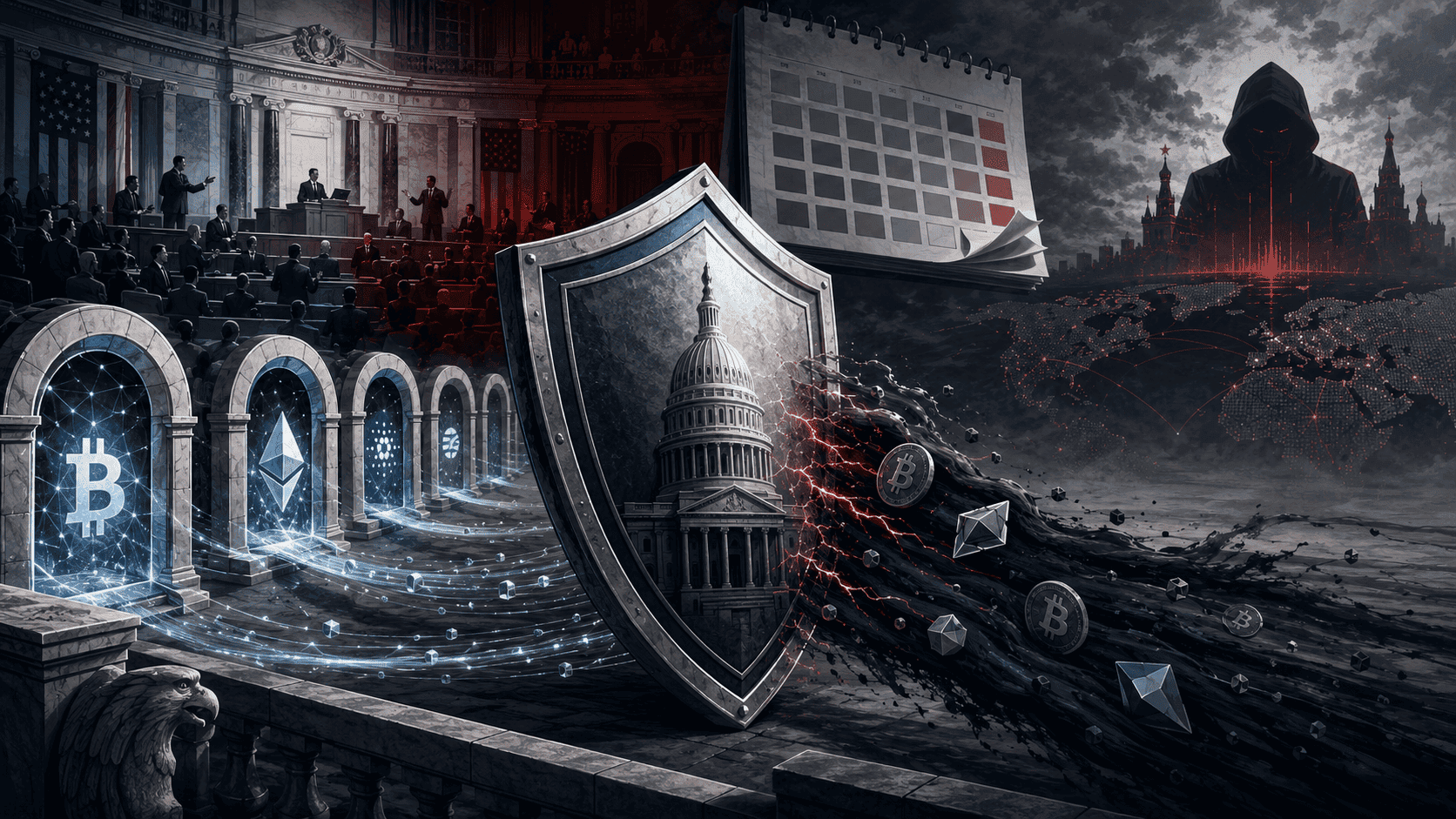
The Wyoming Republican is no longer arguing that the bill helps crypto companies. She is arguing it stops state-sponsored theft.
The Three Sections She Is Pointing To
The argument rests on specific provisions rather than general claims, which makes it worth examining directly.
Section 201 extends Bank Secrecy Act and anti-money-laundering obligations to digital asset firms for the first time, covering exchanges, DeFi front ends and crypto ATMs. A related provision in the July 22 Senate substitute subjects registered digital commodity brokers, dealers and exchanges to BSA requirements, obliging them to maintain AML policies, file transaction reports and monitor suspicious activity.
Section 303 grants Treasury a new special-measure authority to designate a foreign jurisdiction or financial institution as a “primary money laundering concern” specifically for digital asset activity. This mirrors powers Treasury already holds over traditional banking but extends them into crypto, letting the department monitor, restrict or prohibit transactions connected to designated jurisdictions.
Section 305 is the one Lummis emphasises most. It creates a safe harbor that allows exchanges to voluntarily freeze funds tied to suspicious activity before obtaining a court order, provided they cooperate with law enforcement. Firms acting in good faith receive protection from civil liability, while existing suspicious activity reporting obligations remain in place.
The practical problem this addresses is speed. Stolen crypto moves in minutes; court orders take days. Lummis has grouped these among what she calls more than 16 illicit-finance safeguards built into the legislation.
The Numbers Behind the Argument
Whatever one thinks of the bill, the scale of the problem Lummis cites is not disputed.
North Korea-linked groups accounted for roughly two-thirds of all crypto hacking losses globally in the first half of 2026, about $643 million of the $972 million stolen across a record 207 incidents. April alone saw a $285 million theft from Solana-based Drift Protocol and a $292 million compromise of a LayerZero bridge used by DeFi platform KelpDAO.
The longer record is worse. Researchers tracked $2.02 billion in DPRK-linked crypto thefts during 2025, a 51% increase over 2024, bringing cumulative losses since 2019 to roughly $6.75 billion. The FBI attributed the 2022 Ronin Bridge attack, which drained roughly $620 million in ether from Axie Infinity’s infrastructure, to the Lazarus Group and APT38. In February 2025, North Korean TraderTraitor actors executed the largest single crypto heist on record, taking about $1.5 billion from Bybit.
US agencies have also warned that North Korean operatives use false identities to secure remote IT jobs at technology companies, generating revenue for weapons programmes while providing access that can support intrusions and laundering.
Warren’s Counter-Argument
The opposition to Lummis’s framing is direct and comes from the same committee.
Senator Elizabeth Warren, the ranking Democrat on Senate Banking, has argued the bill as drafted is a ticket to sanctions evasion, citing exemptions she says the legislation carves out for decentralised finance platforms. Her position is that the same provisions Lummis presents as safeguards contain gaps wide enough for the exact actors the bill claims to target.
The disagreement is genuine rather than performative. Both senators are pointing at the same text and reaching opposite conclusions about whether DeFi coverage is adequate. Warren separately called the July 22 draft dead on arrival over its ethics provisions, which give the Justice Department sole civil enforcement authority.
Reasonable people can read the illicit-finance sections differently, and the bill’s actual effect on North Korean operations would depend heavily on implementation and on how broadly the DeFi definitions are interpreted by regulators. Neither senator’s characterisation can be verified until the law exists.
The Clock and the Math
The legislative reality is unforgiving regardless of which argument is more persuasive.
Republicans hold 53 Senate seats and need roughly seven Democratic crossovers to clear the 60-vote procedural threshold. Thune has said he does not expect a final vote before the recess, though he wants floor debate to begin. The Senate has shelved the bill in favour of other legislation, leaving a narrow window before August 7.
Others in the industry have been making adjacent arguments. SkyBridge Capital founder Anthony Scaramucci said on July 26 that the bill is not perfect but “ten times better” than leaving crypto unregulated. Ripple’s Brad Garlinghouse has called it XRP’s last regulatory hurdle.
What It Means
The shift in framing is itself the story. When a bill’s lead sponsor moves from “this helps American companies compete” to “this stops North Korea funding its weapons programme,” it signals that the original argument has run out of persuasive road with the votes that matter.
It is also a shrewd repositioning. Democratic resistance has centred on ethics and consumer protection, not on national security, which is one of the few remaining areas of genuine bipartisan consensus. Framing the bill as counter-proliferation policy rather than industry accommodation targets exactly that opening.
Whether it works is another matter. The seven Democrats whose votes decide this have cited ethics, illicit finance and consumer protection as their concerns, and Warren’s counter-argument attacks the illicit-finance claim directly. Lummis is asking undecided senators to accept that the bill’s AML provisions close more gaps than its DeFi exemptions open. That is a technical judgment most senators will make on staff advice rather than on a post on X.
For the crypto industry, the episode is a reminder of how thoroughly the regulatory debate has been absorbed into broader political fights. The technical questions about market structure were largely settled months ago. What remains unresolved is whether Congress can pass anything at all in the ten days it has left, and the argument has moved on to whichever ground offers the best chance of finding seven votes.
Disclaimer: This article is for informational purposes only and does not constitute financial or legal advice. Cryptocurrency investments carry significant risk. Always conduct your own research before making any investment decisions.