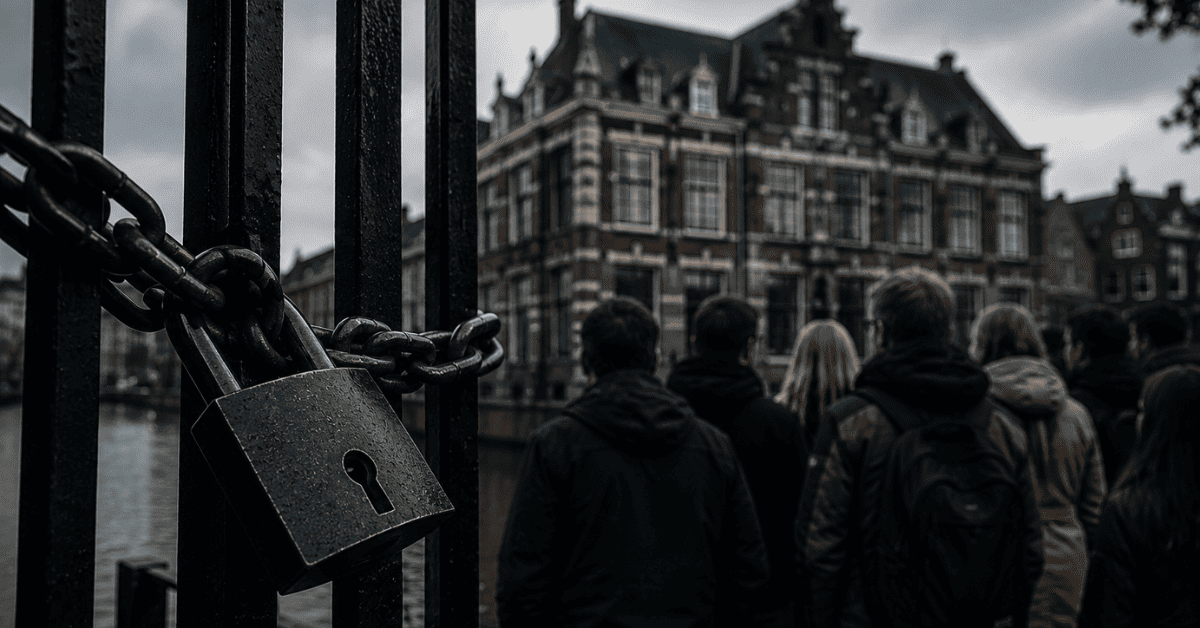
Knaken bankruptcy proceedings could be the next step for the Dutch crypto platform after prosecutors asked a Rotterdam court to declare the company insolvent, leaving roughly 30,000 customers unable to access their funds.
The request was made by the Dutch Public Prosecution Service, known locally as the OM, against Knaken Cryptohandel B.V. and the linked Stichting Knaken Payments. Prosecutors said they acted in the public interest after receiving signals from the Dutch financial regulator, the Autoriteit Financiële Markten, about a highly concerning situation at the company.


The court has not yet ruled on the request. Still, the case has already become one of the clearest examples of how Europe’s tougher crypto rules can turn a licensing failure into a full customer crisis.
Prosecutors Say Customers Are No Longer Being Paid
Knaken allowed users to convert euros into cryptocurrencies, trade digital assets and store coins on the platform. That business model now requires authorization from the AFM under Europe’s Markets in Crypto-Assets Regulation, better known as MiCA.
According to prosecutors, Knaken did not obtain the required license. The company said it had stopped operating and was working on a settlement process for customers. The OM said it was very concerned that this wind-down was not happening in an orderly way.
The most serious point is customer access. Prosecutors said the company had stopped paying out customers, creating the risk of serious consequences for users who still had assets on the platform.
That is why the OM is asking for bankruptcy in the public interest. If the court approves the request, a court-appointed trustee would take control of the process and use company assets to repay creditors, including customers, where possible.
FIOD Is Also Looking at Possible Criminal Offences
The bankruptcy request is not the only legal development.
The Dutch fiscal intelligence and investigation service, FIOD, is separately examining possible criminal offences. Prosecutors said the AFM’s concerns and a complaint from the regulator helped trigger that investigation.
As part of the probe, authorities carried out multiple searches on June 29, seized digital data carriers and froze company assets. No people were arrested.
That does not mean wrongdoing has already been proven. It does mean the Knaken situation has moved beyond a simple licensing problem and into a more serious legal phase.
For customers, the distinction may feel less important than the immediate reality. Their accounts are unavailable, the company’s future is uncertain, and the court has not yet decided what happens next.
MiCA Is Starting to Bite
The Knaken case is also a warning to smaller European crypto platforms.
Before MiCA, Dutch crypto firms could operate under registration with De Nederlandsche Bank. That system has been replaced by a stricter licensing framework under the AFM. Platforms now need to meet more detailed standards around governance, compliance, risk management, consumer protection and financial controls.
Knaken had operated for years and was known in the Netherlands partly through football sponsorships, including links to clubs such as Feyenoord. But history and brand visibility do not replace regulatory approval.
This is the uncomfortable part of MiCA’s rollout. Stronger rules are meant to protect customers, but when a platform fails to qualify, users can still get caught in the middle if the wind-down is messy.
Why Customers Are Locked Out
When a crypto exchange or broker suddenly stops operating, customer access can become complicated quickly.
If assets are held on-platform, users rely on the company’s internal systems, compliance processes and settlement procedures to withdraw. Even if customer assets exist, a broken or frozen operating structure can make withdrawals difficult or impossible until a legal process clarifies control.
That is different from self-custody, where users hold their own private keys. Self-custody has its own risks, including loss, theft and user error. But the Knaken case shows the opposite risk clearly: when assets are kept with a platform, users depend on that platform remaining functional, licensed and financially organized.
This is why exchange failures often create panic even before the final financial picture is known. Customers may not know whether the issue is liquidity, compliance, operations, asset segregation or something more serious.
Not Another FTX, But the Lesson Is Familiar
There is no need to overstate the comparison. Knaken is not FTX, and Dutch prosecutors have not said customer funds were misused in the same way.
But the lesson is familiar. Crypto users can lose access to assets not only because of hacks or market crashes, but because the company holding those assets runs into legal, licensing or operational trouble.
That makes regulation important, but it also makes due diligence important. Users should check whether a crypto service provider is licensed, understand how customer assets are held and avoid assuming that a well-known name is automatically safe.
For European crypto firms, the message is just as clear. MiCA compliance is no longer a distant policy discussion. It is becoming a survival issue.
A Stress Test for Dutch Crypto Oversight
The Knaken bankruptcy request now puts the Rotterdam court, the OM, the AFM and FIOD at the center of a major customer protection test.
If bankruptcy is granted, the next phase will likely focus on what assets remain, how customer claims are handled and whether users can recover their crypto or cash balances. If the request is rejected, pressure will remain on Knaken to show it can complete a controlled settlement without worsening customer losses.
Either way, the case is likely to be watched closely across Europe. MiCA was designed to bring order to crypto markets, but the transition from registration to full licensing is proving painful for firms that cannot meet the new standard.
For Knaken users, the issue is much more immediate. About 30,000 people are waiting to find out whether they can get their money back, and who will be responsible for making that happen.
Disclaimer: This article is for informational purposes only and does not constitute financial, investment, or legal advice. Always conduct your own research before making any investment decisions.