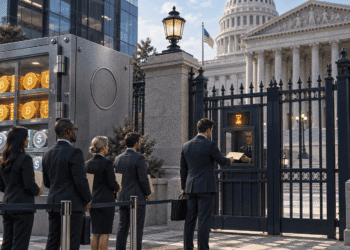

Mastercard cleared one of the hardest regulatory hurdles in American crypto on Wednesday. The New York State Department of Financial Services granted Mastercard Transaction Services US LLC a BitLicense, giving the payments giant legal authority to conduct digital asset business in the country’s most tightly regulated state.
This isn’t Mastercard dipping a toe into crypto. It’s the company that processes $9 trillion in annual payment volume, telling the market that stablecoins and tokenized deposits are part of its future infrastructure. Not as an experiment. As a core business function.


The BitLicense is widely considered the toughest crypto regulatory approval in the United States. Issued under strict standards covering cybersecurity, anti-money laundering, consumer protection, and financial transparency, it requires companies to meet the same kind of scrutiny that banks face. Most crypto firms have avoided New York entirely rather than go through the process.
Mastercard didn’t avoid it. It went straight through it. And the reason tells you everything about where the payments industry is heading.
What Mastercard Plans to Do With It
This isn’t about letting you buy Bitcoin with your Mastercard. The company has no plans to launch a consumer-facing crypto trading product.
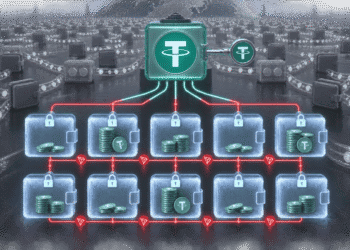
Instead, Mastercard is using the BitLicense to build something far more significant: a regulated stablecoin settlement infrastructure that can move tokenized value across its global merchant network.
In practical terms, that means Mastercard is building the backend plumbing that would allow stablecoin payments to flow through the same rails that credit and debit card transactions already use. A merchant who accepts Mastercard today could eventually settle those transactions in USDC, USDT, or bank-issued stablecoins like SoFiUSD without changing their existing payment terminal or processing relationship.
Chief Product Officer Jorn Lambert framed it clearly. He said regulatory clarity helps build trust as digital value moves into everyday use, and that the company aims to align innovation with regulatory expectations. The emphasis on “backend settlement” rather than “consumer crypto” is deliberate. Mastercard wants to be the pipe through which stablecoins flow, not the exchange where people buy them.
The BitLicense also positions Mastercard to handle tokenized deposits, the emerging category of bank-issued digital assets that combine blockchain efficiency with traditional deposit protections. SoFi just launched tokenized deposit plans alongside SoFiUSD. Other banks are expected to follow. Mastercard wants to be ready to settle those transactions when they do.
Why New York Matters More Than Any Other State
Mastercard could have pursued crypto licenses in friendlier jurisdictions. Wyoming, Texas, and Florida all have lighter regulatory frameworks. Choosing to go through New York first is a strategic decision that signals seriousness to every institutional partner with which Mastercard works.
New York is the financial capital of the United States. The banks, asset managers, hedge funds, and payment processors that Mastercard needs as partners are overwhelmingly based there. Having a BitLicense means Mastercard can conduct regulated crypto business directly with New York-based institutions without any legal ambiguity.
The BitLicense framework has been updated multiple times since its introduction in 2015 and remains one of the strictest digital asset regimes in the world. Companies that hold it have demonstrated compliance with requirements that go well beyond what most crypto firms are accustomed to. That compliance track record becomes a competitive advantage when pitching stablecoin settlement services to risk-averse banks and corporations.
Only a handful of major companies hold a BitLicense. Ripple, Coinbase, Circle, Gemini, and Paxos are among the most prominent. Mastercard now joins that list, and its scale dwarfs every other name on it.
The Race Between Visa and Mastercard
The two largest payment networks in the world are now racing to build stablecoin infrastructure, and the competition is intensifying.
Visa has been ahead in execution. It completed the first USDC stablecoin credit card settlement in Canada with Wealthsimple earlier this month. Its global stablecoin settlement program has surpassed a $7 billion annualized run rate. Visa operates over 160 stablecoin card programs across Latin America, Europe, Asia Pacific, and Africa.
Mastercard has taken a different approach, focusing on regulatory infrastructure before product launches. The $1.8 billion acquisition of BVNK, a stablecoin payments company, gave Mastercard the technical backend. The BitLicense gives it the regulatory foundation. The combination positions Mastercard to launch stablecoin settlement products in the most regulated market in America from day one, rather than building in friendlier jurisdictions and expanding later.
Mastercard also has an existing relationship with the XRP Ledger. The company participated in the first cross-border tokenized Treasury settlement alongside JPMorgan, Ripple, and Ondo Finance. Its Multi-Token Network routed the redemption instruction from the blockchain to JPMorgan’s settlement system. Both Ripple and Mastercard now hold BitLicences, opening the door for deeper collaboration on digital asset settlement in New York.
The rivalry between Visa and Mastercard has defined the payments industry for decades. Stablecoins are the newest front in that rivalry, and the stakes are enormous. Whoever builds the dominant settlement infrastructure for blockchain-based payments will control a significant piece of how money moves for the next generation.
What This Means for the Stablecoin Market
Zoom out from Mastercard specifically, and the pattern becomes overwhelming.
In a single week, SoFi launched the first bank-issued stablecoin inside a consumer app. Cash App rolled out zero-fee USDC transfers to 60 million users. Circle minted $3.25 billion in USDC on Solana. Mastercard secured a BitLicense for stablecoin settlement. Twenty banks remain queued to issue stablecoins through Anchorage Digital. And the GENIUS Act continues to provide the regulatory foundation for all of it.
The stablecoin market has crossed $320 billion in total supply. The infrastructure being built around it by Mastercard, Visa, SoFi, Cash App, PayPal, and Amazon isn’t speculative experimentation. It’s permanent financial plumbing that will handle trillions in transaction volume over the coming decade.
For the crypto industry, Mastercard’s BitLicense is another confirmation that the largest players in global finance view stablecoins as essential infrastructure rather than a passing trend. When a company that processes payments for 3 billion cardholders across 210 countries decides that stablecoins warrant the most demanding regulatory process in America, the debate about whether this technology matters is over.
The only remaining question is how fast the transition happens. And based on this week, the answer is: faster than anyone expected.
Disclaimer: This article is for informational purposes only and does not constitute financial advice. Cryptocurrency investments carry significant risk. Always conduct your own research before making any investment decisions.