NFTs got so cursed that Hollywood, or at least horror cinema, made the curse literal.
There is a movie called NFT: Cursed Images, and Fandango describes it with a very on-brand premise: “A group of crypto savvy friends begin experiencing strange occurrences after buying into a cursed NFT collection.” That alone makes it useful as crypto-culture content, because it shows NFTs are no longer just a market story. They are now a horror trope.

NFTs went from “future of ownership” to “don’t mint that, it’s haunted.”
This Is Not Really a Market Story, It Is a Culture Story
The interesting part is not whether the movie is a box-office hit. It is what the movie says about where NFTs now sit in popular culture.
During the NFT boom, the pitch was futuristic. Digital ownership would reshape art, identity, fandom and online economies. Now an NFT collection can be the setup for a horror film, which tells you the narrative has changed. NFTs are familiar enough to be used as a recognizable pop-culture device, and weird enough to be funny and creepy at the same time.
That is actually a milestone of sorts. Technologies become culturally real when they move beyond industry talk and into fiction, satire and genre storytelling.
The Plot Sounds Like Peak 2020s Internet Horror
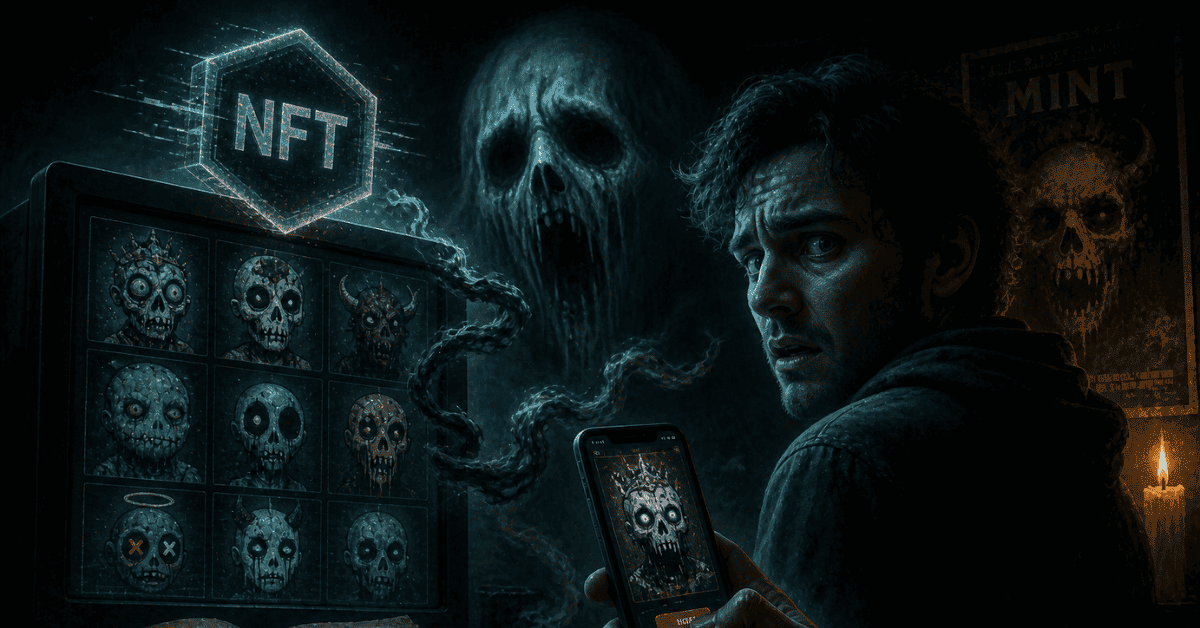
Rotten Tomatoes describes the film in a more expanded way: seven friends in London discover a coveted NFT collection called Crypto Horrors, promising profit, status and social clout, but the collection is cursed, and the monsters inside the NFTs begin manifesting in the real world. Fandango at Home similarly describes the film as a cursed NFT unleashing digital monsters into reality.
That is a very readable concept because it blends two things people already understand.
First, horror loves cursed objects. Tapes, dolls, mirrors, houses, books and photos have all carried supernatural doom before. Second, crypto culture already has the language of cursed collections, doomed bags, haunted timelines and terrible mints. The movie basically merges internet speculation with old-school supernatural panic.
It is a very online version of horror.
Why This Actually Fits NFTs So Well
NFTs were always about more than finance. They were also about identity, signaling and belonging.
People bought collections because they liked the art, wanted status, wanted access, wanted community or wanted to be early. That made the entire space emotionally loaded. Owning an NFT was never just ownership. It was part flex, part bet and part self-branding.
That makes NFTs perfect for horror symbolism. A cursed collection is just an exaggerated version of something the market already felt at times. Hype, obsession, FOMO and social clout were all central to the NFT cycle. A movie can turn those into literal danger very easily.
In other words, the premise works because the culture around NFTs already felt a little haunted.
The Real Shift Is From Hype Asset to Memeable Object
The bigger story is that NFTs have moved from being treated as revolutionary objects to being treated as cultural material.
That does not mean the technology is dead. NFT rails still exist, digital art still exists and on-chain ownership still has serious use cases. But the mainstream emotional temperature has changed. NFTs are no longer automatically framed as the future. They are just as likely to be framed as weird, excessive, unserious or cursed.
That shift matters. It means the market cooled enough for people to tell stories about NFTs instead of only trying to sell them.
And honestly, that may be healthier.
NFT Tourists Left, but the Cultural Footprint Stayed
A lot of the easy money crowd moved on. The tourists left. The floor-price obsession calmed down. Many collections lost their hype.
But the idea of NFTs stayed behind in public imagination.
That is why a film like NFT: Cursed Images is useful as a crypto-culture story. It suggests NFTs still have symbolic power, even if they no longer dominate markets the way they once did. The symbol just changed. Instead of “next big thing,” the NFT can now stand for internet greed, clout chasing, digital obsession or supernatural bad vibes.
That is a weird downgrade, but it is still relevance.
The Bottom Line
NFT: Cursed Images is not important because it proves NFTs are back.
It is interesting because it shows NFTs have entered the next phase of cultural life. They are no longer only speculative assets or tech talking points. They are now part of genre fiction, internet satire and horror symbolism.
That is a strange evolution, but also a very crypto one.
NFTs went from “future of ownership” to “do not touch that collection, it is cursed.” And somehow, that may be one of the most honest summaries of the last few years of NFT culture.
Disclaimer: This article is for informational purposes only and does not constitute financial, investment, or legal advice. Always conduct your own research before making any investment decisions.