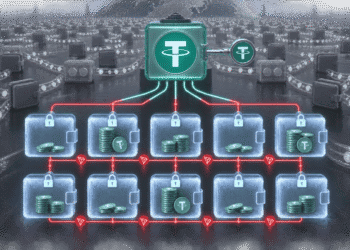
Humanity Protocol spent years engineering what it called “the trust layer of the internet,” a decentralised system using palm-vein biometrics and zero-knowledge proofs to prove someone is human without exposing their personal data. The project raised $50 million from Pantera Capital, Jump Crypto, Animoca Brands, and Blockchain.com. It reached a $1.1 billion valuation. It positioned itself as the direct rival to Sam Altman’s Worldcoin.
On June 8, a single compromised employee laptop dismantled all of it.


The laptop, belonging to a member of the Humanity Foundation, inexplicably contained enough active private keys to cross the multi-signature approval threshold for the project’s bridges on both Ethereum and BNB Chain. Attackers drained more than 17 wallets for a combined total exceeding $32 million. The H token crashed approximately 90% within hours.
The protocol’s code wasn’t hacked. The zero-knowledge cryptography wasn’t broken. The biometric system wasn’t compromised. The entire system fell because a developer’s corporate laptop held the keys to the kingdom, and someone got access to that laptop.
How the Attack Unfolded
The exploit was operational, not technical. That distinction matters.
On-chain analyst Specter was first to flag the attack, reporting that more than 17 wallets holding H tokens had been drained. Early losses topped $5 million before rising rapidly past $30 million. Blockchain monitoring platform Lookonchain confirmed the scale in real time as it unfolded.
The attacker didn’t just steal existing tokens. According to Lookonchain, the hacker minted an additional 100 million H tokens on BNB Smart Chain using the compromised keys, then dumped everything. The stolen and freshly minted tokens were swapped into Ethereum and BNB through decentralised exchanges including Kyber Network and PancakeSwap, accelerating the token’s collapse.
By the time the dust settled, the attacker had converted holdings into approximately 18,510 ETH (worth around $30.8 million) and 1,548 BNB (around $924,000). Roughly $4 million was moved toward mixers for laundering. Another 111 million H tokens, worth approximately $14 million, remained in controlled addresses.
The ability to mint new tokens is what made this attack so devastating. A normal theft drains existing funds. This attacker could create unlimited new H tokens and sell them into the market, crushing the price while extracting value. The compromised keys didn’t just give access to the treasury. They gave control over the token supply itself.
The Dominant Attack Pattern of 2026
The Humanity Protocol hack fits a pattern that has defined crypto security throughout 2026. The biggest losses are coming from stolen keys, not flawed code.
In April 2026, Solana-based Drift Protocol lost approximately $285 million after attackers seized an administrative key, in an attack later attributed to North Korea-linked actors. The same month, Kelp DAO lost roughly $292 million through a single-validator bridge vulnerability, triggering the LayerZero exodus that sent $4.7 billion migrating to Chainlink. April 2026 closed as the most-hacked month in crypto history by incident count, with DefiLlama logging close to 30 separate exploits.
These attacks share a common characteristic. They bypass protocol-level security entirely and exploit operational weaknesses instead. A smart contract bug requires the attacker to find a flaw in the code, which is increasingly difficult as auditing improves. A private key compromise requires the attacker to find a poorly secured key, which is often far easier because key management is a human and operational problem rather than a cryptographic one.
Private key compromises are particularly costly because they hand thieves direct control of funds rather than requiring them to manipulate code. When you have the keys, you don’t need to outsmart the system. You are the system.
The Humanity Protocol case adds an uncomfortable irony. A project promoting decentralisation maintained centralised control points concentrated enough that one laptop could compromise the entire bridge infrastructure. The gap between the decentralised marketing and the centralised reality is exactly where the attack found its opening.
The Staging Allegation
The story took a darker turn when ZachXBT, the crypto industry’s most prominent on-chain investigator, publicly questioned the official narrative.
ZachXBT called the incident “possibly staged” and accused the team of “crime pumping” the token before the dump. The accusation suggests that the hack may not have been an external attack at all, but rather an inside job designed to extract value while blaming an anonymous hacker.
The team, led by founder Terence Kwok, attributed the incident to the compromise of private keys belonging to a Humanity Foundation member. They posted that they were “aware of a security incident involving the compromise of private keys” and urged users not to interact with affected infrastructure.
ZachXBT’s allegation hasn’t been proven. But his track record gives it weight. He has exposed numerous frauds, rug pulls, and staged incidents across crypto, and his public accusations are rarely made carelessly. The “crime pump” allegation refers to a pattern where teams artificially inflate a token’s price before an insider extracts value under the cover of an apparent hack.
The unresolved fraud allegation adds a burden that a normal hack wouldn’t carry. A project that suffered an external attack can rebuild trust by improving security and compensating users. A project facing credible accusations of staging its own hack faces a fundamentally different and harder recovery, because the question isn’t whether the security was weak but whether the team itself can be trusted at all.
Why This Matters Beyond One Token
Humanity Protocol wasn’t just another DeFi token. Its ambitions made the breach significant beyond the $32 million loss and the 90% price crash.
In January 2026, the project integrated with Fireblocks, enabling more than 2,400 institutions to hold and interact with H and other Humanity-native assets. It built a biometric identity narrative, a credential system, enterprise-facing integrations, and institutional custody access. The project was positioning itself as critical infrastructure for proving human identity in an age of AI-generated bots.
That ambition is what makes the breach a cautionary tale for the entire identity-verification sector. Worldcoin, Humanity Protocol’s larger rival, handles the same sensitive category of biometric data. If a project built to be “the trust layer of the internet” can be compromised by one laptop, it raises uncomfortable questions about whether any of these systems can be trusted with the biometric data of millions of users.
The incident damages trust in projects handling sensitive user data at a moment when that data is becoming more valuable. As AI makes it harder to distinguish humans from bots, the demand for identity verification grows. Humanity Protocol was supposed to meet that demand. Instead, it demonstrated that the operational security behind these systems can be far weaker than the cryptography they advertise.
The Recovery Problem
For Humanity Protocol, the path forward is brutal.
The H token is down nearly 90% with exhausted liquidity. A token in that condition is extremely difficult to rebuild around. The capital that backed the $1.1 billion valuation has evaporated. The institutional integrations through Fireblocks now carry the stain of a major security failure. And the unresolved fraud allegation from ZachXBT hangs over every attempt to restore confidence.
The project has urged users to avoid interacting with its bridge or liquidity pools until an all-clear is issued. It has warned users to rely only on official communication channels and remain alert to scams and impersonation attempts that typically follow major security incidents. The team has promised regular updates and a full investigation.
But promises of investigation don’t restore $32 million or rebuild a token down 90%. And a larger token unlock of approximately 266 million H, worth around $28 million, is scheduled for June 25 across six allocations including the foundation treasury and a strategic reserve. That unlock, arriving two and a half weeks after the hack, adds supply pressure to a token that’s already collapsed.
The Humanity Protocol breach reinforces a lesson that 2026 keeps teaching the crypto industry: privacy cryptography and operational security are not the same thing. You can build the most sophisticated zero-knowledge identity system in the world, and it won’t matter if the keys to your bridges are sitting on a developer’s laptop. The weakest link in crypto security isn’t the code. It’s the humans and the operations around it.
FAQ
What happened to Humanity Protocol?
On June 8, 2026, attackers compromised a Humanity Foundation member’s laptop that contained enough private keys to cross the multi-signature threshold for the project’s bridges on Ethereum and BNB Chain. They drained over 17 wallets for more than $32 million, minted 100 million additional H tokens, and dumped everything. The H token crashed approximately 90% within hours.
Was the protocol’s code hacked?
No. The exploit was an operational failure, not a technical one. The protocol’s zero-knowledge cryptography and biometric system weren’t compromised. The attacker gained control through stolen private keys stored on a compromised laptop. This fits the dominant 2026 pattern where the biggest losses come from stolen keys rather than code vulnerabilities, similar to the Drift Protocol ($285M) and Kelp DAO ($292M) exploits.
What did ZachXBT allege about the hack?
On-chain investigator ZachXBT called the incident “possibly staged” and accused the team of “crime pumping” the token before the dump, suggesting it may have been an inside job rather than an external attack. The allegation hasn’t been proven, but ZachXBT’s track record of exposing frauds gives it weight. The accusation creates an additional recovery challenge beyond the financial loss.
Disclaimer: This article is for informational purposes only and does not constitute financial advice. Cryptocurrency investments carry significant risk. Always conduct your own research before making any investment decisions.