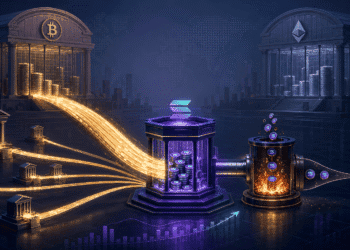
Solana has always marketed itself as the fast blockchain. Now it wants to become the fastest by a huge margin.
At Consensus Miami 2026 this week, Solana co-founder Anatoly Yakovenko dropped a timeline that got the entire crypto world talking. The network’s long-awaited Alpenglow upgrade could ship as early as next quarter, potentially arriving sometime in Q3 2026. If it delivers on its promises, Solana will be able to confirm transactions in roughly 150 milliseconds. That’s about the time it takes you to blink.


To put that in perspective, Solana currently takes around 12.8 seconds to finalize a transaction. Alpenglow would cut that by nearly 100 times. We’re talking faster than a credit card authorization.
What Exactly Is Alpenglow?
Without getting too deep into the technical weeds, here’s what you need to know. Every blockchain relies on a system that lets all the computers on the network agree on which transactions are valid. That process is called consensus, and it’s basically the engine that makes the whole thing work.
Solana’s current engine uses two components called Proof of History and Tower BFT. They’ve served the network well, but they have limitations when it comes to how quickly transactions can be confirmed as final and permanent.
Alpenglow rips out both of those systems and replaces them with two brand new ones called Votor and Rotor.
Votor is the new consensus protocol. Instead of making validators go through multiple rounds of on-chain voting (which eats up time and clogs the network), Votor lets them bundle their votes off-chain and submit them in one or two quick rounds. If 80% of validators agree in the first round, the transaction is done. Finished. Final.
Rotor handles how data gets spread across the network. The old system relied on multi-hop relays that could introduce delays. Rotor creates more direct communication paths between validators, with simulations showing data can travel across the network in as little as 18 milliseconds.
As CoinDesk reported from Consensus Miami, Yakovenko described Alpenglow as pushing transaction confirmation toward the physical limits of how fast information can travel around the globe.
Why Does Speed Matter So Much?
You might be wondering why shaving a few seconds off transaction times is such a big deal. Fair question. Here’s the thing. When we talk about blockchain competing with traditional financial infrastructure, speed is everything.
Credit card networks process payments in about one to two seconds. If a blockchain wants to handle the same kind of real-time commerce, whether that’s payments, trading, or even gaming, it needs to be at least that fast. Most blockchains aren’t even close.
At 150 milliseconds, Alpenglow would make Solana faster than Visa. That opens the door to use cases that simply aren’t possible on slower networks. Think high-frequency trading on decentralized exchanges, instant point-of-sale crypto payments, real-time gaming economies, and AI agents transacting autonomously without noticeable delays.
It’s the kind of infrastructure upgrade that doesn’t just improve what already exists. It makes entirely new things possible.
The Timing Is Awkward Though
Here’s the catch. Alpenglow is arriving at a moment when Solana’s on-chain activity has taken a noticeable hit.
Monthly active users have fallen to a two-year low of around 34.1 million. Network fees are down 50% since January. Total value locked across Solana DeFi protocols has dropped 56% from its August 2025 peak to $5.5 billion. And monthly DEX volume has slid from a $145 billion peak last October to about $42 billion at the end of April.
A lot of that decline is tied to the fading of the memecoin mania that drove so much of Solana’s activity throughout 2025. When the meme hype cooled off, a huge chunk of speculative trading went with it.
SOL itself has been stuck in a tight trading range between roughly $80 and $90 for months. According to CCN’s analysis, a breakdown below $79 could open a path toward $67.50, while a breakout above $92 could target $107 and beyond.
So the big question is whether Alpenglow can reignite interest in the network and bring developers and users back. A faster, more reliable Solana is certainly more attractive to builders. But upgrades alone don’t guarantee adoption. The ecosystem needs compelling applications that take advantage of that speed, and users who actually want to use them.
The Competition Isn’t Standing Still
Solana isn’t the only blockchain chasing faster finality. Coinbase’s Base network rolled out Flashblocks last year, cutting block times to 200 milliseconds. BNB Chain and Unichain are also working on speed improvements. And Ethereum’s layer-2 ecosystem continues to evolve with rollups that are getting faster all the time.
What sets Alpenglow apart is the scale of the change. This isn’t a minor tweak. It’s a complete replacement of Solana’s consensus mechanism, the most fundamental upgrade to the network’s core architecture since it launched. The community clearly supports it too. When the proposal went to a governance vote last September, 98.27% of participating SOL stakers voted in favor.
If the upgrade ships smoothly and without security issues, it could give Solana a genuine technical edge that’s hard for competitors to match quickly. If it stumbles or introduces new bugs, it could make an already difficult year for the network even worse.
Either way, Q3 2026 is shaping up to be a defining moment for Solana.
FAQ
What is Solana’s Alpenglow upgrade?
Alpenglow is a complete overhaul of Solana’s consensus mechanism that replaces Proof of History and Tower BFT with two new systems called Votor and Rotor. It aims to reduce transaction finality from 12.8 seconds to approximately 150 milliseconds.
When will Alpenglow launch?
Solana co-founder Anatoly Yakovenko said at Consensus Miami 2026 that the upgrade could arrive as soon as Q3 2026, though the exact date depends on completing security audits and testing.
Will Alpenglow affect SOL’s price?
A successful launch could reignite developer and user interest in Solana, which may positively impact SOL. However, the network is currently dealing with declining activity and fees, so the upgrade alone may not be enough to drive a significant price move.
Disclaimer: This article is for informational purposes only and does not constitute financial advice. Cryptocurrency investments carry significant risk. Always conduct your own research before making any investment decisions.