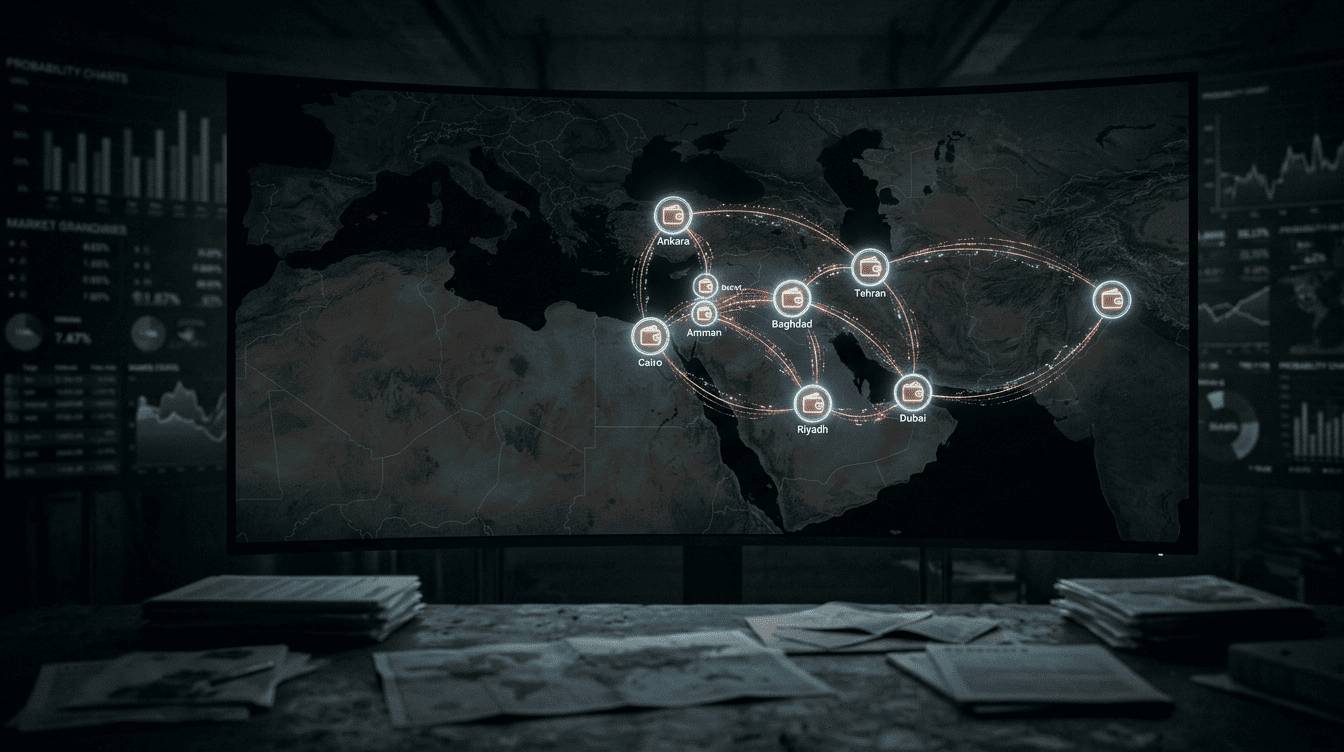
Nine connected Polymarket accounts have been flagged after generating about $2.4 million in winnings from Iran-related war markets with a reported 98% win rate.
The accounts placed more than 80 bets tied mostly to U.S. military operations and Iran-linked geopolitical outcomes. The pattern has raised insider-trading concerns because the accounts appeared to predict sensitive events with unusual accuracy, including timing around strikes, leadership outcomes, and ceasefire-related markets.


The story matters because prediction markets are no longer small side bets. They are becoming information markets where traders price politics, war, regulation, and economic outcomes in real time. That can make them useful, but it can also create serious integrity problems when markets involve national security events and possible nonpublic information.
A 98% Win Rate Raises Questions About Market Integrity
The main issue is not that someone made money on Polymarket. The issue is the pattern.
Nine connected accounts reportedly made more than 80 wagers with a 98% success rate, collecting about $2.4 million from markets tied heavily to military events and Iran-related outcomes. That kind of performance is unusual even for skilled traders because geopolitical markets are normally messy, fast-moving, and difficult to predict with precision.
A trader can get lucky once. A trader can also make a smart call based on public information. But when several connected accounts repeatedly win on sensitive events, the market starts asking whether the traders had access to information that ordinary users did not.
That is why this story is bigger than Polymarket alone. It cuts into the core question facing prediction markets: are they measuring public expectations, or are they becoming places where insiders can monetize sensitive information before everyone else knows it?
Iran War Markets Are a Difficult Test Case
Iran-related markets create an especially difficult problem for prediction platforms because the events are tied to national security, diplomacy, military timing, and classified decision-making.
A normal sports market has injury reports, public schedules, and visible performance data. A crypto price market has order books, charts, flows, and public trading activity. War markets are different. The most valuable information may sit inside government briefings, military planning rooms, diplomatic channels, intelligence circles, or defense contractors.
That makes these markets vulnerable to a very specific kind of abuse. A trader with early knowledge of a strike, ceasefire, or leadership decision could place a wager before the public understands what is happening. The market would then move after the news becomes public, leaving ordinary traders at a disadvantage.
This does not prove every winning account used inside information. It does show why the structure is risky. When people can bet on military outcomes, the line between information discovery and war profiteering becomes much harder to defend.
Prediction Markets Are Becoming Real Information Venues
Polymarket and similar platforms have grown because they give users a simple way to trade on outcomes instead of only discussing them.
That has value. Prediction markets can sometimes aggregate public expectations faster than polls, commentators, or traditional news cycles. Traders put money behind their views, which can make market prices a useful signal of what participants believe is likely to happen.
The problem is that the same structure also rewards anyone with better information. In politics, regulation, corporate events, and military decisions, better information can mean nonpublic information. That is where market integrity becomes complicated.
This year, more than $1 billion has reportedly been staked online on military decisions and outcomes, showing how large the category has become. Once markets reach that size, suspicious trading patterns are no longer just platform problems. They become governance, legal, and public-policy problems.
Governance Pressure Is Likely to Grow
The Polymarket Iran-bet scrutiny is likely to increase pressure on prediction-market operators to prove that their surveillance systems can detect and respond to suspicious activity.
That does not only mean looking for wash trading or obvious manipulation. It means identifying clusters of connected wallets, unusual win rates, suspicious timing, account funding patterns, exchange withdrawal trails, and repeated betting around sensitive events. Blockchain data can help because wallets leave traces, but identity and intent are still difficult to prove.
Platforms also face a hard policy question: should certain markets exist at all?
Banning every sensitive market would reduce the usefulness of prediction platforms as real-time information tools. Allowing every war, assassination, hostage, or military-action market can create incentives that many regulators and ordinary users may find unacceptable. The hardest category is not elections or sports. It is markets where lives, state secrets, and military decisions are involved.
The current case will likely make that debate louder because the flagged accounts reportedly won not once, but repeatedly.
Insider-Trading Rules Are Harder in Crypto Prediction Markets
Traditional markets already have rules against trading on material nonpublic information, but prediction markets create new gray areas.
In stocks, regulators can look at company insiders, earnings announcements, merger talks, and broker records. In decentralized or crypto-linked prediction markets, the activity may involve anonymous wallets, offshore access, VPNs, decentralized settlement, and complex funding paths.
That does not mean enforcement is impossible. It means the evidence trail is different. Investigators may need blockchain analytics, exchange records, device data, identity checks, communications, and timing analysis to understand whether a trader simply had a strong view or used protected information.
Recent research around Polymarket information leakage has also highlighted how hard it can be to measure suspicious timing correctly. Researchers studying documented insider cases on Polymarket found that public-event timestamps, market structure, and deadline-based contract design can strongly affect whether pre-event trading looks suspicious.
That makes platform governance even more important. If prediction markets want to become mainstream financial venues, they will need better monitoring, clearer market rules, and stronger cooperation with investigators when suspicious clusters appear.
What This Means for Polymarket Users
A market price can feel like a neutral probability, but that price may be shaped by traders with better information, deeper capital, or coordinated wallet networks. That is especially true in markets tied to government decisions, military action, court rulings, regulatory approvals, or corporate events where information does not reach everyone at the same time.
Users should also be careful about chasing moves after odds change quickly. A sudden price shift can reflect public news, but it can also reflect a few large wallets positioning before everyone else understands why. In thin or sensitive markets, that can leave late traders buying into bad odds.
Prediction markets can still be useful. They can show how crowds price uncertainty. But users should treat geopolitical markets with extra caution because the information gap can be much wider than in sports, crypto, or entertainment markets.
What Happens Next?
The next phase is likely to focus on wallet tracing, platform response, and whether any enforcement body decides the evidence is strong enough to investigate further.
The flagged accounts may remain anonymous unless exchange records, legal processes, or platform data connect the wallets to real people. If investigators can identify who controlled the accounts and whether they had access to sensitive information, the case could become far more serious.
Polymarket and other prediction platforms may also face pressure to tighten controls around military and geopolitical markets. That could include stronger surveillance, clearer market eligibility rules, higher scrutiny for new accounts betting heavily on sensitive events, or limits on contracts tied directly to violence and national security.
For now, the case has already delivered a warning. Prediction markets are powerful because they turn information into prices. But when the information may be nonpublic, classified, or connected to war, the same mechanism can create a market-integrity problem that platforms cannot afford to ignore.
Disclaimer: This article is for informational purposes only and does not constitute financial, investment, or legal advice. Always conduct your own research before making any investment decisions.