Ethereum is trading at $2,098. That’s 57% below its all-time high. It’s down 30% on the year. The ETH/BTC ratio is at multi-year lows. By almost every surface-level metric, 2026 has been a disaster.
And yet some of the most credible names in global finance are calling it the buying opportunity of the decade.


Citi’s target is $3,175. Standard Chartered is at $7,500. The most aggressive bulls see $10,000 to $12,000 before December. That would mean a 370% to 470% gain from current prices in roughly six months.
On the other side, Harvard’s endowment dumped its entire $87 million ETH position. Eight senior researchers have left the Ethereum Foundation this year, five in May alone. Goldman Sachs exited its Solana and XRP positions. A former Ethereum Foundation researcher has proposed creating a $1 billion new institution just to stop the bleeding.
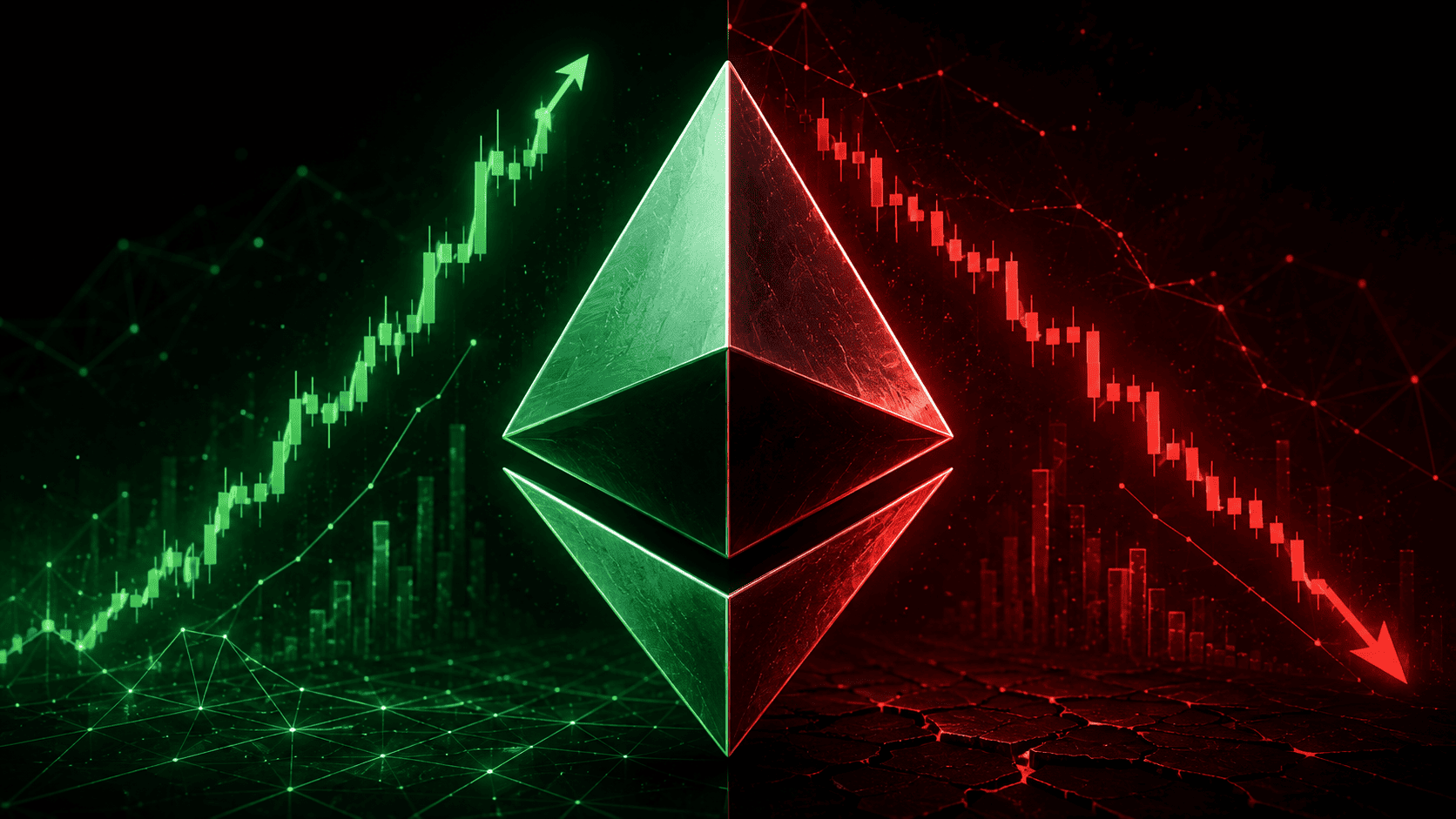
The gap between the bulls and bears has never been wider. Both sides are looking at the same network, the same data, and the same upgrade roadmap. They’re reaching completely opposite conclusions. Understanding why tells you everything you need to know about where Ethereum stands right now.
The Bull Case: Everything Under the Surface Is Getting Stronger
The optimists aren’t ignoring the price. They’re looking past it to what’s building underneath.
The Glamsterdam upgrade went live on May 1, delivering the most significant performance improvement since The Merge in 2022. The gas limit tripled from 60 million to 200 million per block. The upgrade introduced enshrined proposer-builder separation and block-level access lists. The target is 10,000 transactions per second, roughly ten times what Ethereum handled before. Gas fees are expected to drop by up to 78%.
This is the kind of infrastructure upgrade that takes months to fully reflect in network activity and prices. The bulls argue the market hasn’t priced it in yet because the impact is still materializing. DeFi protocols need to optimize for the new throughput. Developers need to build applications that leverage the speed. And users need to experience the lower fees before the activity meaningfully increases.
On the institutional side, the signals are mixed, but the positive ones are hard to ignore. Jane Street, one of the most sophisticated trading firms on Wall Street, slashed its Bitcoin ETF holdings by roughly 70% and added $82 million in Ethereum ETF exposure. When a firm of that caliber rotates from Bitcoin to Ethereum, it’s making a calculated bet that ETH is undervalued relative to BTC at current levels.
BlackRock filed to put its $7 billion money-market fund on Ethereum. Grayscale launched a staking ETF on NYSE Arca. BlackRock’s staked ETH ETF pulled $100 million on its first day of trading. The institutional infrastructure for Ethereum has never been deeper.
The supply picture adds another layer. Exchange supply has fallen to a yearly low of 14.9 million ETH. Over 66% of all ETH is locked in staking. Accumulation wallets hold 26.55 million ETH. When most of the supply is locked up, and the amount available for trading keeps shrinking, any meaningful increase in demand can produce outsized price moves.
The Bear Case: The Price Is Telling You Something the Fundamentals Aren’t
The pessimists have an equally compelling argument, and it starts with a simple observation: Glamsterdam already shipped, and the price kept falling.
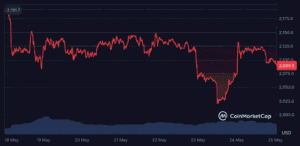
The biggest Ethereum upgrade since The Merge went live three and a half weeks ago. Since then, ETH has dropped from $2,380 to $2,098. The market had every reason to rally on the news. Instead, it sold. When a major positive catalyst arrives, and the price goes down rather than up, it tells you something about the underlying demand.
The institutional picture is more complicated than the bull case suggests. Harvard’s endowment liquidated its entire $87 million position. Ethereum ETFs have posted over $2.4 billion in cumulative outflows across five consecutive months of net withdrawals. On May 7 alone, ETH ETFs recorded $103.5 million in outflows. Jane Street’s $82 million buy is real, but it’s a drop in the bucket compared to the billions flowing out.
The brain drain is genuinely concerning. Eight senior researchers and leaders have left the Ethereum Foundation in 2026, with five departures in May alone. Carl Beek and Julian Ma announced their exits just this past week. When the people who build and maintain a network’s core technology start leaving at an accelerating pace, it raises legitimate questions about the project’s long-term trajectory.
Former researcher Dankrad Feist went further than anyone by proposing a billion-dollar new institution specifically tasked with protecting ETH’s competitive position and price. The fact that a former insider believes Ethereum needs a billion-dollar rescue fund to stay competitive tells you how serious the internal concerns have become.
Competition keeps intensifying. Solana briefly overtook Ethereum in monthly DEX volume. Base, Arbitrum, and other Layer 2 networks are siphoning activity from the main chain. Standard Chartered estimated that Base alone removed $50 billion from ETH’s market cap through fee cannibalization. Hyperliquid generates more weekly fees than Ethereum and Solana combined.
The Glamsterdam Paradox
The Glamsterdam upgrade is at the heart of the disagreement between bulls and bears, and both sides use it to support their case.
The bulls say the upgrade tripled Ethereum’s capacity, slashed fees, and set the stage for a new wave of application development. The full impact takes months to materialize, just like The Merge didn’t immediately transform Ethereum’s economics when it launched in 2022. Give it time.
The bears say the market had months to front-run Glamsterdam and chose not to. The upgrade was announced, developed in public, and went live on a known date. If institutional investors and large traders believed it would meaningfully increase demand for ETH, they would have positioned ahead of it. Instead, the price has done nothing but fall since launch day.
There’s a third possibility that neither side talks about enough. The upgrade may be genuinely important for Ethereum’s long-term competitive position without being a short-term price catalyst. Making a blockchain faster and cheaper doesn’t automatically increase the value of its native token. It could simply make the network more useful while the token continues to trade in line with macro conditions, ETF flows, and speculative sentiment.
In that scenario, Glamsterdam succeeds technically but doesn’t rescue the price, at least not on any timeline that matters for traders with a six-month horizon. Long-term holders benefit. Short-term traders don’t.
Where the Analyst Targets Come From
The range of credible year-end predictions spans from $1,800 to $12,000. Understanding the methodology behind each helps separate serious analysis from headline-chasing.
Citi’s $3,175 target is based on a relatively conservative framework that assumes moderate ETF inflows resume, Glamsterdam drives incremental network activity, and the Fed delivers one rate cut in the second half. It’s essentially a “things get slightly better” scenario that yields roughly a 50% gain from current levels.
Standard Chartered’s $7,500 target is more aggressive. It assumes institutional capital rotates meaningfully from Bitcoin into Ethereum, ETF outflows reverse into sustained inflows, and the Glamsterdam upgrade triggers a new wave of DeFi and tokenization activity on Ethereum’s main chain. That would require ETH’s market cap to reach approximately $905 billion, more than four times its current level.
The $10,000 to $12,000 projections from the most aggressive bulls require what analysts call a “monetary premium scenario,” in which ETH is treated not just as a utility token but as a base-layer money asset, similar to how Bitcoin is treated as digital gold. At $12,000, ETH’s market cap would be roughly $1.45 trillion, a territory that no non-Bitcoin crypto asset has ever reached.
On the bearish end, FxPro’s Alexander Kuptsikevich targets $2,000. Changelly’s technical model suggests ETH may not break above $2,538 for the remainder of the year. And if the $2,000 support fails, analysts see limited technical support until $1,800, which was the floor during the worst of the spring selloff.
The Key Levels That Will Decide Everything
Forget the year-end targets for a moment. Here’s what matters right now on the chart.
ETH is trading at $2,098, just below the $2,100 level that has acted as a floor since the recent decline. The 7-day moving average sits at $2,135, providing immediate overhead resistance. The 30-day moving average at $2,267 is the level that swing traders watch as the trend decider.
The critical support zone sits between $2,000 and $2,085. If ETH holds above $2,000, the oversold conditions and depressed sentiment could trigger a relief rally toward $2,300. If it breaks below $2,000, the next major support is $1,800. Analysts estimate roughly $800 million in long liquidation risk below the $2,162 level, which means a breakdown could cascade quickly.
On the upside, reclaiming $2,300 is the minimum needed to restore any short-term bullish momentum. Breaking above $2,400, the resistance that rejected every rally in May, would confirm that the downtrend is over. And pushing through the 200-day EMA near $2,367 would shift the long-term structure from bearish to neutral for the first time since April.
The Fear and Greed Index at 28 and the RSI approaching oversold territory both suggest the selling pressure may be close to exhaustion. Historically, these conditions have preceded bounces. Whether those bounces turn into sustained recoveries depends on whether the catalysts, ETF inflows, Glamsterdam adoption, and institutional rotation, actually materialise.
The Real Question Nobody Is Asking
Beyond the price targets and technical levels, there’s a deeper question that will determine Ethereum’s fate in 2026 and beyond.
Is Ethereum a platform or money?
If it’s a platform, then its value should be tied to usage: transactions processed, fees generated, applications hosted, and developers building. By those metrics, Ethereum remains the largest smart contract blockchain by TVL, developer count, and institutional adoption. But platforms can be disrupted by faster, cheaper alternatives, which is exactly what Solana, Base, and Hyperliquid are doing.
If it’s money, then its value should be tied to monetary properties: scarcity, security, decentralization, and trust. By those metrics, Ethereum has a case. Over 66% of the supply is staked. Exchange supply is at yearly lows. The network is the most decentralized smart contract platform. But Bitcoin dominates the “digital money” narrative so completely that ETH has struggled to carve out its own monetary identity.
The bulls need ETH to be both. A platform that generates utility-driven demand and money that commands a scarcity premium. The bears think it’s neither, trapped between Bitcoin’s store-of-value dominance and Solana’s execution speed.
The answer will probably take years to fully resolve. But at $2,098 with a $7,500 price target from Standard Chartered and an $87 million sell order from Harvard, the market is telling you it genuinely doesn’t know. And when the market is this divided, the eventual resolution tends to be violent in whichever direction it breaks.
FAQ
Why are Ethereum price predictions so divided?
Analyst targets for ETH by the end of 2026 range from $1,800 to $12,000 because the fundamental signals are genuinely contradictory. The Glamsterdam upgrade tripled capacity, BlackRock is building on the network, and 66% of supply is staked. But the price keeps falling, ETF outflows have exceeded $2.4 billion, eight senior researchers have left, and competition from Solana and Base is intensifying. Both bullish and bearish interpretations are supported by real data.
What happened with the Glamsterdam upgrade?
Glamsterdam went live on May 1, 2026, tripling Ethereum’s gas limit from 60 million to 200 million and targeting 10,000 transactions per second. It’s the biggest execution-layer upgrade since The Merge. Despite the technical success, ETH’s price has fallen from $2,380 to $2,098 since launch, raising questions about whether infrastructure improvements alone can drive token price appreciation.
What are the key price levels to watch for ETH?
Critical support ranges from $2,000 to $2,085. A break below $2,000 risks a cascade toward $1,800 due to an estimated $800 million in long liquidation risk. On the upside, reclaiming $2,300 would restore short-term bullish momentum. Breaking above $2,400 would confirm the downtrend is over. The 200-day EMA near $2,367 is the key level that separates bearish from neutral market structure.
Disclaimer: This article is for informational purposes only and does not constitute financial advice. Cryptocurrency investments carry significant risk. Always conduct your own research before making any investment decisions.