
For weeks, crypto’s biggest anxiety has had a name: Strategy. Michael Saylor’s company, the largest corporate Bitcoin holder on earth, recently broke its “never sell” vow and sold 3,588 Bitcoin for $216 million to cover preferred dividends, its largest disposal ever. With Strategy controlling roughly 4% of all Bitcoin in circulation, traders watch its every move, terrified that the biggest whale in the market might start unloading.
JPMorgan just published a report arguing that everyone is worrying about the wrong thing.


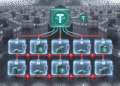
In a note led by managing director Nikolaos Panigirtzoglou, the bank’s analysts said Strategy is not the primary structural threat to Bitcoin. Yes, its sales can add bursts of selling pressure. But those are temporary. The deeper, more dangerous risk, the analysts argued, is something far quieter and slower: the steady build-out of private, permissioned blockchains by the very institutions crypto was supposed to disrupt.
It’s a counterintuitive argument, and it cuts against one of the crypto industry’s favorite stories. For years, the bullish thesis has been that Wall Street’s embrace of blockchain would pour money into Bitcoin, Ethereum, and public networks. JPMorgan is suggesting the opposite might happen: the institutions could adopt the technology while routing around the tokens entirely.
The Walled Garden Problem
To understand the argument, you need to understand the difference between public and private blockchains.
Public blockchains like Bitcoin and Ethereum are open. Anyone can use them, build on them, or hold their tokens. Their value comes partly from that openness and from demand for the native tokens that power them. When activity flows across these networks, it generates fees and demand that support the tokens’ prices.
Private, or “permissioned,” blockchains are closed. Only approved participants can use them. Banks love them because they deliver exactly what regulated finance requires: identity verification, privacy controls, and governance standards that public chains can’t currently match. A bank moving billions in client funds can’t use a network where every transaction is visible to the world and anyone can participate anonymously.
JPMorgan’s argument is that as institutions get serious about tokenization, they’ll increasingly choose these walled gardens. Issuance, custody, and settlement of tokenized assets could migrate onto private infrastructure that handles compliance properly, leaving public chains relegated to what the analysts called “distribution and connectivity”, the peripheral role of moving things around rather than the core role of settling them.
If that plays out, the tokenization boom that was supposed to flow into public crypto could instead flow into closed networks that don’t use public tokens at all, and that retail investors can’t even access.
The Evidence Already in Motion
The report isn’t purely theoretical. JPMorgan pointed to concrete examples already moving in this direction.
The tokenized real-world asset market currently sits around $50 billion, much of it on Ethereum today. But the analysts read that Ethereum concentration as early experimentation rather than a settled structure, the phase where firms test on public rails before building their own. As adoption matures, they expect the serious volume to move to private infrastructure.
DTCC, the plumbing behind virtually all US securities settlement, is developing tokenization workflows on permissioned infrastructure while only selectively connecting to public networks. It has piloted tokenized US Treasuries using its own systems. Securitize has issued tokenized assets through regulated platforms with eligibility controls. Each of these is a case of institutional tokenization happening in a controlled environment rather than openly on public chains.
SWIFT’s new blockchain project, which connects over 11,000 banks, reinforces the same regulated lane, as do central bank digital currency efforts like the digital euro and digital yuan. The pattern the analysts describe is one where “permissioned networks anchor the regulated system and public chains are merely used for distribution and connectivity.”
The Twist for Stablecoins and the CLARITY Act
The argument extends beyond tokenized assets to stablecoins, and here it produces a genuinely surprising conclusion.
The CLARITY Act, the crypto market-structure bill the industry desperately wants passed, is usually treated as unambiguously bullish. JPMorgan complicated that. Even if CLARITY passes this year, the analysts argued, it might not lift the threat, and could even make it worse. Clearer rules could embolden banks to issue their own tokenized deposits faster, competing directly with public stablecoins like USDT and USDC. Regulatory clarity that helps banks build bank-issued deposit tokens comes partly at the expense of the public stablecoins that run on Ethereum, Solana, and other chains.
In other words, the very regulatory progress the industry is counting on could accelerate the migration of activity into bank-controlled systems. It’s a genuinely uncomfortable possibility for anyone assuming that clearer rules automatically benefit public crypto.
The Conflict of Interest Worth Naming
Here’s the part any honest reading of this report has to include: JPMorgan is not a neutral observer.
The bank operates its own permissioned blockchain platform, Kinexys, which has already processed over $4 trillion in transactions within its private network. When JPMorgan argues that permissioned blockchains are the future of institutional finance, it is, in part, making an argument for its own business model. The bank has a direct commercial interest in the world it’s describing coming true.
That conflict doesn’t make the analysis wrong. The examples it cites are real, the institutional preference for private infrastructure is genuine, and the logic is sound. But investors should weigh the source alongside the substance. A bank with a $4 trillion private blockchain telling you private blockchains will win is offering insight and advertising at the same time. The prudent move is to take the argument seriously without treating it as disinterested truth.
The Bull Case Isn’t Dead
JPMorgan itself acknowledged its outlook could change, and the counterarguments are substantial.
The analysts said their thesis could weaken if public and private chains develop side by side rather than in competition, if stablecoins keep growing under clearer rules, or if Bitcoin simply continues trading as digital gold, a store of value whose demand has little to do with whether banks tokenize Treasuries on private rails. That last point matters most for Bitcoin specifically. Bitcoin’s core investment case has never really depended on being the settlement layer for tokenized securities. It’s a scarce, non-sovereign store of value. Private blockchains handling bank settlements don’t obviously threaten that.
There’s also a paradoxical bull case buried in the report. If Wall Street walls itself off inside private, permissioned systems, Bitcoin’s role as the one truly open, neutral, outside-the-system ledger arguably becomes more valuable, not less. In a world of corporate walled gardens, the open alternative has a distinct appeal.
The honest takeaway is that JPMorgan has identified a real long-term risk that the crypto industry tends to wave away. The assumption that institutional blockchain adoption automatically enriches public tokens is not guaranteed. Some of that adoption may route around them entirely. Whether that becomes the dominant pattern or just one lane alongside thriving public networks is unsettled, and the answer will unfold over years, not months. But the report is a useful corrective to lazy bullishness: watching where institutions actually build, public rails or private ones, may matter more for crypto’s long-term value than watching what Michael Saylor does with his next tranche of Bitcoin.
Disclaimer: This article is for informational purposes only and does not constitute financial advice. Cryptocurrency investments carry significant risk. Always conduct your own research before making any investment decisions.