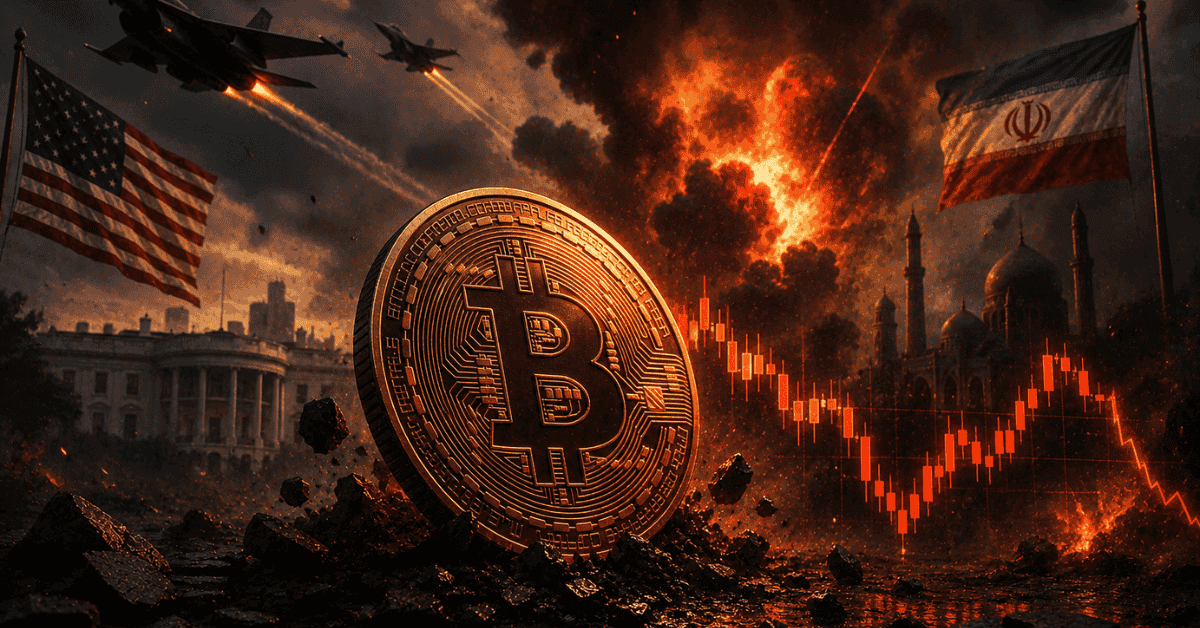
Bitcoin volatility is back in focus after the United States launched additional strikes on targets in Iran, adding fresh pressure to global markets already dealing with oil shocks, inflation fears and fading risk appetite.
The strikes, announced by U.S. Central Command on June 10, came amid renewed military tensions between Washington and Tehran. Oil prices rose after the escalation, with Brent crude moving toward the mid-$90s as traders priced in a higher risk premium around Middle East supply routes.


Bitcoin reacted like a risk asset rather than a safe haven. BTC has been trading around the low $60,000 area during the broader sell-off, with traders watching whether the market can defend key support or slide into another wave of liquidations.
Why Bitcoin Is Reacting to Iran Tensions
Bitcoin is often described as digital gold, but in moments of sudden geopolitical stress, it does not always behave like gold.
When conflict risk rises, investors usually reduce exposure to volatile assets first. That can include crypto, high-growth stocks and leveraged trades. Bitcoin may benefit from long-term distrust in fiat currencies, but in the short term it is still heavily owned by traders who manage risk quickly.
That is why military escalation can hit BTC even if the long-term Bitcoin thesis remains unchanged.
If oil prices rise sharply, inflation concerns can also return. Higher energy prices can pressure consumers, complicate central bank policy and reduce appetite for speculative assets. For Bitcoin, that matters because the asset tends to perform best when liquidity is improving, not when investors are worried about another inflation shock.
The Oil Market Is the Key Macro Link
The market reaction is not only about the strikes themselves. It is about what they could mean for oil.
The Strait of Hormuz remains one of the world’s most important energy chokepoints. Any threat to shipping through the region can push crude prices higher, even before actual supply losses are confirmed.
That creates a difficult setup for crypto.
Rising oil can strengthen inflation expectations, support the U.S. dollar and make investors more defensive. Bitcoin can still rally during geopolitical stress, but it usually needs a strong liquidity story or heavy safe-haven demand to offset the risk-off reaction.
Right now, the market appears more focused on downside risk than on Bitcoin’s store-of-value narrative.
Bitcoin Was Already Under Pressure
The timing of the Iran escalation matters because Bitcoin was already struggling.
Recent market data showed BTC around $63,000 after a sharp weekly decline, with capital rotating toward AI stocks, megacap technology names and traditional market opportunities. That means Bitcoin entered the geopolitical shock from a weak position, not from a strong breakout.
When an asset is already under pressure, negative news can hit harder.
Traders who bought the dip may cut positions quickly if support breaks. Leveraged longs can be forced out. ETF flows can become more important as investors look for signs that institutional demand is still present.
That is why the next few sessions matter so much.
What Levels Traders Are Watching
The most important area remains the $60,000 zone.
If Bitcoin holds above that level and begins forming higher lows, the market may treat the Iran-driven volatility as another stress test rather than the start of a deeper breakdown. A rebound from support could also encourage traders to argue that the worst of the sell-off has already been priced in.
If Bitcoin loses $60,000 cleanly, the mood could change quickly.
A decisive break below that level may trigger fresh selling, especially if oil keeps rising and risk assets remain weak. In that scenario, traders may start looking toward the mid-$50,000 area or lower support zones for the next major test.
The key point is that Bitcoin does not need bad news to fall forever. It only needs enough uncertainty to keep buyers cautious.
Could Bitcoin Still Bounce?
Yes, but the bounce needs confirmation.
Bitcoin often reacts sharply to geopolitical headlines, then stabilizes once markets understand the scale of the event. If the conflict does not expand further, oil prices cool and ETF demand improves, BTC could recover some lost ground.
A relief rally would not be surprising.
But a durable recovery needs more than a headline bounce. Bitcoin would need improving spot demand, stronger ETF inflows, lower liquidation risk and a cleaner macro backdrop. Without those factors, any rebound could remain fragile.
This is why traders should be careful with extreme conclusions. The Iran strikes are important, but they are one part of a larger market picture.
The Bigger Lesson for Bitcoin Investors
The latest volatility shows that Bitcoin’s identity is still evolving.
In theory, Bitcoin should benefit from distrust in governments, currencies and geopolitical stability. In practice, it is still traded inside a global risk system shaped by oil, interest rates, ETF flows and leverage.
That does not invalidate Bitcoin’s long-term case. It simply means short-term price action can look messy when global markets are stressed.
For now, the market is asking a simple question. Is Bitcoin a safe haven during this crisis, or just another risk asset being sold when uncertainty rises?
The answer may depend on what happens next in Iran, oil markets and the $60,000 support zone.
If tensions cool and buyers defend support, Bitcoin volatility could become the base for another rebound. If the conflict escalates and oil keeps climbing, BTC may face more downside before confidence returns.
Disclaimer: This article is for informational purposes only and does not constitute financial, investment, or legal advice. Always conduct your own research before making any investment decisions.