When SpaceX opened for trading on the Nasdaq under the ticker SPCX on Friday, the largest IPO in history immediately delivered the largest first-day move in modern IPO history. Shares priced at $135 closed approximately 19% higher, valuing the company at around $2.11 trillion.
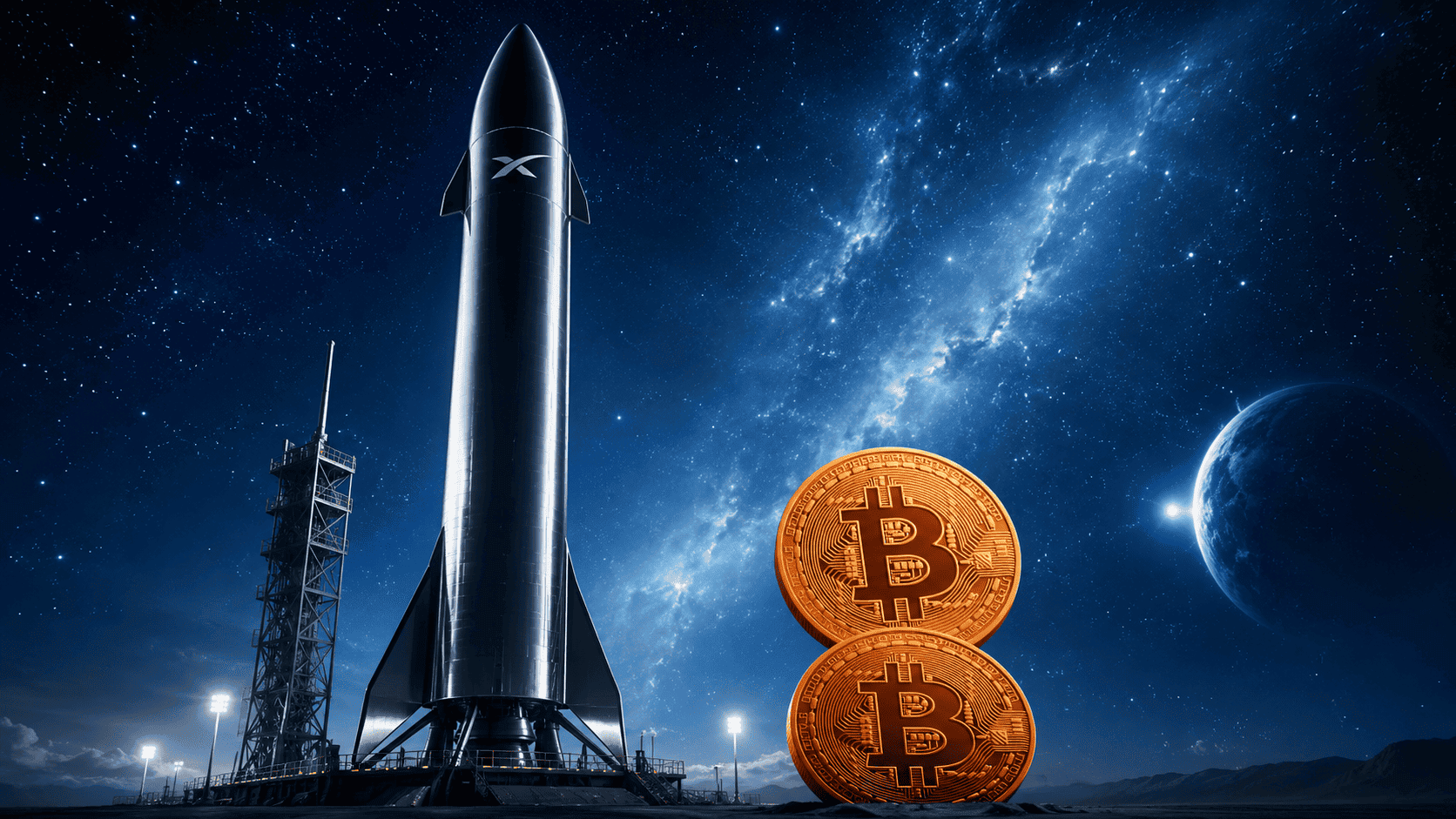
At the same moment, Bitcoin was trading near $63,500, with a total market capitalisation of approximately $1.26 trillion. The math is striking. SpaceX, a single private company that opened its first trading day on Friday morning, is now worth nearly twice as much as every Bitcoin in existence combined.


One company versus 19.8 million Bitcoin held by tens of millions of people across the globe. SpaceX wins by a margin that would have seemed absurd even six months ago.
The IPO raised $75 billion across 555.6 million Class A shares. Demand exceeded $250 billion, roughly four times the offering. Underwriters secured a green shoe option for an additional 83 million shares worth $11.2 billion to satisfy remaining demand. The debut pushed Elon Musk’s personal net worth to approximately $1.1 trillion. Across just five and a half years, the combined value of his stakes in Tesla, Neuralink, the Boring Company, and now SpaceX has quintupled.
And Bitcoin? It moved sideways. The liquidity drain that analysts had been warning about, the rotation of capital from crypto into the largest IPO in history, never materialised in the way bears expected.
The Liquidity Drain That Didn’t Happen
In the weeks leading up to the SpaceX listing, the dominant bearish narrative for Bitcoin was straightforward. The largest IPO in history would absorb $75 billion in capital that needed to come from somewhere. Bernstein had warned that Wall Street was “chasing AI” and bypassing crypto. Analysts including Jim Cramer publicly noted that liquidity appeared to be moving from Bitcoin into SpaceX exposure.
The thesis was logical. If pension funds, sovereign wealth funds, and large asset managers needed to fund SpaceX allocations, they would sell their most liquid underperforming holdings to raise cash. Bitcoin ETFs, which had bled $5.75 billion since mid-May, fit the profile perfectly.
Bitcoin didn’t crash on Friday. The price actually held above $63,000 during and after the listing. Over the full week leading into the IPO, Bitcoin rose just 0.43%, essentially flat, but not down. Ethereum traded sideways. The broader crypto market gained 1.11% to $2.18 trillion. Everything analysts had been warning about, the systemic outflow, the cascading sell pressure, the multi-day liquidation event, simply failed to occur.
Several factors explain why the feared drain didn’t happen. The tokenised IPO products from Bybit and Kraken kept some retail capital within crypto exchange ecosystems rather than draining to traditional brokerages. The cancellation of planned US strikes against Iran late in the week eased geopolitical tension and helped risk assets stabilise. And the institutional flows funding SpaceX appear to have come largely from traditional cash reserves, equity portfolios, and money market funds rather than from forced crypto liquidations.
The lesson is significant. The biggest single capital event in IPO history occurred and Bitcoin barely moved. The bearish liquidity rotation thesis turned out to be wrong, at least in this iteration. For a market that had been pricing in disaster, the actual outcome was almost uneventful.
SpaceX Owns 18,712 BTC
The irony of SpaceX being worth more than twice Bitcoin’s market cap is that the company itself holds a substantial Bitcoin position. SpaceX’s S-1 filing disclosed 18,712 BTC, worth approximately $1.18 billion at current prices. That makes SpaceX one of the largest publicly traded corporate Bitcoin holders globally, alongside Strategy, Marathon Digital, and Tesla.
For investors who bought SPCX at the IPO price of $135, every share now includes indirect exposure to Bitcoin. The roughly $1.18 billion in BTC sitting on SpaceX’s balance sheet flows through to shareholders proportionally. A SpaceX shareholder is technically a Bitcoin holder, whether they realise it or not.
The mathematics produces a strange outcome. SpaceX’s market cap is now nearly $2.11 trillion. Bitcoin’s market cap is around $1.26 trillion. SpaceX’s Bitcoin holdings represent approximately 0.056% of its market cap. The crypto exposure is real but tiny relative to the company’s overall valuation.
The bigger implication is that SpaceX’s first-day success could set a template for future tech IPOs to follow. Anthropic’s listing is reportedly being drafted for September at an $852 billion post-money mark. OpenAI’s filing is in preparation at a target valuation near $1 trillion. Either of these companies disclosing significant Bitcoin holdings on their balance sheets could secure a premium from crypto-correlated allocators. The Bitcoin treasury strategy, originally pioneered by Strategy, may be quietly normalising as standard corporate practice for the next wave of tech IPOs.
The Tokenised Share Race
Friday’s listing was historic not just because of SpaceX’s valuation, but because of how crypto exchanges participated in the IPO.
Tokenised SpaceX shares began trading on Bybit, Kraken, Binance, and Robinhood, pushing the tokenised equities market past $5.5 billion in market capitalisation. The xStocks framework built by Kraken’s parent Payward delivered $135 IPO pricing to retail investors in over 110 countries who could never have accessed traditional IPO subscriptions through Wall Street brokerages.
Hyperliquid’s SPCX perpetual futures, which had been trading since May 18 at a $150 reference price, spiked to $216 before settling near $203 during the lead-up to the listing. Once SPCX opened on Nasdaq, arbitrageurs immediately shorted the perpetuals and bought real shares, pulling the synthetic price back toward the listed price within hours.
The convergence of synthetic perpetuals on Hyperliquid, tokenised IPO shares on Bybit and Kraken, and traditional equity trading on Nasdaq created the most fragmented and interconnected primary market debut in financial history. Crypto exchanges weren’t just observers of the SpaceX listing. They were primary venues for an enormous slice of the retail participation.
The infrastructure being demonstrated has implications beyond SpaceX. The combination of regulated tokenised shares, derivative perpetuals, and traditional equity all trading the same underlying asset creates a new model for IPO participation. Future major listings, including the expected Anthropic and OpenAI offerings, will likely follow the same multi-venue playbook.
The Symbolic Weight
A single private company being worth more than twice Bitcoin’s entire market cap is the kind of comparison that should give crypto advocates pause.
Bitcoin has been positioned for over a decade as the future of money, the digital gold of the internet era, and the most important monetary innovation since the gold standard. The investment thesis depended on Bitcoin eventually capturing enough value to rival traditional asset classes including gold, sovereign debt, and major corporate equities.
In June 2026, that thesis is being tested. SpaceX, a company that launches satellites and is preparing for missions to Mars, just demonstrated that it can capture nearly twice as much investor capital as the entire Bitcoin network combined. Apple. Microsoft. Nvidia. Saudi Aramco. All of these companies have larger market caps than Bitcoin. SpaceX has now joined them on a single trading day.
The bull case for Bitcoin argues that this asymmetry will eventually resolve as Bitcoin’s role expands beyond speculative investment into payments, settlement, and store-of-value applications. The bear case argues that Bitcoin will remain a relatively small alternative asset while companies like SpaceX, Tesla, and the AI giants capture the value creation of the next two decades.
Friday’s outcome is data for both arguments. Bitcoin survived the largest IPO in history without crashing. That’s a structural win. But it survived precisely because so many investors are now choosing SpaceX over Bitcoin for their growth capital. The asset class that crypto bulls believed would replace traditional finance just demonstrated that traditional finance is producing companies large enough to dwarf it.
The next phase of this story will play out over the coming weeks. Whether Bitcoin can mount a recovery as macro conditions ease, whether SpaceX shares continue rising or face a post-IPO correction, and whether the Anthropic and OpenAI IPOs follow the same template will all reveal how this rebalancing of capital across new economy assets eventually settles.
For now, the headline is clear. One company. Nearly two Bitcoins. The largest IPO in history opened on Friday, and the world looks different already.
FAQ
How much is SpaceX worth after the IPO?
SpaceX priced its IPO at $135 per share and traded up approximately 19% on its first day, reaching a market capitalisation of around $2.11 trillion. The company raised $75 billion across 555.6 million Class A shares, with demand exceeding $250 billion. The debut pushed Elon Musk’s personal net worth to approximately $1.1 trillion.
Why didn’t Bitcoin crash during the SpaceX IPO?
Several factors prevented the feared liquidity drain. Tokenised IPO products from Bybit and Kraken kept some retail capital within crypto ecosystems. The cancellation of US strikes against Iran late in the week eased geopolitical tension. And institutional funding for SpaceX appears to have come largely from traditional cash reserves and equity portfolios rather than from forced crypto liquidations. Bitcoin rose 0.43% over the IPO week.
Does SpaceX hold Bitcoin?
Yes. SpaceX’s S-1 filing disclosed 18,712 BTC on its balance sheet, worth approximately $1.18 billion at current prices. That makes SpaceX one of the largest publicly traded corporate Bitcoin holders globally. Every SPCX shareholder now has indirect Bitcoin exposure through the company’s treasury holdings, though these represent only about 0.056% of SpaceX’s $2.11 trillion market cap.
Disclaimer: This article is for informational purposes only and does not constitute financial advice. Cryptocurrency and securities investments carry significant risk. Always conduct your own research before making any investment decisions.