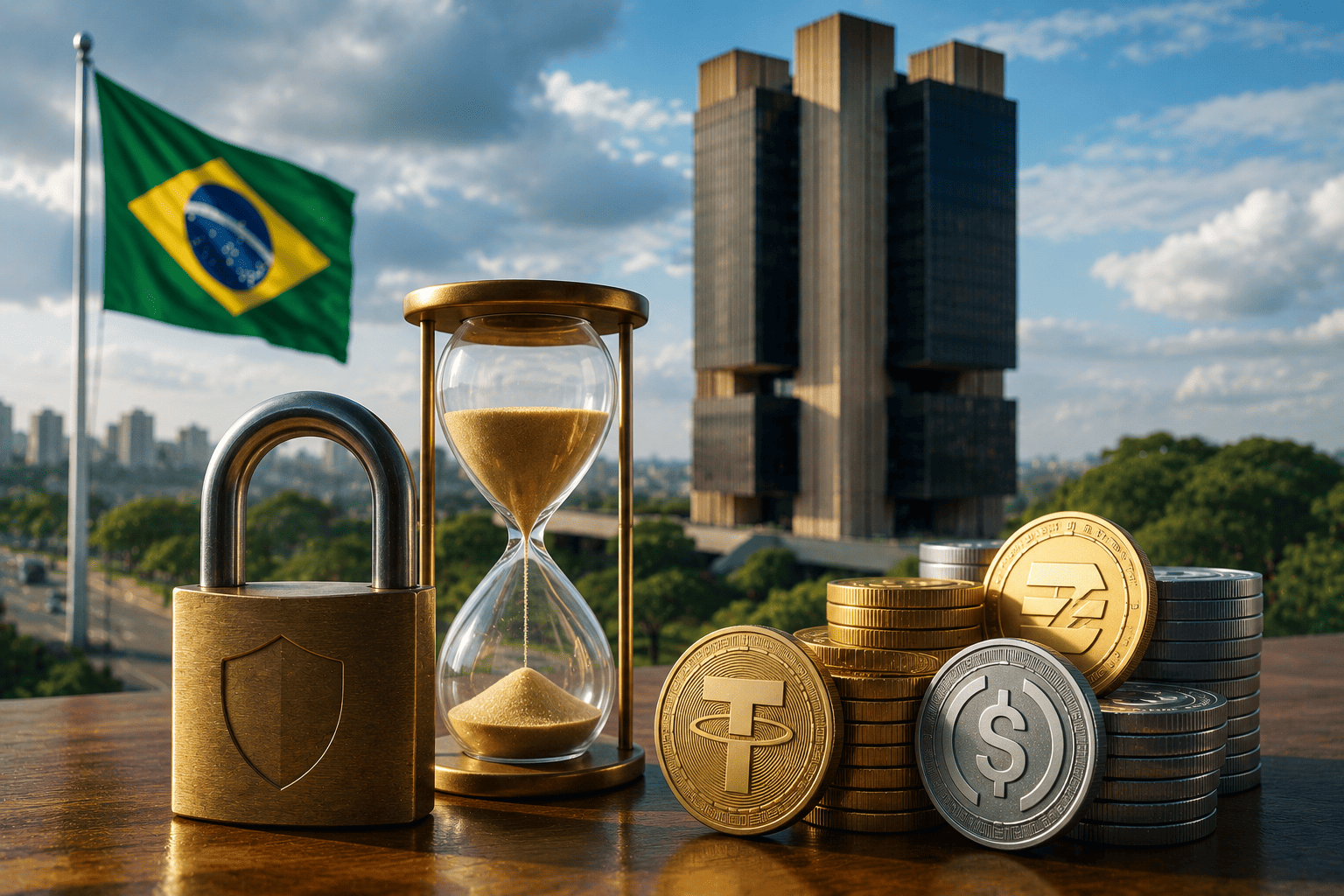
Brazil stablecoin transfers could soon become slower for larger transactions if the country’s central bank moves ahead with a new proposal aimed at crypto exchanges and virtual asset service providers.
According to local reports, the Banco Central do Brasil has proposed a preventive hold of up to 24 hours on certain stablecoin and crypto transfers sent to self-custody wallets or overseas destinations. The measure would apply to transactions worth $10,000 or more, including cases where a customer reaches that amount through multiple transfers in a single day.


The proposal is not yet final, but it shows how one of Latin America’s most active crypto markets is trying to bring stablecoin payments closer to traditional financial oversight.
Brazil Wants More Time to Review Large Stablecoin Transfers
The central bank’s proposed rule would give regulated crypto service providers more time to review large transfers before assets leave their platforms.
That is important because once stablecoins move to a self-custody wallet or a foreign platform, local institutions may have less visibility over what happens next. The 24-hour window is intended to let exchanges assess risk, check whether the transaction matches the customer’s profile and verify information linked to anti-money laundering and counter-terrorist financing rules.
The measure would not necessarily force every affected transfer to wait a full day. Reports say the assets could be released sooner if the provider determines that the transaction is safe under its internal risk controls.
That distinction matters. The proposal is being framed as a temporary review mechanism, not a permanent block on customer funds.
Why the $10,000 Threshold Matters
The $10,000 threshold gives the proposal a clear target. It is not designed to capture every small retail stablecoin transaction.
Instead, it focuses on larger transfers and business-style flows, especially those linked to cross-border payments, remittances, institutional activity and treasury movement. These are exactly the areas where stablecoins have become most useful in emerging markets.
For many users, dollar-backed stablecoins are attractive because they move quickly, trade around the clock and can reduce dependence on slower banking rails. In countries where access to dollars is important, stablecoins often act as a practical bridge between local currencies and global liquidity.
That is also why regulators are paying closer attention. A payment rail that is fast and global can be useful for legitimate users, but it can also create blind spots for authorities trying to monitor fraud, capital movement and illicit finance.
The Rule Could Hit Stablecoin Speed
The biggest concern for the crypto industry is speed.
Stablecoins are popular partly because they settle much faster than many traditional payment systems. A mandatory review period, even if limited to high-value transfers, could reduce one of their main advantages.
Local industry voices have warned that moving from same-day settlement to next-day settlement could make stablecoin transfers less competitive, especially for international payments. That matters in Brazil, where crypto adoption is not just speculative. Stablecoins are widely used for payments, exchange access, dollar exposure and cross-border movement.
For exchanges and brokers, the rule could also add compliance costs. They would need stronger risk-scoring systems, transaction monitoring processes and daily records of suspicious or attempted fraud activity.
Brazil Is Tightening Its Crypto Framework
The proposal comes after Brazil has already moved to bring virtual asset service providers into a more formal regulatory structure.
The central bank has been building rules around licensing, consumer protection, transparency, internal controls and the treatment of fiat-pegged crypto assets. Stablecoins are a major part of that framework because they sit close to foreign exchange and payments.
That position makes them different from Bitcoin or other volatile crypto assets. Bitcoin is often treated as an investment or store-of-value asset. Stablecoins, especially dollar-backed tokens like USDT and USDC, are more directly connected to payments and currency movement.
For regulators, that makes stablecoins harder to ignore.
Not a Ban, But Still a Serious Restriction
The proposed 24-hour hold should not be confused with a total ban on stablecoins.
Users would still be able to buy, hold and transfer stablecoins. The restriction would apply to certain large transfers where regulated providers are asked to perform additional checks before completing the transaction.
Still, for the market, the impact could be significant. Stablecoins became powerful because they allowed money-like value to move instantly across borders. Any rule that adds waiting time changes the user experience.
The question is whether Brazil can find a balance. Too little oversight can leave room for fraud and regulatory blind spots. Too much friction can push activity away from regulated platforms and into less visible channels.
A Test Case for Emerging Market Stablecoin Regulation
Brazil’s proposal could become a useful case study for other emerging markets.
Many countries face the same problem. Stablecoins are increasingly important for payments, remittances and dollar access, but they also challenge traditional financial controls. Regulators do not want to crush innovation, but they also do not want a parallel dollar payment network operating outside their supervision.
Brazil’s approach appears to be a middle path. It does not remove stablecoins from the market, but it does make large outbound transfers more bank-like.
That may be where stablecoin regulation is heading globally. The technology will remain fast, but regulated entry and exit points may become slower, stricter and more closely monitored.
For Brazil’s crypto users, the immediate takeaway is simple. Large stablecoin transfers are not being banned, but they may soon come with a pause button.
Disclaimer: This article is for informational purposes only and does not constitute financial, investment, or legal advice. Always conduct your own research before making any investment decisions.