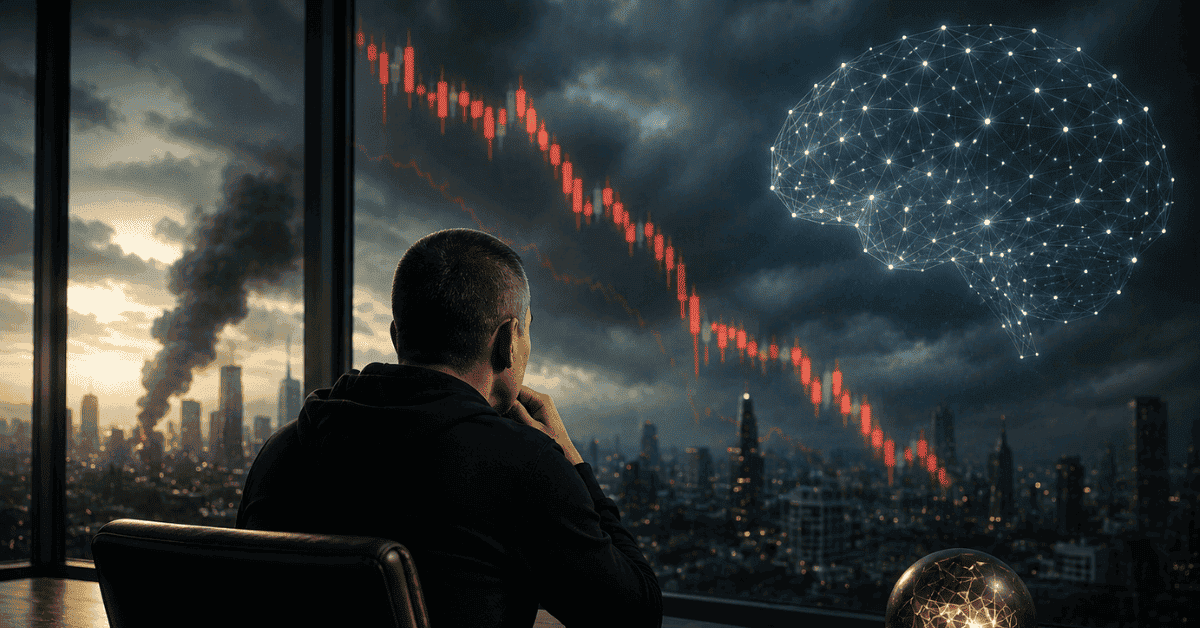
Crypto market slump fears have dominated 2026, but Binance founder Changpeng “CZ” Zhao says there is no single explanation for why digital assets have struggled so sharply this year.
In an interview with CoinDesk, Zhao pointed to a mix of pressures weighing on Bitcoin and the wider market, including geopolitical tension, capital rotating into artificial intelligence, and the familiar four-year crypto cycle. His comments come as Bitcoin trades near $60,000 after falling heavily from last year’s highs, while broader trading activity across crypto has cooled.


The message is not that one villain broke the market. It is that crypto is now being pulled by several forces at once.
CZ Says the Crypto Selloff Is Not Just About Bitcoin
Zhao told CoinDesk that the weakness across digital assets cannot be reduced to a single cause. That matters because crypto investors often look for one clean explanation during a downturn, such as regulation, interest rates, ETF flows, liquidations, or whale selling.
This cycle has been messier.
Bitcoin opened 2026 near $89,000, briefly climbed above $96,000, then slid toward the $60,000 area. Looking back further, CoinDesk noted that Bitcoin is down around 50% from its October 2025 high above $126,000.
That kind of move has shaken confidence far beyond Bitcoin itself. Altcoins have suffered thinner liquidity, retail interest has faded, and many speculative narratives that looked unstoppable last year now feel much harder to defend.
AI May Be Taking the Hot Money Away From Crypto
One of Zhao’s more interesting explanations was not about crypto at all. He suggested that new industries such as artificial intelligence have pulled in money that might otherwise have gone into digital assets.
That is an important shift. In previous cycles, crypto was often the main home for high-risk, high-upside speculation. In 2026, AI has become a serious competitor for investor attention.
AI stocks, private AI companies, chips, infrastructure, automation and data centers have all become part of a larger capital rotation. For traders and venture investors, that means crypto is no longer the only obvious place to chase growth.
Still, Zhao framed that trend as positive over the long run rather than purely negative. If AI and crypto both grow, the two sectors may eventually overlap more deeply through payments, identity, compute markets, on-chain agents and automated financial activity.
For now, though, the AI boom may be making crypto feel less urgent.
Global Tensions Have Made Risk Assets Harder to Own
Geopolitics is another factor weighing on the market. CoinGecko’s Q1 2026 report said the crypto market moved from a sharp correction into a deeper “crypto winter” as bearish momentum collided with global geopolitical instability.
That risk-off backdrop has made speculative assets harder to hold. When global tensions rise, investors often move toward safer assets, cash, gold, the dollar or defensive trades. Crypto can still attract long-term believers, but it tends to suffer when liquidity tightens and fear rises.
CoinGecko reported that total crypto market capitalization fell 20.4% in Q1 to $2.4 trillion, leaving the asset class about 45% below its October 2025 peak. The same report said centralized exchange spot volume dropped 39.1% in Q1, a sign that the downturn has affected not just prices, but participation.
That is one of the clearest signs of a weaker cycle. Prices can bounce quickly, but lost trading activity usually takes longer to rebuild.
The Four-Year Cycle Still Haunts the Market
Zhao also mentioned the traditional four-year crypto cycle, a pattern often linked to Bitcoin halving events, liquidity waves and investor psychology.
The idea is simple. Crypto tends to move through periods of accumulation, rapid expansion, overheating and correction. It is not a perfect clock, and every cycle has its own triggers, but the rhythm still shapes market behavior.
The current downturn is especially painful because many investors entered 2026 expecting institutional adoption, clearer regulation and ETF demand to support higher prices. Instead, the market has been forced to digest weaker liquidity, lower volume and fading momentum.
That does not mean the four-year cycle explains everything. It does suggest that crypto may still be vulnerable to old market habits, even as the industry becomes more institutional.
Policy Clarity May Help, But It Will Not Fix the Market Alone
Zhao also discussed U.S. crypto policy, including the Digital Asset Market Clarity Act, known as the CLARITY Act. He suggested that individual bills matter, but may not determine crypto’s long-term direction by themselves.
That view is realistic. Regulation can improve confidence, reduce legal uncertainty and help institutions build around digital assets. But policy cannot automatically create demand, restore liquidity or force investors back into risk assets.
The market still needs stronger participation, better narratives and real use cases that survive beyond bull market hype.
Why CZ’s Comments Matter Now
Zhao is no longer Binance CEO, after stepping down in 2023 as part of the company’s U.S. settlement, but he remains one of the most recognizable figures in crypto. His view carries weight because Binance helped shape the last decade of exchange-driven crypto growth.
His comments also land at a moment when the industry is searching for a better explanation than “crypto is dead” or “Bitcoin will always bounce.”
The more useful answer is somewhere in between. Crypto is dealing with macro pressure, geopolitical fear, competition from AI, weaker trading volumes and cycle fatigue. None of those forces alone explains the full decline, but together they help explain why 2026 has felt so heavy.
For investors, the key takeaway is not that the market is guaranteed to recover quickly. It is that this downturn is broader than one bad headline. If crypto rebounds, it will likely need more than optimism. It will need liquidity, trust, clearer regulation and new demand that goes beyond speculative rotation.
Disclaimer: This article is for informational purposes only and does not constitute financial, investment, or legal advice. Always conduct your own research before making any investment decisions.