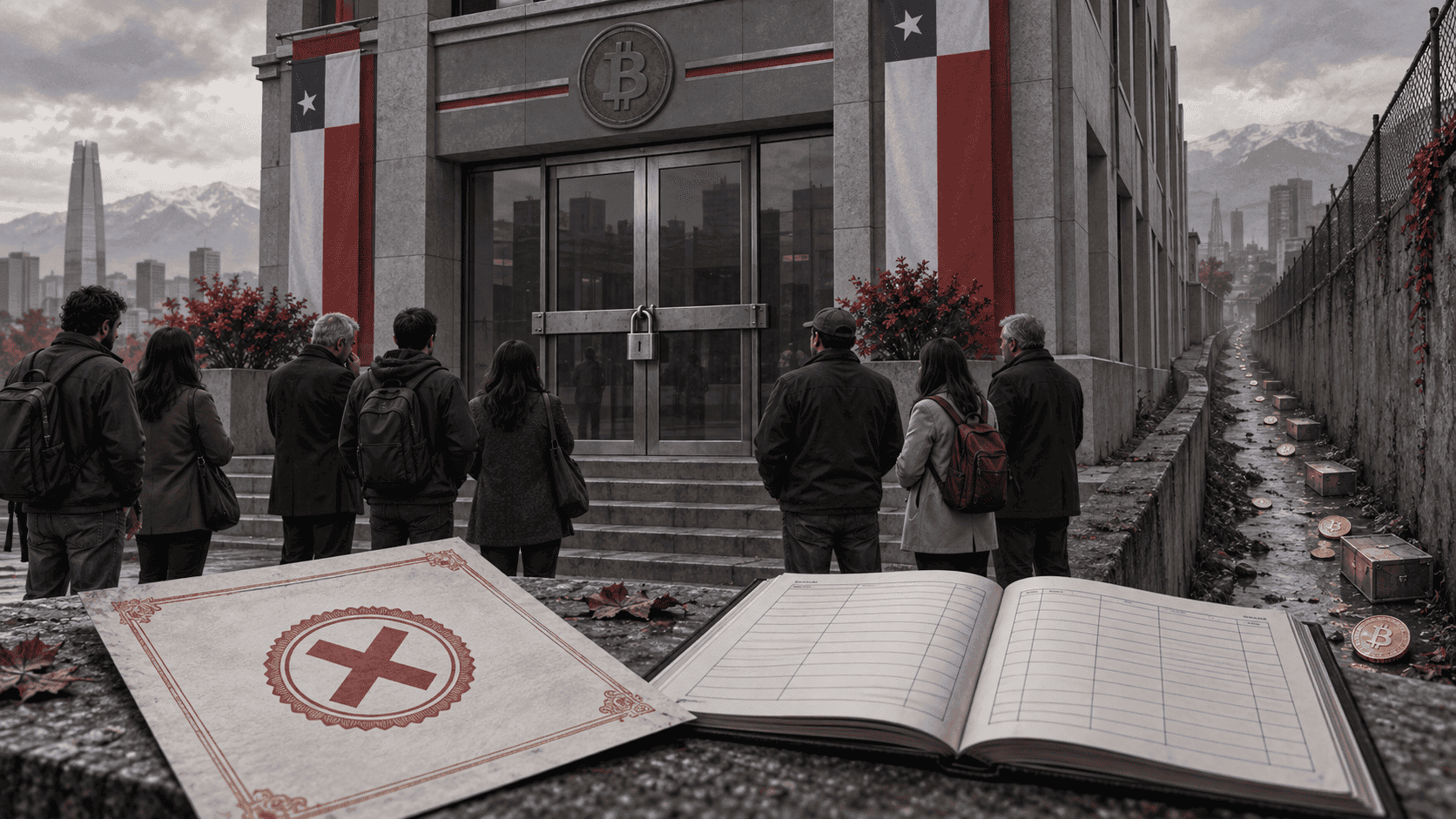
One of Chile’s best-known crypto exchanges is shutting down permanently after discovering that more than $7 million in customer money had left its wallets, some of it years ago.
Orionx suspended withdrawals and announced the closure on 3 September, following a forensic audit that traced a series of transactions moving customer assets to wallets the company did not control. The missing funds span Bitcoin, Ethereum, XRP and Polygon.


More than 100,000 registered users are affected.
“Our sole priority now is to return as much of our clients’ assets as possible,” the exchange said in a statement, while stopping short of guaranteeing anyone gets everything back.
The exchange is accusing its own founders
The day before going public, Orionx filed criminal complaints against two of its founding partners.
The audit concluded that Joaquín Díaz and Roberto Zibert, along with other former employees, were allegedly aware of or involved in transactions that created the gap between what Orionx said it held and what it actually held.
According to the complaint as reported by Chilean media, those transfers took place between 2018 and 2021.
Orionx launched in 2017. That means the alleged siphoning was happening while the exchange was building its reputation across Latin America and marketing itself as a trusted place to store crypto.
Five years passed before an audit caught it.
The regulator had already said no
Chile’s Financial Market Commission rejected Orionx’s application to operate in June, and the reasons look pointed in hindsight.
The CMF turned down the exchange’s bid to join the Financial Services Provider Registry under Chile’s Fintech Law on 19 June, citing failures to provide audited financials and client-protection guarantees.
Orionx had been trading under a transitional regime while that application was pending. After the rejection, it kept operating anyway.
The CMF has since confirmed the exchange was not authorised to offer crypto financial services and was working outside the Fintech Law’s provisions.
It has also made clear it will not oversee the wind-down or any restitution process. That leaves the 100,000-plus users with one route to recovery: the courts.
Orionx has announced a phased plan for returning assets but has not guaranteed users will get all their money back.
Tether invested a year ago
The collapse is more awkward given who backed the exchange.
Tether, the issuer of USDT, made a strategic investment in Orionx as part of its Series A funding round in June 2025. That was seven months before the CMF rejected the licence application and roughly 15 months before the closure.
Orionx had been on an upward trajectory for much of the past year, which is part of what makes the fall so abrupt. The exchange had become popular with younger Chilean users during a period when the country was publicly discussing whether to hold bitcoin as a reserve asset.
Some Chilean commentators are describing this as the largest crypto crisis the country has faced.
Proof of reserves would have caught it
The gap sat undetected for years because nobody was checking in a way that would have surfaced it.
Proof of reserves is a straightforward accountability tool. An exchange cryptographically demonstrates that it holds customer assets one to one, publishing evidence that anyone can verify. Run continuously, it makes a growing shortfall very difficult to hide.
Orionx did not implement it. Neither, as one analysis noted, do most regional exchanges.
It is not a perfect safeguard. Proof of reserves can be gamed with careful timing, and it does not prove solvency on its own. But a liability gap of this size, accumulating over three years, would very likely have shown up long before a forensic audit went looking for it.
The lesson is older than the exchange
There is nothing novel about what happened here. Customer assets went somewhere they should not have gone, the people responsible were on the inside, and the users had no way of knowing until the money was already spent.
The pattern repeats because the incentive structure repeats. Exchanges hold customer funds, users cannot see the balance sheet, and the only thing standing between the two is whoever runs the company.
Regulation helped less than it should have. Chile has a Fintech Law and a regulator that correctly identified Orionx as unfit, rejecting its application over precisely the issues that later surfaced. The exchange simply continued trading, and the regulator now says it cannot force restitution.
For users elsewhere, the practical takeaway is narrow but useful. Check whether an exchange publishes proof of reserves and whether it is actually licensed rather than merely applying. If it holds a large balance you cannot afford to lose, move it to a wallet where you hold the keys.
Nothing about that advice is new. Orionx’s customers are the latest people to learn it the expensive way.
FAQ
How much is missing?
More than $7 million in customer assets, spanning Bitcoin, Ethereum, XRP and Polygon holdings.
Will users get their money back?
Unclear. Orionx has announced a phased restitution plan but has not guaranteed full recovery. Chile’s regulator says it cannot order restitution, leaving users to pursue claims through the courts.
Was Orionx licensed?
No. The CMF rejected its application in June 2026 over missing audited financials and client-protection guarantees. Orionx continued operating without authorisation.
Disclaimer: This article is for informational purposes only and does not constitute financial or legal advice. Cryptocurrency investments carry significant risk. Always conduct your own research before making any investment decisions.