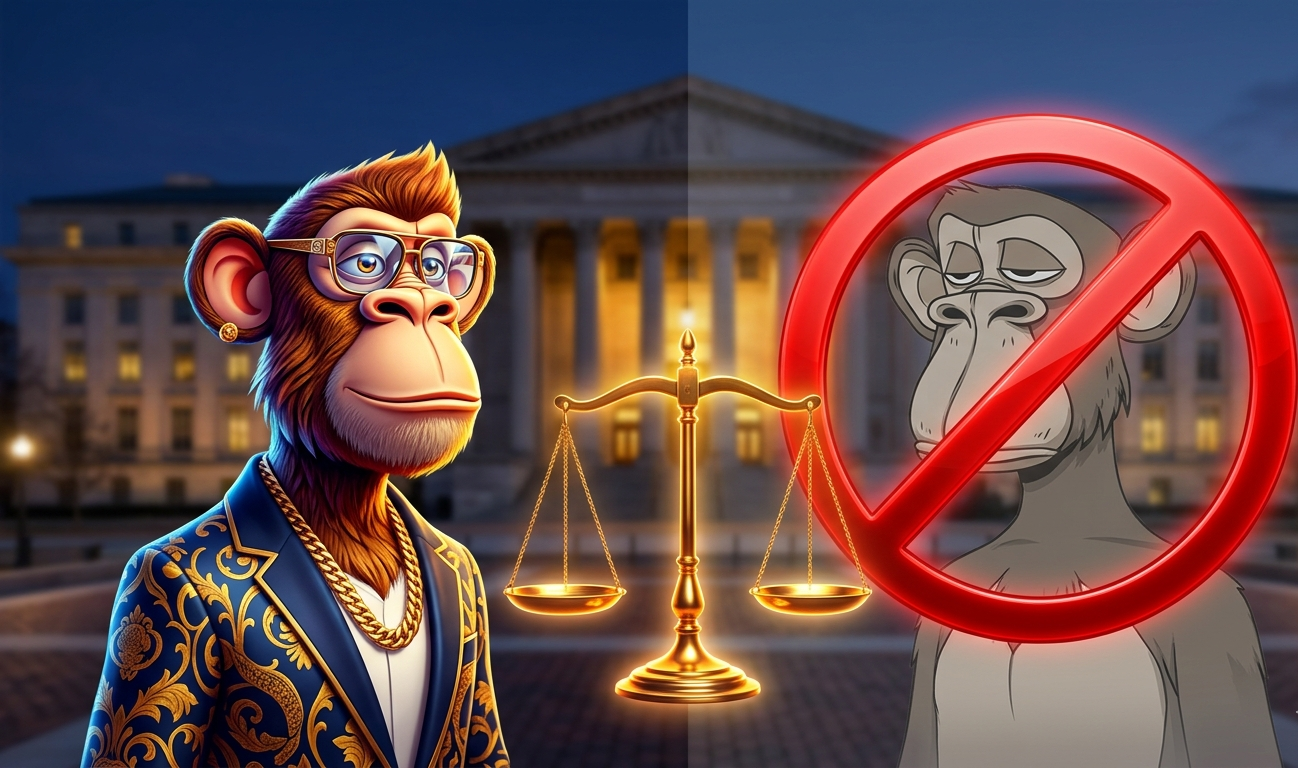
One of the most chaotic legal battles in NFT history is finally over. Yuga Labs, the company behind the Bored Ape Yacht Club, has settled its lawsuit against conceptual artist Ryder Ripps and his business partner Jeremy Cahen, ending a dispute that began in 2022 and wound its way through two major federal court rulings before the parties agreed to resolve it out of court. The settlement bars Ripps and Cahen from using Yuga’s trademarks. The dispute centred on whether the pair’s project, which reused Bored Ape imagery, crossed the line from satire into trademark infringement. The financial terms of the agreement have not been disclosed. What has been disclosed is the court order permanently prohibiting Ripps and Cahen from using Yuga Labs’ marks and artwork going forward, a restriction that carries the full weight of federal enforcement.
How It Started
Yuga Labs filed the lawsuit in 2022, accusing Ryder Ripps and Jeremy Cahen of profiting from a collection of NFTs that resembled the Bored Ape Yacht Club tokens. The lawsuit claimed that the RR/BAYC NFT collection misled buyers by copying the unique traits of Bored Ape images, and that the duplication caused consumer confusion and led to millions in profits for the defendants.


Ripps charged approximately $200 in ETH for an NFT of whichever Bored Ape image the user wanted. To make a purchase, users had to check a disclaimer box stating they understood the token was a new mint of BAYC imagery being re-contextualised for educational and satirical purposes. Ripps argued he was making a political statement about alleged problematic elements in the original BAYC collection. Yuga Labs argued he was running a commercial counterfeit operation under the cover of artistic expression. Yuga sued for false designation of origin, trademark infringement, cybersquatting, unfair competition, and unjust enrichment.
The Court Rulings That Shaped NFT Law
The district court granted summary judgment in favour of Yuga on its trademark and cybersquatting claims, dismissed the defendants’ counterclaims, and awarded Yuga over $8 million in damages, including disgorgement of profits, statutory damages, attorney fees, and costs. The judge found that Ripps and Cahen had acted with bad faith intent to profit, and that the RR/BAYC NFTs did not express an idea or point of view but simply pointed to the same digital images as the original BAYC collection.
However, the Ninth Circuit Court of Appeals reversed the summary judgment on the issue of consumer confusion, remanding that question for trial, while affirming that NFTs qualify as goods under the Lanham Act. That affirmation was the most legally significant output of the entire case. By ruling that NFTs are goods under the Lanham Act, the Ninth Circuit established that federal trademark law applies to digital collectibles in the same way it applies to physical products. Every NFT collection operating in the United States now has a clearer basis for protecting its brand, its imagery, and its name under trademark law.
The Ninth Circuit Ruling on NFTs as Goods
The appellate ruling from July 2025 deserves particular attention because it produced the controlling legal precedent even though the full case was ultimately settled before trial. The Ninth Circuit confirmed that non-fungible tokens are goods under the Lanham Act and as such can be protected by trademark law. The court noted that customers experience the BAYC NFTs as more than a digital deed or authentication of artwork, highlighting that they function as membership passes, granting exclusive access to social clubs, branded merchandise, and events. The ruling aligns with the U.S. Patent and Trademark Office’s position that trademark protection can extend to NFTs just as it does to physical items.
The court also rejected Ripps’ argument that his work was protected under the First Amendment, finding that his use of BAYC’s marks went well beyond commentary and was aimed at selling competing products. The decision parallels the earlier ruling in Hermès v. Rothschild, in which the Birkin bag-maker successfully argued that MetaBirkin NFTs infringed its famous trademark, signalling that courts are willing to apply long-standing trademark principles to digital-first disputes.
Why the Settlement Happened
With the Ninth Circuit ordering a jury trial on the consumer confusion question, both sides faced the costs, unpredictability, and continued public exposure of a full courtroom proceeding. The resolution closes one of the most consequential IP enforcement proceedings in the NFT industry’s short legal history, a case that generated, at the appellate level, a controlling Ninth Circuit ruling that NFTs qualify as goods under the Lanham Act and are therefore protectable by federal trademark law.
While this legal dispute was ongoing, Bored Apes largely receded from public view. Last year, Bored Ape Yacht Club reappeared in the form of a metaverse experience called Otherside. Ripps stated that the terms of the settlement were confidential, and Yuga Labs declined to comment beyond the court filing. The silence from both sides suggests a negotiated resolution that neither party found fully satisfying but both found preferable to a jury trial.
What This Means for the NFT Industry
The Yuga Labs versus Ripps case produced something more durable than its settlement: a body of case law that defines how trademark protection works in the NFT space. Several important principles now apply across the industry as a result of this litigation.
First, NFT collections are legally recognisable goods under U.S. federal trademark law. Any creator or company that has established brand recognition around an NFT collection can now pursue trademark infringement claims with a clearer legal framework behind them. Second, the satire and parody defence has meaningful limits in digital asset contexts. When a project is primarily commercial in nature, using an established brand’s imagery to sell competing tokens, courts are unlikely to accept artistic expression as a shield against trademark liability. Third, this settlement signals that creators of original digital assets may have stronger protections against perceived infringement, even when artistic expression is claimed. Moving forward, the industry will likely see increased scrutiny on projects that closely mimic established NFT collections, prompting clearer guidelines for appropriation and parody in the digital art world.
For NFT collectors, creators, and marketplaces, the practical message is straightforward. Building a project that deliberately copies the visual identity of an established collection, even under the banner of commentary or critique, carries serious legal exposure in U.S. federal courts. The Bored Ape Yacht Club may have faded significantly from its 2021 peak valuations, but the legal infrastructure Yuga Labs built to protect it has just been formally confirmed and will outlast the hype cycle by many years.