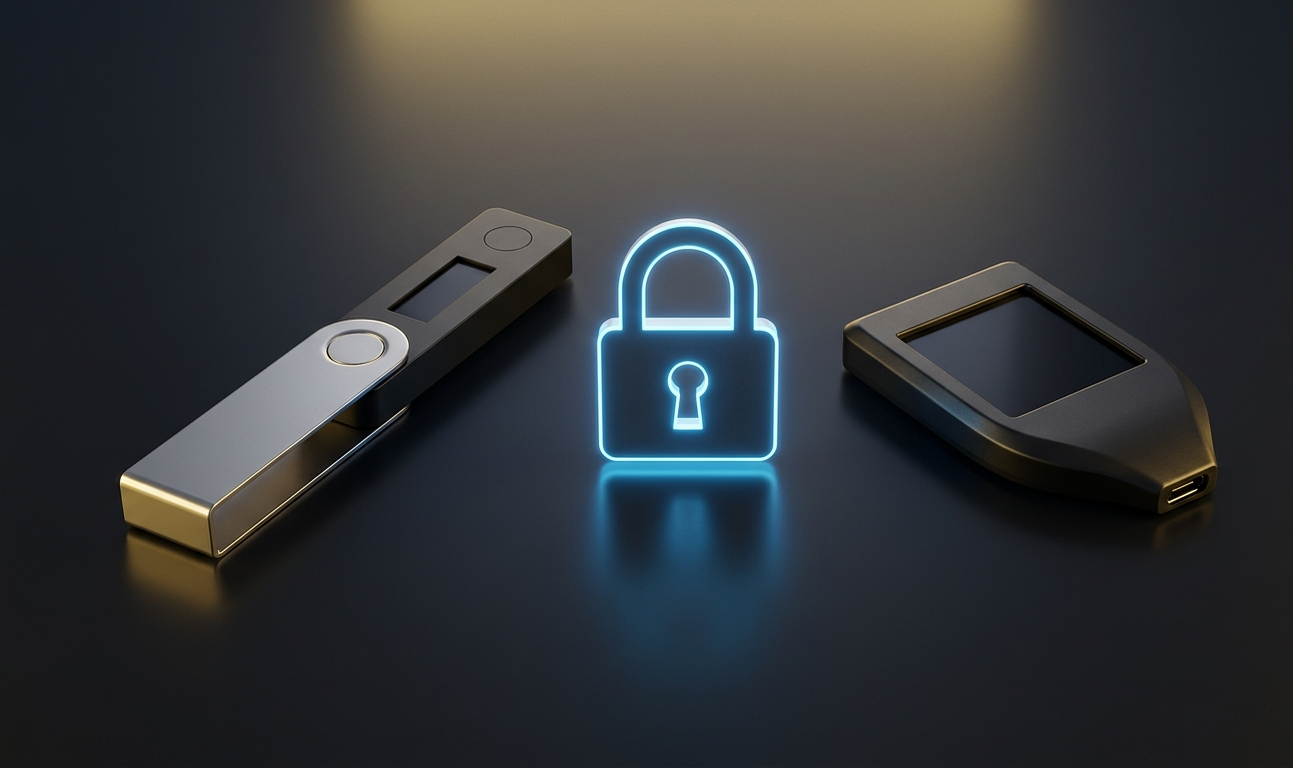
If you hold crypto seriously, a hardware wallet is not optional. Keeping your assets on an exchange means trusting someone else with your keys, and as 2026 has already demonstrated through the Drift Protocol hack, the Binance compliance story, and years of exchange failures before them, that trust is never guaranteed. Ledger and Trezor remain the two most trusted names in hardware wallet security, and both brands significantly updated their product lines in late 2025. This guide breaks down everything you need to know to choose between them in 2026, from security architecture and supported assets to price, mobile experience, and the new risks that matter most right now.
Why a Hardware Wallet Matters More Than Ever in 2026
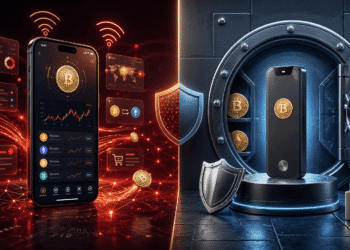
A hardware wallet, also called a cold wallet, is a physical device that stores your private keys offline. Unlike a software wallet running on your phone or computer, it keeps your keys away from the internet entirely. Every transaction requires physical confirmation on the device itself, meaning even if your computer is completely compromised by malware, an attacker cannot move your funds without physically pressing a button on the wallet in your hand.


Your biggest risk shifts from online hacks to backup mistakes, specifically losing your recovery phrase or giving it to a scammer. Two rules apply every time: never share your recovery phrase with anyone, and always verify the full address on the device screen before confirming a transaction. With Bitcoin recovering above $70,000 following the Iran ceasefire rally and institutional capital flowing into crypto through ETFs at record pace, the value of assets people are storing offline has never been higher. That makes choosing the right wallet more important than the price of either device.
The 2026 Lineup: What Each Brand Now Offers
Both Ledger and Trezor overhauled their product lines in 2025. Ledger now covers three price tiers with the Nano Gen5 at $179, the Flex at $249, and the Stax at $399. Trezor’s Safe 7 at $249 competes directly in the premium segment for the first time, alongside the Safe 5 and the entry-level Safe 3 at $79.
In October 2025, Ledger launched the Nano Gen5, featuring a 2.8-inch E-Ink touchscreen, Bluetooth BLE 5.2, NFC connectivity, and a battery life of up to ten hours. It also introduces direct dApp connectivity for the first time in the Nano line. Trezor introduced the Safe 7 in the same month, offering a 2.5-inch colour touchscreen with Gorilla Glass 3, haptic feedback, Qi2 wireless charging, and an IP67 water and dust resistance rating, making it the first waterproof hardware wallet on the market.
Security: Two Different Philosophies
Security is where Ledger and Trezor diverge most fundamentally, and understanding the difference matters for making an informed choice.
Ledger’s approach centres on its secure element chip, the same technology used in credit cards and passports. Ledger focuses on secure hardware chips and a polished app experience. All Ledger models use proprietary secure elements with CC EAL5+ or EAL6+ certification, and the firm uses a proprietary operating system called BOLOS where only approved firmware can run on the device, refusing to load any unsigned code. This is a strong defence against malware but it means Ledger’s firmware is closed source and cannot be independently audited by the public.
Trezor takes the opposite philosophical position. Trezor devices run fully open-source firmware. You could compile and install your own firmware if wanted, and Trezor devices have a mode to allow unsigned firmware for advanced users. The Safe 7’s TROPIC01 secure element is the world’s first auditable secure element chip for consumers, meaning its design can be reviewed by independent experts. From the TROPIC01 chip to the firmware to post-quantum cryptography, every component in the Trezor Safe 7 can be independently verified.
The Ledger Data Breach Context
On January 5, 2026, it became known that attackers had hacked Ledger’s payment processor Global-e. The stolen data included customer names, postal addresses, email addresses, phone numbers, and order information. Financial data and seed phrases were not affected. It was not the first incident: in April 2025, Ledger customers received physical letters containing QR codes prompting them to enter their 24-word recovery phrase in a sophisticated phishing campaign. These incidents did not compromise the devices themselves, but they highlight a critical point: the biggest vulnerability in hardware wallet security is often not the device but the company’s customer data handling.
Supported Assets and Ecosystem
Ledger supports over 5,500 cryptocurrencies and provides a more integrated experience through its Ledger Live platform, which enables direct access to staking, NFT management, and interaction with decentralised applications without needing third-party software. Ledger Live integrates over 50 third-party wallets.
Trezor officially supports more than 8,000 cryptocurrencies, though users have noted that the wallet has been slow to add some popular altcoins including ATOM and DOT. Trezor Suite, the companion application, is effective and user-friendly though generally considered less polished than Ledger Live. For DeFi users and NFT collectors who need broad ecosystem integration, Ledger holds a clear advantage. For Bitcoin-focused users who want maximum transparency, Trezor offers Bitcoin-only variants of its flagship models.
Mobile Experience
Ledger models are optimised for mobile and on-the-go security, with strong iOS and Android support throughout the product range. Trezor’s Android app is robust, but iOS functionality remains more restricted compared to Ledger. If you primarily manage your portfolio from an iPhone, this difference is meaningful in daily use.
Price Comparison
| Model | Brand | Price |
|---|---|---|
| Nano S Plus | Ledger | $59 |
| Safe 3 | Trezor | $79 |
| Nano Gen5 | Ledger | $179 |
| Safe 5 | Trezor | $169 |
| Flex | Ledger | $249 |
| Safe 7 | Trezor | $249 |
| Stax | Ledger | $399 |
At the $249 price point, the Ledger Flex and Trezor Safe 7 go head to head and represent the most interesting comparison in 2026. The Flex wins on ecosystem and mobile integration. The Safe 7 wins on hardware transparency, post-quantum readiness, and physical durability with its IP67 rating.
The Quantum Computing Question
Post-quantum cryptography, open-source hardware, and data protection at the manufacturer level are moving to the forefront as purchasing criteria in 2026. Trezor’s Safe 7 is designed with future-proof cryptographic updates in mind. Ledger has not announced a comparable quantum-ready strategy, and all Ledger models continue to use proprietary secure elements. For users who prioritise independent auditability and future-proofing, Trezor currently remains the only option.
Which One Should You Choose?
If you want the smoothest experience and broad app compatibility, Ledger is still the easier buy. If you want the most transparent security posture and a simpler, more inspectable setup, Trezor is the cleaner choice. In 2026, this matchup is about what you trust and what friction you can live with.
For DeFi users, NFT collectors, and anyone who wants maximum ecosystem integration and a polished mobile-first experience, Ledger Flex or Ledger Nano Gen5 are the practical picks. For Bitcoin-focused holders, privacy-conscious users, and anyone who values open-source auditability above everything else, the Trezor Safe 7 is the most technically advanced and transparent option on the market. For beginners on a budget, the Trezor Safe 3 at $79 offers excellent value with its secure element chip and fully open-source software.
Whatever you choose, the most important advice in 2026 remains unchanged. Always order directly from the official manufacturer’s website, never from third-party sellers. Never enter your recovery phrase into anything online. And always verify every transaction address on the device screen itself before confirming. The wallet protects your assets. The recovery phrase is your assets.